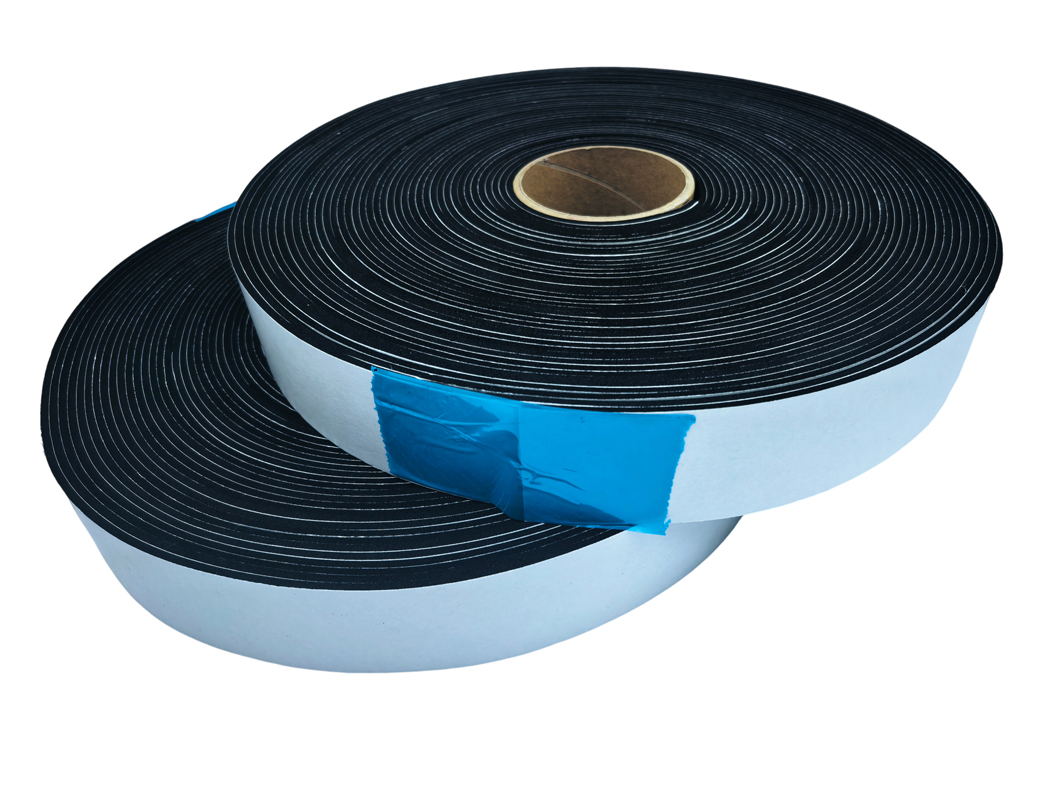
Selecting the appropriate sealing material is a crucial consideration in automotive and industrial applications, where performance, durability, and efficiency directly influence reliability, regulatory compliance, and overall lifecycle cost. A common challenge faced by engineers, installers, and procurement professionals is determining:
Which is the better choice—EPDM foam or EPDM tape—for a specific sealing application?
Although both materials are derived from EPDM rubber and provide excellent resistance to weathering, temperature extremes, and chemical exposure, they are designed to fulfill different functional requirements. This guide outlines the key differences, typical applications, and selection criteria, enabling B2B buyers to make informed, confident decisions.
Understanding EPDM as a Sealing Material
EPDM (Ethylene Propylene Diene Monomer) is widely used across automotive, manufacturing, HVAC, and industrial applications due to its outstanding performance characteristics, including:
●Strong resistance to UV radiation, ozone, and weathering
●Reliable performance across a broad temperature range
●Compatibility with metals, plastics, and composite materials
●Long-term durability in demanding operating environments
While the base material remains the same, the key distinction lies in how EPDM is manufactured, supplied, and applied in sealing applications.
What Is EPDM Foam?
EPDM foam is a flexible, compressible elastomeric material typically supplied in sheets, rolls, or custom profiles. It is specifically designed for applications where compression sealing, cushioning, or vibration isolation is required.
Typical Applications for EPDM Foam
●Gaskets and seals accommodating variable gap sizes
●Vibration dampening in industrial machinery
●Noise reduction in automotive components and assemblies
●Custom die-cut parts and engineered profiles
●Sealing large, uneven, or irregular surfaces
Key Advantages
●Excellent compression set resistance and recovery
●Conforms easily to irregular or uneven surfaces
●Can be precisely fabricated to meet custom design requirements
●Suitable for load-bearing and dynamic sealing applications
EPDM foam is the preferred solution when applications demand flexibility, adaptability, and controlled compression for effective sealing performance.
What Is EPDM Tape?
EPDM tape is typically manufactured from closed-cell EPDM foam and features a pressure-sensitive adhesive backing, enabling quick, clean, and consistent installation across a wide range of applications.
A high-performance example is TP10 EPDM foam tape, engineered for automotive and industrial sealing where reliability, uniformity, and installation efficiency are essential.
Typical Applications for EPDM Tape
●Sealing automotive doors, bonnets, and enclosures
●Industrial panel and joint sealing
●Electrical cabinets and enclosure systems
●HVAC housings and access panels
●High-volume or production-line installations
Key Advantages
●Rapid application with minimal labor requirements
●Uniform seal thickness for consistent performance
●Strong adhesion to metals, plastics, and composite materials
●Reduced risk of installation errors and rework
EPDM tape is the preferred solution when speed, repeatability, and installation efficiency are key priorities in sealing applications.
EPDM Foam vs. EPDM Tape: How to Choose
Selecting between EPDM foam and EPDM tape depends on the specific requirements of the application rather than the material itself. Each option is designed to address different performance and installation needs.
Choose EPDM Foam When:
●Gap sizes vary or are uneven
●Custom shapes, profiles, or thicknesses are required
●Compression characteristics need to be precisely controlled
●Vibration dampening or cushioning is critical
Choose EPDM Tape When:
●Fast and efficient installation is a priority
●A self-adhesive sealing solution is preferred
●Consistency is essential in assembly-line environments
●Reducing labour time and associated costs is important
In many industrial applications, EPDM tape proves to be the more cost-effective option, as it minimizes installation time and reduces variability during assembly.
Why TP10 EPDM Tape Is a Strong Industrial Solution
TP10 EPDM Tape is a high-performance, closed-cell EPDM foam tape developed for demanding automotive and industrial sealing applications where reliability and consistency are essential.
Key Benefits of TP10 EPDM Tape
●Closed-cell EPDM structure helps prevent the ingress of water, air, and dust
●High-quality acrylic adhesive delivers strong, long-lasting bonds to metals, plastics, and painted surfaces
●Retains flexibility and sealing performance over extended periods
●Suitable for both indoor and outdoor environments
TP10 effectively combines the sealing performance of EPDM foam with the convenience and efficiency of an adhesive-backed tape, making it a practical and dependable solution for a wide range of B2B applications.
When EPDM Foam and EPDM Tape Are Used Together
In more complex assemblies, EPDM foam and EPDM tape are often used in combination rather than as alternatives.
For example:
●EPDM foam can be applied for primary compression sealing
●EPDM tape can be used for secondary seals, access panels, or finishing interfaces
This combined approach enables engineers and installers to balance sealing performance with installation efficiency, ultimately optimizing both functionality and overall cost.
Making the Right Specification Choice
Selecting between EPDM foam and EPDM tape ultimately depends on the specific application requirements, installation method, and total cost of ownership.
●EPDM foam is best suited for custom, compression-driven sealing applications
●EPDM tape offers advantages in speed, consistency, and reduced labour requirements
For many automotive and industrial sealing needs, TP10 EPDM foam tape delivers a reliable, specification-aligned solution while simplifying installation and minimizing unnecessary complexity.

 English
 العربية
 Français
 Русский
 Español
 Português
 Deutsch
 italiano
 日本語
日本語 한국어
한국어 Nederlands
 Tiếng Việt
 ไทย
ไทย Polski
 Türkçe
 ភាសាខ្មែរ
 Bahasa Melayu
 ဗမာစာ
ဗမာစာ தமிழ்
தமிழ் Filipino
 Bahasa Indonesia
 magyar
 Română
 Čeština
 қазақ
қазақ Српски
 हिन्दी
 فارسی
فارسی Kiswahili
 Norsk
Norsk Svenska
 українська
 Ελληνικά
 Suomi
Suomi עברית
עברית Latine
 Dansk
Dansk اردو
اردو বাংলা
বাংলা Afrikaans
 नेपाली
 Oʻzbekcha
 Azərbaycan dili
 Български
 guarani
 Hausa
Hausa Kurdî
Kurdî Kurdî
Kurdî Lietuvių
 Wikang Tagalog
 isiZulu


