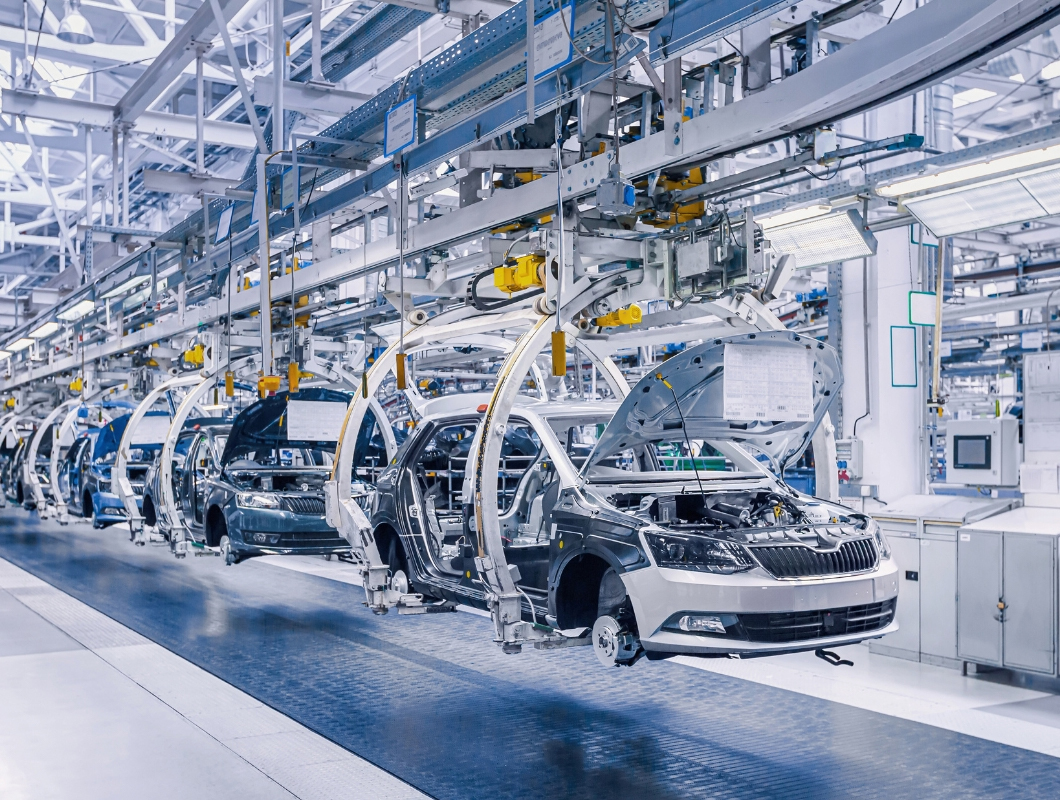
We rely on cars and aircraft to operate safely and reliably every day, and foam is an important part of that performance. Beyond seating and cushioning, foam is used in door panels, cushions, bumpers, mounts, and gaskets to absorb shock, isolate components, and reduce vibration. In each application, the material must withstand repeated movement and compression, often through millions of cycles over years of service.
Vibration is an unavoidable part of automotive and aerospace operation. Continuous vibration can accelerate wear, contribute to material fatigue, and damage sensitive components. It can also increase noise, as structure-borne vibration is transmitted through vehicle or aircraft structures and converted into airborne sound within the cabin. Effective vibration control is therefore essential for improving component durability, passenger comfort, and long-term product reliability.
Vibration Damping and Fatigue Resistance: Why They Go Together
Vibration damping and fatigue resistance are closely connected. Damping helps absorb and dissipate vibrational energy before it is transferred to surrounding structures, while fatigue resistance determines how well the material maintains its performance after repeated loading and deformation.
Research published in the Journal of Vibration Engineering & Technologies found that structural failures in aircraft components can begin with fatigue-induced crack initiation at areas of concentrated stress, while damping-based mitigation can help improve fatigue resistance. This reinforces an important consideration for automotive and aerospace engineers: damping performance and long-term durability should be evaluated together.
A foam may provide excellent vibration damping when new, but if it loses its resilience, develops permanent compression, or deteriorates under repeated loading, its ability to protect surrounding components will decline. The ideal vibration damping foam must therefore deliver both effective energy dissipation and reliable fatigue resistance throughout the expected service life of the application.
Automotive Foam: Controlling Structure-Borne Vibration
Automotive components are exposed to continuous vibration from the engine, drivetrain, and road surface. Under-hood and undercarriage components must also withstand heat, oil, moisture, and changing environmental conditions. The right foam helps isolate vibration while maintaining its physical properties throughout the vehicle's service life.
Key properties for automotive applications include:
●Low compression set: Helps gaskets, mounts, and isolation pads maintain their shape and sealing performance under prolonged compression and repeated vibration.
●Resistance to oil, fuel, and moisture: Important for components installed under the hood or beneath the vehicle.
●Effective sound and vibration isolation: Reduces the transmission of vibration and noise without adding unnecessary weight.
Neoprene and EPDM foams are commonly used for engine-bay isolation pads, engine and pump mounts, compressor mounts, door panels, and bumper cushioning. Both materials offer good resistance to heat, ozone, and weathering, making them suitable for components exposed to demanding automotive environments.
Expanded Polypropylene (EPP) foam is another strong option where repeated impact and recovery are important. Its ability to absorb shock and recover its shape after compression makes it suitable for reusable automotive components and structural cushioning. Foam density also affects performance: higher-density grades generally provide greater load-bearing capacity and dimensional stability, while lower-density grades can be appropriate for lightweight cushioning and less demanding isolation applications.
Aerospace Equipment: Vibration Damping Without Unnecessary Weight
Aerospace applications place an especially strong emphasis on weight reduction. Every added component must justify its weight, so vibration damping materials need to deliver effective performance without creating unnecessary mass.
Key properties for aerospace applications include:
●High damping efficiency at low density: Absorbs vibrational energy while minimizing weight.
●Long-term dimensional stability: Maintains its shape and performance under sustained vibration and repeated loading.
●Temperature resistance: Performs reliably across the wide temperature variations experienced during flight and ground operations.
●Compliance with applicable flammability and material requirements: Essential for aircraft interiors and other aerospace assemblies.
Polyurethane (PU) foam is widely used in aerospace seating because it combines cushioning, comfort, and vibration absorption while tolerating the repeated loading associated with seating applications.
For structural and interior applications requiring greater dimensional stability, closed-cell polyethylene (PE) foam and cross-linked polyethylene (XLPE) foam can provide a useful balance of low weight, resilience, and structural support. Their closed-cell construction also helps limit moisture absorption and maintain consistent physical properties across demanding temperature conditions—from cold-soaked conditions at cruising altitude to heat-soaked surfaces on the ground.
Ultimately, the best foam for automotive or aerospace vibration control depends on the combination of vibration frequency, loading conditions, temperature, environmental exposure, density, and required service life. Selecting the material based on the complete operating environment helps ensure reliable damping performance throughout the life of the component.
What Research Shows About Fatigue and Compression Set
Vibration damping is only one part of long-term foam performance. A study of closed-cell EVA foam subjected to repeated compression cycles found that mechanical property degradation can be linked to changes at the cell-wall level, including creep-induced buckling and the gradual development of tears in the thin walls separating individual cells. As these microscopic changes accumulate, gas can move more easily between neighboring cells, altering the foam's damping behavior before stiffness and energy absorption eventually decline.
For long-service applications, the goal is therefore not simply to select a foam with strong initial damping performance. The material must also retain its structural integrity and functional properties over repeated loading, temperature changes, and environmental exposure. Foam with predictable, gradual cell-wall degradation is more likely to maintain damping performance within the required specifications throughout the component's service life.
This is why compression set resistance and fatigue performance are just as important as initial damping capability when selecting foam for demanding applications. A material that effectively absorbs vibration on the first day but loses its resilience after repeated engine heat cycles or extended flight hours will eventually stop providing the protection it was designed to deliver.
Choosing the Right Foam for Reliable Vibration Isolation
Whether you are isolating engine-bay components, reducing drivetrain vibration, or cushioning aircraft interior assemblies, the right foam can help control vibration, withstand repeated loading, and extend component service life.
At TOPSUN Foam, we consider material properties, density, geometry, loading conditions, and environmental exposure when developing foam solutions for vibration-control applications. Our in-house CNC routing, waterjet cutting, die cutting, contour cutting, and skiving capabilities allow us to cut, shape, laminate, and optimize foam components to meet specific design and performance requirements.
If you need help selecting a foam for your vibration-control application, our specialists can help evaluate the material and fabrication options for your requirements. Talk to a foam specialist to discuss your application.

 English
 العربية
 Français
 Русский
 Español
 Português
 Deutsch
 italiano
 日本語
日本語 한국어
한국어 Nederlands
 Tiếng Việt
 ไทย
ไทย Polski
 Türkçe
 ភាសាខ្មែរ
 Bahasa Melayu
 ဗမာစာ
ဗမာစာ தமிழ்
தமிழ் Filipino
 Bahasa Indonesia
 magyar
 Română
 Čeština
 қазақ
қазақ Српски
 हिन्दी
 فارسی
فارسی Kiswahili
 Norsk
Norsk Svenska
 українська
 Ελληνικά
 Suomi
Suomi עברית
עברית Latine
 Dansk
Dansk اردو
اردو বাংলা
বাংলা Afrikaans
 नेपाली
 Oʻzbekcha
 Azərbaycan dili
 Български
 guarani
 Hausa
Hausa Kurdî
Kurdî Kurdî
Kurdî Lietuvių
 Wikang Tagalog
 isiZulu


