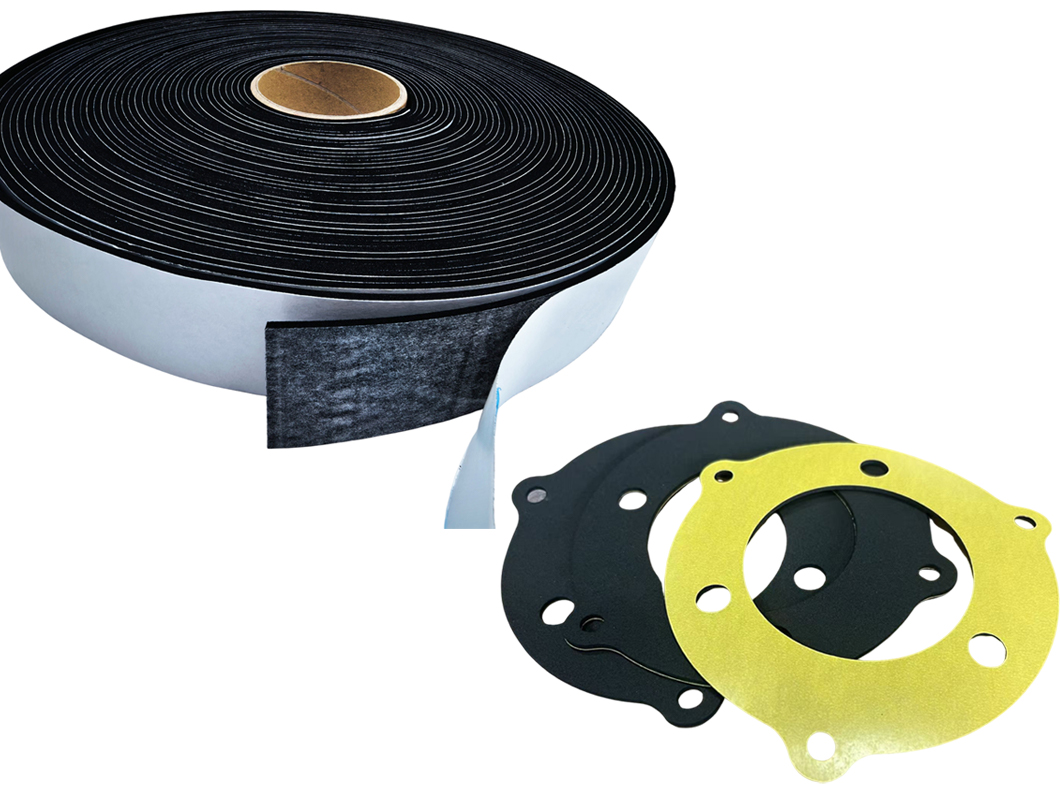
Understand Which Gasket Material Is Right for Your Application
Selecting the right gasket material is a critical decision for any design, engineering, or procurement team. Choosing the wrong material can result in premature failure, inadequate sealing performance, increased maintenance costs, and production inefficiencies.
As a leading China-based manufacturer of rubber and foam gaskets, TOPSUN specializes in converting a wide range of materials into custom-engineered sealing solutions tailored to specific application requirements. Whether your goal is to prevent moisture ingress, reduce vibration, provide thermal insulation, or protect sensitive equipment and enclosures, our team can help you identify the optimal material based on performance requirements, regulatory compliance, and overall cost efficiency.
With extensive material expertise and precision manufacturing capabilities, TOPSUN delivers reliable gasket solutions designed to perform in demanding environments while supporting your long-term product success.
Foam vs Rubber Gaskets: Core Differences
| Feature | Foam Gaskets | Rubber Gaskets |
| Structure | Cellular (open or closed cell) | Solid elastomer |
| Compression | Compresses easily | Higher compression force needed |
| Seal Type | Low-pressure sealing | Medium to high-pressure sealing |
| Weight | Lightweight | Denser and heavier |
| Best Use | Cushioning, vibration, light sealing | Chemical, fuel, and fluid sealing |
When to Use Foam Gaskets
Foam gaskets are an excellent choice for applications requiring low compression force, vibration dampening, shock absorption, thermal insulation, weather sealing, or easy adhesive-backed installation.
Common Foam Gasket Materials
●Closed-cell EPDM and Neoprene
●Vinyl Nitrile (flame-retardant)
●Polyethylene (PE) foam
●Open-cell Polyurethane (PU) foam for limited applications
Typical Applications
Foam gaskets are widely used in HVAC systems, electrical enclosures, personal protective equipment (PPE), and automotive interior sealing, where reliable cushioning, insulation, and environmental protection are required.
When to Use Rubber Gaskets
Solid rubber gaskets are ideal for applications that require reliable sealing under medium to high pressure, exposure to fluids, oils, or fuels, strong chemical resistance, and the ability to withstand high mechanical stress.
Common Rubber Gasket Materials
●Nitrile (NBR): Excellent resistance to oils and fuels
●EPDM: Outstanding weather, ozone, and steam resistance
●Neoprene: Versatile, general-purpose sealing material
Typical Applications
Rubber gaskets are commonly used in fuel tanks, pipe flanges, valve covers, pumps, generators, and other industrial equipment where durable, leak-resistant sealing is essential.
How TOPSUN Helps You Choose the Right Gasket
At TOPSUN, we work closely with OEMs, engineers, and procurement teams to identify the most suitable gasket solution based on your specific application requirements. Our evaluation process considers:
●Operating pressure and sealing conditions
●Exposure to fluids, chemicals, and temperature extremes
●Seal design requirements, including compression and adhesive-backed applications
●Environmental and operating conditions
●Industry and regulatory compliance standards, such as UL94, FMVSS, and EN45545
With our expertise, you receive accurate material recommendations, rapid quotations, and precision-converted gasket solutions tailored to your needs—whether you require prototypes, small production runs, or high-volume manufacturing.
Partner with a Trusted CHN Gasket Manufacturer
At TOPSUN, we are committed to delivering high-quality gasket solutions backed by technical expertise and reliable service. Our capabilities include:
●ISO 9001-certified manufacturing processes
●Full material traceability for both foam and rubber products
●In-house converting services, including die-cutting, CNC cutting, and kiss-cutting
●A wide range of flame-retardant and adhesive-backed material options
●Fast lead times, responsive technical support, and low minimum order quantities (MOQs)
From initial consultation to final delivery, we focus on providing precision-engineered products, dependable performance, and long-term customer partnerships.
FAQS
1. Which is better for outdoor applications: foam or rubber?
Both closed-cell EPDM foam and solid EPDM rubber provide excellent resistance to weathering, UV exposure, and ozone. Foam is more compressible and ideal for low-pressure sealing, while solid rubber offers greater durability and performance in applications subject to higher loads and pressures.
2. Can foam gaskets be used in contact with oil or fuel?
Generally, foam materials are not recommended for prolonged exposure to oils or fuels, as these substances can cause material degradation. For fuel and oil-resistant sealing applications, nitrile rubber (NBR) is typically the preferred choice.
3. Are foam gaskets available in flame-retardant grades?
Yes. Certain foam materials, including Vinyl Nitrile and selected Neoprene grades, are available with flame-retardant properties and can meet standards such as UL94 HF1 and FMVSS 302, depending on the specification.
4. Which is more cost-effective: foam or rubber gaskets?
Foam gaskets are generally more economical, particularly for adhesive-backed sealing applications and large-volume production. Rubber gaskets typically have a higher initial cost but can provide superior durability and service life in demanding environments.
5. Can TOPSUN supply both foam and rubber gasket kits?
Yes. TOPSUN manufactures both foam and rubber gaskets and can provide custom gasket kits containing multiple material types. Kits can be tailored to your assembly requirements, helping to simplify installation and streamline your production process.

 English
 العربية
 Français
 Русский
 Español
 Português
 Deutsch
 italiano
 日本語
日本語 한국어
한국어 Nederlands
 Tiếng Việt
 ไทย
ไทย Polski
 Türkçe
 ភាសាខ្មែរ
 Bahasa Melayu
 ဗမာစာ
ဗမာစာ தமிழ்
தமிழ் Filipino
 Bahasa Indonesia
 magyar
 Română
 Čeština
 қазақ
қазақ Српски
 हिन्दी
 فارسی
فارسی Kiswahili
 Norsk
Norsk Svenska
 українська
 Ελληνικά
 Suomi
Suomi עברית
עברית Latine
 Dansk
Dansk اردو
اردو বাংলা
বাংলা Afrikaans
 नेपाली
 Oʻzbekcha
 Azərbaycan dili
 Български
 guarani
 Hausa
Hausa Kurdî
Kurdî Kurdî
Kurdî Lietuvių
 Wikang Tagalog
 isiZulu


