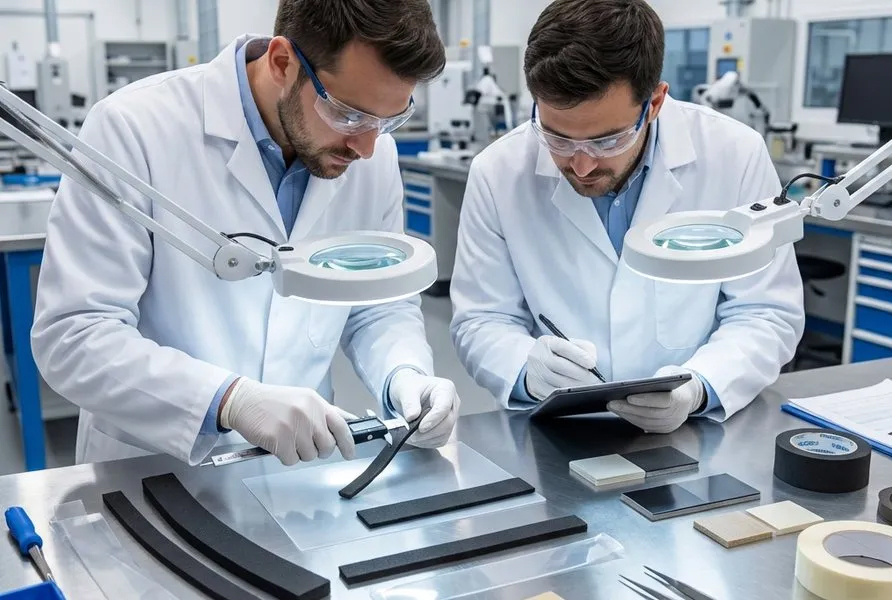
Adhesive-backed foam is widely used across the automotive, packaging, medical equipment, footwear and bag manufacturing, sports equipment, construction, and industrial manufacturing sectors. By combining foam and adhesive into a single ready-to-install product, it can speed up assembly, simplify installation, and eliminate the need to apply a separate adhesive.
However, adhesion problems can sometimes occur after installation. The foam may fail to bond properly to the surface, the edges may begin to lift, or the material may detach from the installation area after a short period of use. When this happens, it is easy to assume that the adhesive itself is poor quality. In reality, adhesive failure is not always caused by a weak adhesive.
Many factors can affect bonding performance, including the type of foam, the properties of the application surface, temperature, surface contamination, installation pressure, storage conditions, and even the shape and design of the finished part. To identify the real cause, it is important to examine where the failure occurred. The adhesive may have separated from the application surface, detached from the foam itself, or pulled away together with part of the foam material.
Below, we examine the nine most common reasons why adhesive-backed foam fails to stick and discuss practical solutions for each problem.
What Is Adhesive-Backed Foam?
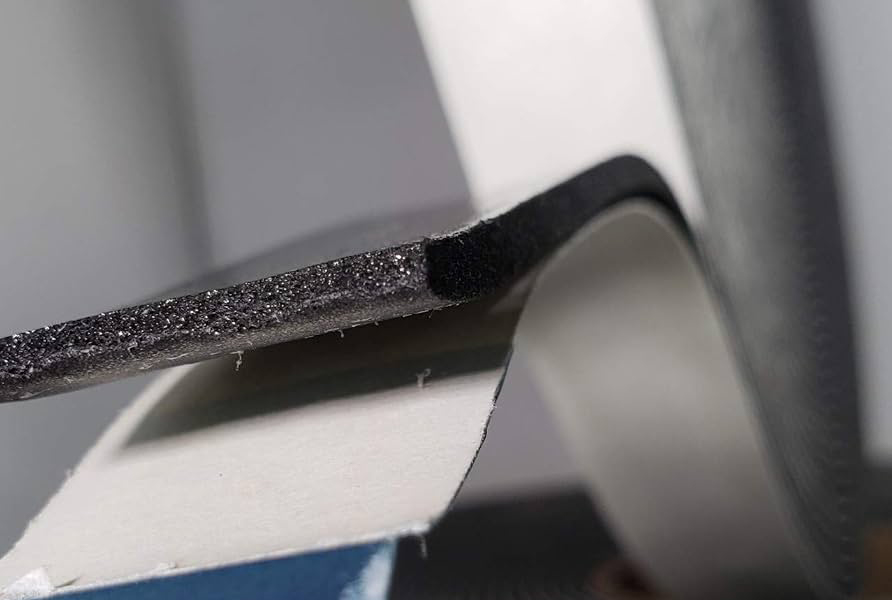
Adhesive-backed foam is a foam sheet, roll, strip, or custom-converted part with a pressure-sensitive adhesive applied to one or both sides. The adhesive layer is typically protected by a release liner, which is removed before installation.
EVA foam, polyethylene foam, EPDM foam, EPDM/NBR foam, neoprene foam, TPE foam, and other industrial foam materials can be supplied with an adhesive backing to meet specific application requirements.
Adhesive-backed foam is commonly used for seals, gaskets, cushioning and shock absorption, insulation, protective components, ready-to-install assemblies, and temporary positioning during production. To achieve reliable performance, the adhesive must be carefully matched to the foam material, the bonding surface, and the environmental and operating conditions of the application.
How Can You Identify the Main Cause of the Problem?
Before changing the adhesive or replacing the foam, inspect the point where the bond failed. Identifying the location of separation can help determine the underlying cause and prevent unnecessary material changes.
●If the adhesive remains on the foam but separates from the application surface, the surface may have been contaminated, damp, excessively rough, or made from a low-surface-energy material.
●If the adhesive remains on the application surface but separates from the foam, the adhesive may not be compatible with the foam material, or the adhesive-backing process may not have been performed correctly.
●If the foam itself tears while the adhesive remains firmly bonded to the surface, the adhesive bond may be stronger than the foam. In this case, the foam's tensile strength, thickness, or density may be insufficient for the application.
Carefully identifying the point of failure can help avoid incorrect material changes, unnecessary production downtime, and increased rework costs.
1. The Installation Surface Is Not Clean
One of the most common reasons adhesive-backed foam fails to stick properly is surface contamination. Dust, oil, grease, moisture, and detergent residue can all interfere with adhesion. For a reliable bond to form, the adhesive must make direct and consistent contact with the application surface.
When a layer of grease, dust, or other contamination is present, the adhesive may bond to the contamination rather than to the actual surface. As a result, the foam may appear to adhere properly at first but begin to lift or detach after several hours or days.
This issue is particularly common with oily metal components, newly manufactured plastic parts, painted surfaces, and production environments where airborne dust or contaminants are present.
Solution
Clean the installation surface thoroughly with a suitable cleaning agent before applying the foam, and allow the surface to dry completely.
Use a clean, lint-free cloth to remove contaminants without leaving fibers behind. After cleaning, avoid touching the bonding area, as oils from the skin can also reduce adhesion.
In production environments, keep the time between surface cleaning and foam installation as short as possible to minimize the risk of dust or other contaminants settling on the surface.
2. The Adhesive Is Not Compatible with the Surface Material
Different materials have different surface properties, and not all surfaces bond equally well with the same adhesive. Metals, glass, and many painted surfaces can provide favorable conditions for adhesion. However, certain plastics—particularly low-surface-energy materials such as polyethylene (PE) and polypropylene (PP)—can be difficult to bond with general-purpose adhesives.
As a result, the same adhesive-backed foam may perform well on a metal surface but begin to lift or detach when applied to a plastic component.
For this reason, no single adhesive should be assumed to work effectively on every type of surface.
Solution
The material of the application surface should be clearly identified before the foam is ordered. If the foam will be applied to plastic, rubber, coated materials, or another specialized surface, providing the manufacturer with an actual sample can help ensure accurate compatibility testing.
Some applications may require a primer or an adhesive specifically formulated for low-surface-energy materials. These requirements should be identified and tested during the development stage rather than after mass production or installation.
3. The Adhesive Is Not Compatible with the Foam Material
EVA foam, polyethylene foam, EPDM foam, neoprene foam, and TPE foam all have different chemical compositions, surface characteristics, and physical structures. An adhesive that performs well on one type of foam may not provide the same bonding performance on another.
For example, polyethylene foam has a relatively low-surface-energy structure that requires careful adhesive selection. EPDM and neoprene foams may also contain additives or compounds that can influence adhesion and long-term bond durability.
Even foam materials with a similar appearance may respond differently to the same adhesive. Differences in density, formulation, surface treatment, manufacturing methods, and additives can all affect bonding performance.
Solution
The exact foam material should be identified before selecting an adhesive. General descriptions such as "soft foam,""black foam,"or"industrial foam"do not provide enough information to determine adhesive compatibility.
The manufacturer should understand the foam's material composition, density, surface characteristics, application surface, and expected operating conditions.
For demanding or critical applications, sample testing should be carried out before mass production. Early testing can help identify compatibility issues and reduce the risk of bonding failures, material waste, and costly rework later in the production process.
4. Insufficient Pressure Was Applied During Installation
Many pressure-sensitive adhesives used on adhesive-backed foam require adequate pressure during installation to establish a strong initial bond. If the foam is simply placed on the surface without sufficient pressure, parts of the adhesive may not make full contact with the application surface.
This issue is particularly common on textured, uneven, or curved surfaces. The center of the foam may adhere properly while the corners and edges receive insufficient contact and remain partially loose.
Over time, these poorly bonded areas can become the starting point for edge lifting and eventual foam separation.
Solution
After positioning the foam, apply firm and even pressure across the entire bonding area. A roller can be used for larger parts, while a press or another suitable installation tool may be more effective for smaller components.
Applying pressure only at individual points with a finger is often insufficient because it does not ensure consistent contact across the entire adhesive surface.
At the same time, excessive pressure should be avoided, especially with soft or low-density foam, as it may crush or permanently deform the material. The appropriate installation pressure should be determined according to the foam's thickness, density, and softness.
5. The Adhesive Was Not Given Enough Time to Develop Full Bond Strength
Initial tack is not the same as final bond strength. Although the foam may appear to stick immediately after installation, the adhesive may require additional time to develop its full bonding strength.
If the part is bent, stretched, placed under tension, or moved to the next stage of production too soon, the risk of adhesive failure can increase.
This problem is particularly common on high-speed production lines, where components are processed immediately after installation without allowing sufficient time for the bond to develop.
Solution
After installation, allow the adhesive sufficient time to develop its bond strength. During this period, avoid exposing the part to excessive tension, pressure, bending, or vibration.
The required bonding time can vary depending on the adhesive type, ambient temperature, surface material, and installation conditions. The appropriate dwell time should therefore be clearly defined in the production process.
For industrial applications, test samples should be evaluated after the recommended bonding period rather than only a few minutes after installation. This provides a more accurate assessment of long-term adhesion performance.
6. The Installation Temperature Is Not Suitable
Temperature can significantly affect adhesive performance during installation. In cold conditions, some adhesives become stiffer and may not flow or conform effectively to the application surface.
At excessively high temperatures, the adhesive may become too soft, reducing its ability to maintain a stable bond or causing it to flow from the edges of the foam.
Temperature changes can also create moisture-related problems. For example, when foam is moved from a cold storage area into a warm and humid environment, condensation may form on its surface. Even a very thin layer of moisture that is difficult to see can interfere with adhesion.
Solution
Both the foam and the application surface should be kept within a suitable temperature range before installation. If the material has been stored in a cold warehouse, allow it to reach the recommended installation temperature before use.
The installation environment is only one part of the equation. The expected operating temperature of the finished product must also be considered. Foam used in vehicles, boiler rooms, cold-storage facilities, or outdoor applications may be exposed to significant temperature changes.
The selected adhesive should therefore be evaluated not only for its installation conditions but also for its ability to maintain reliable performance throughout the actual temperature range of the application.
7. The Installation Surface Is Rough or Porous
An adhesive requires sufficient contact with the application surface to form a strong and reliable bond. On highly rough, porous, or deteriorating surfaces, only part of the adhesive may come into direct contact with the material.
Surfaces such as unfinished wood, concrete, plaster, deteriorated paint, and certain fabrics can create bonding problems. Some porous materials may absorb part of the adhesive, while weak coatings or surface layers may detach along with the foam.
In these situations, the adhesive itself may not be the primary cause of failure. The underlying surface may simply lack the strength or stability needed to support a durable bond.
Solution
Evaluate the condition and strength of the application surface before installation. If paint, coatings, or surface layers peel or separate easily, the surface should be repaired, cleaned, or stabilized before applying the adhesive-backed foam.
Depending on the material, a primer, a thicker adhesive layer, or mechanical surface preparation may improve bonding performance.
The most effective solution should be selected based on the specific surface material and application requirements. Simply using more adhesive without properly preparing the surface will rarely solve the underlying problem.
8. The Adhesive-Backed Foam Was Stored Improperly
Improper storage can negatively affect the performance of adhesive-backed foam. Exposure to excessive heat, direct sunlight, dust, moisture, or unsuitable storage pressure can damage the adhesive, foam, or protective release liner.
If the release liner becomes partially detached or the edges of a roll are exposed, dust and other contaminants can settle on the adhesive surface. Improperly stored rolls may also become compressed or deformed, making installation more difficult and affecting the final appearance of the part.
Another common issue is using adhesive-backed foam after an extended storage period without checking its condition or suitability for use.
Solution
Adhesive-backed foam should be stored in its original packaging in a clean, dry environment and protected from direct sunlight and heat sources.
The release liner should remain in place until the foam is ready for installation to protect the adhesive from dust, moisture, and contamination. Production dates, recommended shelf life, and storage conditions should also be monitored.
Rolls and sheets should not be placed under excessive weight or stored in a way that can bend, compress, or deform the foam. Maintaining proper storage conditions helps preserve both adhesive performance and the shape of the finished material.
9. The Part Shape Causes the Edges to Lift
In some cases, both the adhesive and the application surface are suitable, but the design of the foam part itself creates forces that cause the bond to fail.
Sharp corners, excessive foam thickness, installation around tight curves, or placing the edges in areas exposed to airflow, water, or repeated washing can gradually cause the foam to lift and peel away.
Soft and flexible foams naturally tend to return to their original shape after being bent or compressed. If the resulting recovery force exceeds the adhesive's holding strength, the edges may gradually begin to separate from the surface.
Poorly cut parts or foam with damaged, uneven edges may also be more likely to peel prematurely.
Solution
Whenever possible, the corners of adhesive-backed foam parts should be rounded rather than left sharp. The shape of the part should also be designed to match the contour and curvature of the application surface.
For curved or complex surfaces, an actual sample should be installed and tested before mass production to evaluate how the foam and adhesive perform under real application conditions. The foam's thickness, density, and flexibility should also be appropriate for the required degree of bending.
Using foam die-cutting services can help produce accurately shaped parts with clean edges, consistent dimensions, and improved installation quality.
Comparison of Common Reasons Why Adhesive-Backed Foam Does Not Stick
| Main Cause | Visible Sign | Recommended Solution |
| Surface contamination | The adhesive remains on the foam but separates from the application surface. | Thoroughly clean and completely dry the surface before installation. |
| Adhesive incompatibility with the surface | Initial adhesion is weak, or the foam separates from the surface shortly after installation. | Select an adhesive or primer compatible with the specific surface material. |
| Adhesive incompatibility with the foam | The adhesive separates from the foam itself. | Test the adhesive on the exact foam material before production. |
| Insufficient installation pressure | The center of the part adheres properly, but the edges or corners remain loose. | Apply firm and even pressure across the entire bonding area using a roller, press, or suitable tool. |
| Insufficient bonding time | The part separates after handling, assembly, or exposure to stress shortly after installation. | Allow sufficient time for the adhesive to develop its required bond strength before further processing. |
| Unsuitable installation temperature | The adhesive becomes too stiff in cold conditions or excessively soft at high temperatures. | Install within the recommended temperature range and select an adhesive suitable for the expected operating conditions. |
| Rough or porous surface | The adhesive separates together with paint, plaster, coating, or other surface particles. | Repair or stabilize the surface and, where necessary, use a suitable primer or surface preparation method. |
| Improper storage | The adhesive becomes contaminated, weakened, dried out, or damaged before installation. | Store the material in its original packaging under recommended temperature and humidity conditions. |
| Poor part design | The corners or edges gradually lift and peel away from the surface. | Round sharp corners, match the part to the surface contour, and adjust the foam design for the application. |
Conclusion
Adhesive failure in foam applications is not necessarily a sign of poor adhesive quality. Problems such as surface contamination, incorrect adhesive selection, unsuitable installation temperatures, insufficient pressure, inadequate bonding time, improper storage, and unsuitable part design can all contribute to foam peeling or separation.
Reliable adhesion depends on evaluating the foam material, application surface, adhesive, installation process, and operating environment as a complete system. An adhesive-backed foam that performs well on metal, for example, may produce very different results when applied to plastic, rubber, painted surfaces, or other challenging materials.
The most effective way to prevent adhesion problems is to identify potential risks before mass production. Testing samples under actual or simulated application conditions can help reveal issues such as edge lifting, premature separation, and reduced service life.
Material selection and converting quality are equally important. Choosing the appropriate foam thickness, density, and flexibility, together with precise cutting and proper installation, can significantly improve the reliability and durability of adhesive-backed foam products.
Order Adhesive-Backed Foam from TOPSUN
If you need adhesive-backed foam sheets, rolls, or custom-cut parts for your production process, TOPSUN can help you select the right solution for your application. Our specialists can evaluate factors such as foam material, bonding surface, part dimensions, adhesive requirements, and operating conditions to recommend a suitable adhesive-backed foam solution.

 English
 العربية
 Français
 Русский
 Español
 Português
 Deutsch
 italiano
 日本語
日本語 한국어
한국어 Nederlands
 Tiếng Việt
 ไทย
ไทย Polski
 Türkçe
 ភាសាខ្មែរ
 Bahasa Melayu
 ဗမာစာ
ဗမာစာ தமிழ்
தமிழ் Filipino
 Bahasa Indonesia
 magyar
 Română
 Čeština
 қазақ
қазақ Српски
 हिन्दी
 فارسی
فارسی Kiswahili
 Norsk
Norsk Svenska
 українська
 Ελληνικά
 Suomi
Suomi עברית
עברית Latine
 Dansk
Dansk اردو
اردو বাংলা
বাংলা Afrikaans
 नेपाली
 Oʻzbekcha
 Azərbaycan dili
 Български
 guarani
 Hausa
Hausa Kurdî
Kurdî Kurdî
Kurdî Lietuvių
 Wikang Tagalog
 isiZulu


