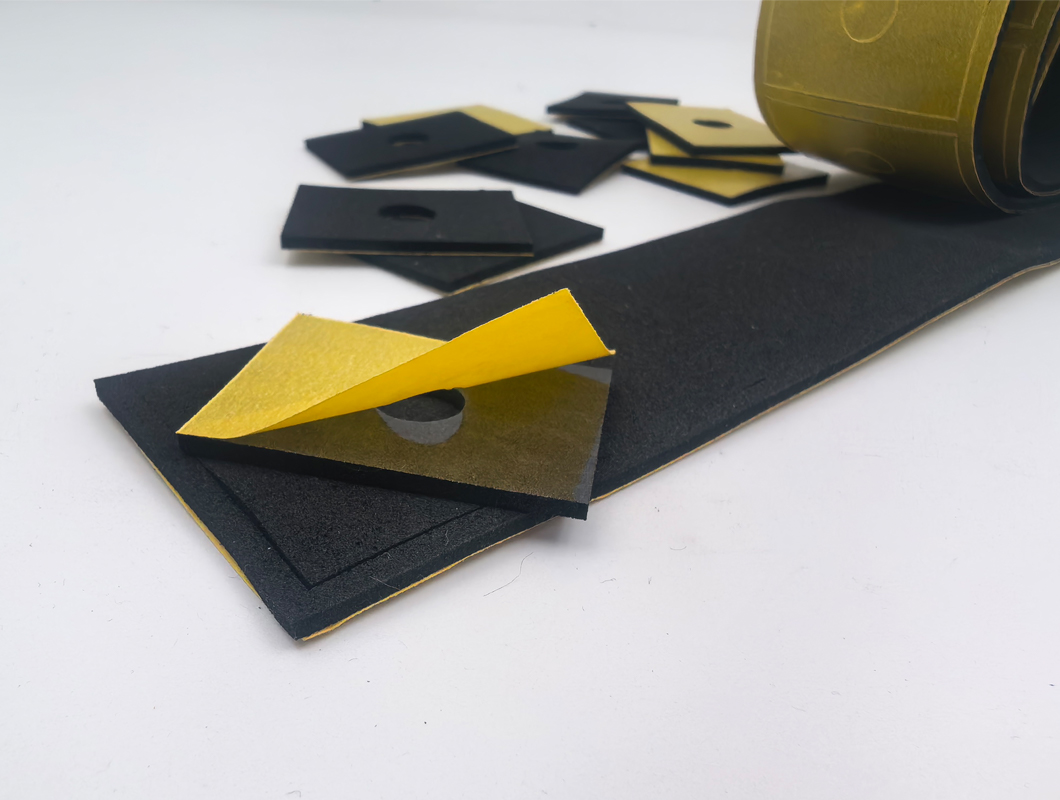
Selecting the right material is critical for sealing, insulation, and protection in high-temperature industrial environments. Choosing the wrong material can result in premature component failure, costly downtime, and increased maintenance expenses. Among the most widely used elastomers for these demanding applications are neoprene and silicone. While both offer excellent performance, each has distinct advantages depending on the operating conditions.
At TOPSUN, we specialize in manufacturing and converting custom foam and rubber components to meet the specific requirements of industrial applications. This guide compares neoprene and silicone in terms of heat resistance, durability, chemical compatibility, and typical applications, helping you determine which material is the best fit for your project.
Why Heat Resistance Matters in Industrial Applications
Heat is one of the most demanding factors affecting the performance and lifespan of industrial materials. Continuous exposure to elevated temperatures can cause rubber components to harden, crack, lose elasticity, or deteriorate prematurely, leading to equipment failure, unplanned downtime, and increased maintenance costs. Industries such as automotive, HVAC, manufacturing, food processing, and electronics rely on sealing and insulation materials that can maintain their performance under thermal stress.
Selecting between neoprene and silicone begins with understanding how each material responds to high-temperature environments and the specific demands of your application.
Understanding Neoprene and Silicone Rubber
1.What Is Neoprene?
Neoprene, also known as polychloroprene rubber, is a versatile synthetic elastomer valued for its balanced combination of flexibility, mechanical strength, and resistance to oils, weathering, and moderate heat. It is widely used in industrial sealing applications, including gaskets, seals, vibration pads, insulation, and protective covers where operating temperatures remain within a moderate range.
2.What Is Silicone Rubber?
Silicone rubber is a high-performance synthetic elastomer composed primarily of silicon, oxygen, carbon, and hydrogen. It is renowned for its exceptional thermal stability, excellent flexibility across an extremely wide temperature range, and outstanding resistance to UV exposure, ozone, and weathering. These properties make silicone an ideal choice for gaskets, seals, insulation, and other components operating in demanding, high-temperature environments.
Neoprene vs. Silicone: Heat Resistance Comparison
1.Neoprene Temperature Performance
Neoprene performs well in applications exposed to moderate temperatures, typically operating between -20°C and +100°C. Certain specialty formulations can withstand intermittent temperatures of up to 120°C, but prolonged exposure to elevated heat may accelerate aging, causing the material to harden, lose flexibility, and experience reduced service life.
For applications involving occasional heat exposure and good resistance to oils and weather, neoprene remains a reliable and cost-effective solution.
2.Silicone Temperature Performance
Silicone offers significantly greater heat resistance than neoprene, making it the preferred material for demanding thermal environments. Standard silicone grades typically operate within a temperature range of -60°C to +200°C, while specialised high-temperature formulations can withstand continuous exposure of up to 250°C with minimal loss of flexibility or mechanical performance.
Its ability to retain elasticity and sealing performance under extreme temperatures makes silicone ideal for engine compartments, industrial ovens, electrical insulation, aerospace equipment, and high-temperature processing systems.
When comparing neoprene vs. silicone for heat-resistant gaskets and seals, silicone is the clear choice for applications requiring long-term performance under continuous high-temperature conditions.
Flexibility and Compression Set
Both neoprene and silicone provide excellent flexibility, but their performance differs significantly when exposed to elevated temperatures and long-term compression.
Neoprene offers good elasticity, durability, and cost-effectiveness, making it a popular choice for general-purpose gaskets, seals, and cushioning applications. It performs reliably under moderate compression and is well suited for industrial environments where operating temperatures remain within its recommended range.
Silicone, however, maintains its flexibility far better under continuous high-temperature conditions. It also exhibits excellent resistance to compression set—the tendency of a material to permanently deform after prolonged compression. As a result, silicone seals and gaskets retain their original shape and sealing performance even after repeated thermal cycling, making silicone the preferred material for demanding, high-temperature sealing applications.
Chemical and Environmental Resistance
Neoprene provides good resistance to oils, greases, refrigerants, and many industrial chemicals. It also offers reliable protection against weathering, ozone, and UV exposure, making it a durable choice for outdoor equipment, HVAC systems, and general industrial applications.
Silicone excels in harsh environmental conditions. It delivers outstanding resistance to UV radiation, ozone, oxidation, moisture, and extreme weather while remaining flexible over an exceptionally wide temperature range. In addition, silicone is chemically inert, non-reactive, and available in food-grade and medical-grade formulations. These characteristics make it the preferred material for applications in the food processing, pharmaceutical, medical device, electronics, and cleanroom industries, where purity, safety, and long-term material stability are essential.
Typical Applications: Where Neoprene and Silicone Perform Best
Both neoprene and silicone are widely used across industrial sectors, but each material is best suited to specific operating conditions and performance requirements.
Common Applications for Neoprene
Neoprene is an excellent choice for applications requiring a balance of durability, flexibility, and resistance to oils and moderate heat. Typical uses include:
●Engine compartment gaskets and seals
●HVAC system seals and insulation components
●Industrial hose linings and protective sleeves
●Low- to medium-temperature equipment enclosures
●Vibration dampening and shock absorption pads
●General-purpose industrial gaskets and weather seals
Neoprene provides a cost-effective solution for applications where continuous exposure to extreme temperatures is not required.
Common Applications for Silicone
Silicone is preferred for environments involving high temperatures, harsh weather conditions, or strict hygiene requirements. Its superior thermal stability and long-term flexibility make it ideal for demanding applications such as:
●High-temperature oven and furnace door gaskets
●Automotive and aerospace engine seals
●Food-grade processing equipment and beverage systems
●Medical devices and pharmaceutical equipment
●Outdoor electrical and electronic enclosure seals
●Cleanroom equipment and laboratory environments
●High-temperature insulation and sealing components
When long-term performance under extreme heat, UV exposure, or repeated thermal cycling is essential, silicone is typically the preferred material.
Durability and Service Life
Both neoprene and silicone are durable elastomers, but their long-term performance depends on the operating environment.
Neoprene is a reliable, all-purpose material that offers excellent resistance to abrasion, weathering, and mechanical wear. It performs well in applications exposed to moderate temperatures, making it a dependable and cost-effective solution for many industrial sealing and insulation needs.
Silicone, however, delivers superior long-term durability in high-temperature environments. Its exceptional resistance to heat, oxidation, UV radiation, ozone, and ageing allows it to retain its flexibility and sealing performance over extended periods. As a result, silicone components typically require less frequent replacement, reducing maintenance costs and improving equipment reliability throughout their service life.
When applications involve continuous exposure to elevated temperatures or repeated thermal cycling, silicone generally provides the greatest long-term value despite its higher initial cost.
TOPSUN's Material Selection Recommendations
At TOPSUN, we manufacture and convert both neoprene and silicone into custom-engineered solutions, including sheets, rolls, gaskets, tapes, seals, and precision die-cut components designed to meet the requirements of a wide range of industrial applications.
Based on our extensive industry experience, we recommend the following:
●Choose silicone for applications operating above 120°C, requiring excellent thermal stability, long-term flexibility, or resistance to repeated thermal cycling.
●Choose neoprene when you need a durable, economical material for moderate-temperature environments with good resistance to oils, weathering, and mechanical wear.
●Evaluate the complete operating environment, including temperature, chemical exposure, compression requirements, UV exposure, and service life expectations before selecting a material.
Our engineering team works closely with OEMs, manufacturers, design engineers, and procurement professionals to recommend the most suitable material for each application, ensuring optimal performance, durability, and cost efficiency.
Neoprene vs. Silicone: Side-by-Side Comparison
The table below highlights the key performance differences between neoprene and silicone, making it easier to select the right material for your industrial application.
| Property | Neoprene | Silicone |
| Typical Maximum Operating Temperature | Up to 120°C (specialty grades) | Up to 250°C (high-temperature grades) |
| Low-Temperature Performance | Good (to approximately -20°C) | Excellent (to approximately -60°C) |
| Flexibility at Elevated Temperatures | Good | Excellent |
| Compression Set Resistance | Good | Excellent |
| UV and Ozone Resistance | Good | Excellent |
| Weather Resistance | Good | Excellent |
| Chemical Resistance | Good resistance to oils, greases, and many industrial chemicals | Excellent resistance to weathering and many chemicals; chemically inert |
| Heat Ageing Resistance | Moderate | Outstanding |
| Service Life in High-Temperature Applications | Good | Excellent |
| Relative Cost | Lower | Higher |
| Best Suited For | General industrial, HVAC, automotive, and moderate-temperature sealing | High-temperature, food-grade, medical, aerospace, and demanding industrial applications |
While neoprene provides an economical solution for many general-purpose industrial applications, silicone is the superior choice when long-term heat resistance, thermal stability, and durability are the primary requirements.
FAQs
Which rubber is better for heat resistance?
Silicone is better for high-temperature resistance, withstanding up to 250°C in some cases.
Is neoprene suitable for hot environments?
Yes, but only up to around 100-120°C. Beyond that, it may degrade over time.
Can silicone be used outdoors?
Absolutely. Silicone offers excellent UV and ozone resistance, making it perfect for outdoor applications.
Which is more cost-effective?
Neoprene is more affordable, but silicone may reduce long-term replacement costs.
Do both materials come in gasket format?
Yes. At TOPSUN, we offer both neoprene and silicone in custom die-cut gaskets.

 English
 العربية
 Français
 Русский
 Español
 Português
 Deutsch
 italiano
 日本語
日本語 한국어
한국어 Nederlands
 Tiếng Việt
 ไทย
ไทย Polski
 Türkçe
 ភាសាខ្មែរ
 Bahasa Melayu
 ဗမာစာ
ဗမာစာ தமிழ்
தமிழ் Filipino
 Bahasa Indonesia
 magyar
 Română
 Čeština
 қазақ
қазақ Српски
 हिन्दी
 فارسی
فارسی Kiswahili
 Norsk
Norsk Svenska
 українська
 Ελληνικά
 Suomi
Suomi עברית
עברית Latine
 Dansk
Dansk اردو
اردو বাংলা
বাংলা Afrikaans
 नेपाली
 Oʻzbekcha
 Azərbaycan dili
 Български
 guarani
 Hausa
Hausa Kurdî
Kurdî Kurdî
Kurdî Lietuvių
 Wikang Tagalog
 isiZulu


