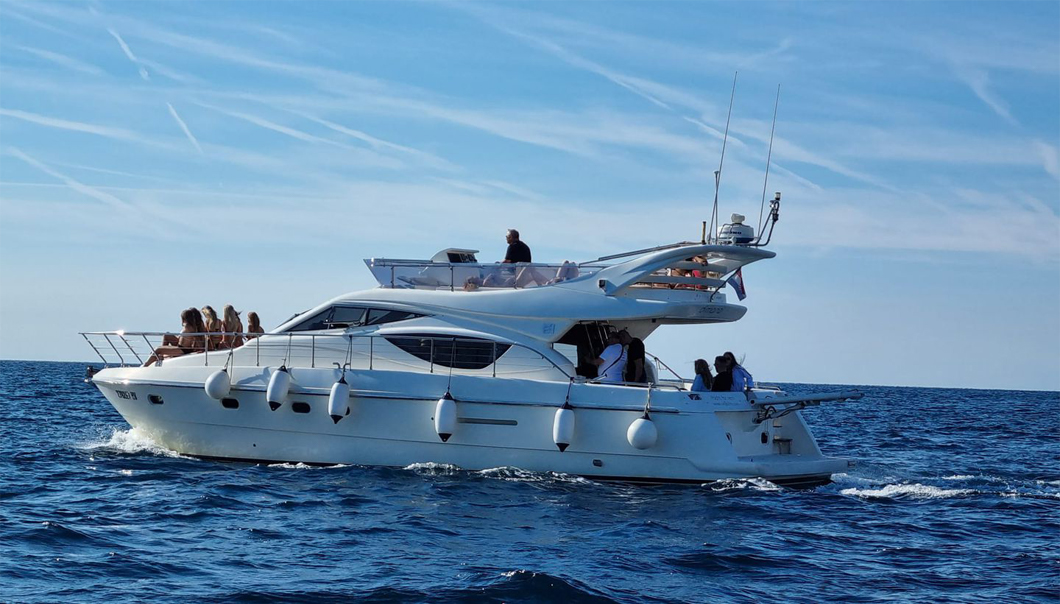
 Marine foam is exposed to some of the most demanding operating conditions. Once installed, it can be difficult to access, costly to inspect, and even more expensive to replace. Throughout the life of a vessel, foam materials must withstand prolonged exposure to sunlight, moisture, saltwater, temperature fluctuations, and constant vibration without losing performance.
To evaluate how well foam withstands these challenges, manufacturers rely on standardized testing methods developed by ASTM International. These tests measure key performance characteristics such as water absorption, UV resistance, compression properties, and long-term durability. Understanding this data helps engineers and designers select the most suitable foam materials for marine applications, ensuring reliable performance and extended service life.
Ultraviolet Resistance Testing
Continuous exposure to sunlight is one of the most challenging conditions marine foam must endure. Over time, ultraviolet (UV) radiation can cause surface hardening, discoloration, embrittlement, and cracking, ultimately compromising the foam's structural integrity and performance. For marine seating, cushioning, flotation, and structural applications, UV resistance is a critical factor in material selection.
UV durability is commonly evaluated using ASTM G154, an accelerated weathering test that uses fluorescent UV lamps to simulate the effects of natural sunlight. The test alternates between UV exposure and condensation cycles to replicate outdoor environmental conditions. After testing, changes in tensile strength, elongation, color, and surface appearance are measured to assess material degradation.
For marine foam applications, UV resistance testing provides valuable insight into three key areas:
Identifying Suitable Foam Materials
Testing helps determine which foam types perform best in exposed environments. Closed-cell materials such as XLPE and EPP generally demonstrate superior UV resistance compared to open-cell foams because their denser structure is less susceptible to surface degradation.
Evaluating Complete System Performance
In many marine seating applications, the upholstery absorbs much of the UV exposure. Marine-grade vinyl and other protective coverings can significantly extend foam life. As a result, overall product design and material construction are often just as important as the foam itself when evaluating UV durability.
Determining the Need for Additional Protection
For applications where the foam remains exposed, such as flotation devices, buoyancy components, or certain structural parts, UV testing helps determine whether protective coatings, UV stabilizers, or other treatments are necessary to achieve the desired service life.
Because marine foam is often installed in locations that are difficult to inspect, repair, or replace, understanding how a material responds to long-term UV exposure is essential for minimizing maintenance costs, maximizing durability, and ensuring reliable performance throughout the vessel’s lifespan.
Water Absorption Testing
Water absorption is one of the most critical performance factors in marine foam applications. Excessive moisture uptake can reduce buoyancy, diminish thermal insulation properties, increase component weight, and create conditions that promote mold and mildew growth. As a result, water resistance is both a performance requirement and, in some applications, a regulatory necessity.
Several ASTM standards are used to evaluate water absorption characteristics, depending on the foam type and intended application.
ASTM D3574 covers the physical and mechanical properties of flexible polyurethane foams, including density, tear strength, airflow, and other performance characteristics that influence moisture behavior.
ASTM D1056 establishes requirements for flexible closed-cell foams, including maximum water absorption limits based on weight gain or volume change. These criteria help ensure the material performs effectively in sealing, gasketing, and water-resistant applications.
ASTM C272 evaluates water absorption in structural foam cores and measures the impact of moisture ingress on mechanical properties. This test is commonly used for foam materials incorporated into composite sandwich structures, such as marine panels constructed with fiberglass skins and foam cores.
Water absorption testing provides valuable information for marine foam selection in several key areas:
Selecting the Right Foam for Wet Environments
Testing identifies materials that can maintain their performance when exposed to water. Closed-cell foams such as cross-linked polyethylene (XLPE) and expanded polyethylene (EPE) are frequently selected for marine applications because they exhibit extremely low water absorption rates and retain their physical properties even after prolonged exposure to moisture.
Evaluating Complete Product Construction
For marine seating and cushioning, water resistance depends on more than the foam alone. Upholstery materials, waterproof barriers, seam construction, and antimicrobial treatments all contribute to moisture protection. Water absorption testing helps verify that the overall product design provides adequate resistance to water intrusion.
Supporting Compliance and Safety Requirements
In flotation and buoyancy applications, water absorption directly affects long-term safety and performance. Testing data is often required to support regulatory compliance, certification programs, and buoyancy calculations, helping ensure flotation systems maintain their intended performance throughout the service life of the vessel.
Foam that absorbs excessive moisture can become heavier, lose performance, and compromise safety. Water absorption testing provides the objective data needed to select materials that will deliver reliable, long-term performance in demanding marine environments.
Vibration Attenuation Testing
Marine environments subject materials to continuous mechanical vibration from engines, wave impact, and vessel operation. Foam used in engine compartments, mounting systems, hull cavities, and noise-control applications must be capable of absorbing and dissipating this energy while maintaining its performance over years of service.
One of the primary methods used to evaluate impact and vibration performance is ASTM D1596, which measures shock-absorbing characteristics. During the test, a weighted platen is dropped onto a foam specimen, and the resulting peak acceleration is recorded. The data is used to generate a dynamic cushioning curve that illustrates how effectively the foam absorbs impact energy at specific thicknesses, densities, and static load conditions. Lower peak acceleration values indicate superior shock absorption and energy management.
Long-term durability is equally important. ASTM D3574 includes compression set testing, which measures the amount of permanent deformation a foam experiences after being subjected to a sustained load. Materials with high compression set values lose thickness over time, reducing their ability to isolate vibration and absorb shock. For marine seating, engine mounts, and other load-bearing applications, low compression set performance is essential for maintaining long-term functionality.
Vibration attenuation testing helps engineers and designers evaluate several critical factors:
Identifying Materials That Maintain Performance Under Repeated Loading
Different foam materials respond differently to continuous vibration and impact. Expanded polypropylene (EPP) is widely valued for its ability to absorb energy while retaining its shape under repeated dynamic loads. Neoprene is commonly used in isolation, sealing, and mounting applications where vibration control and chemical resistance are both required. Dynamic cushioning data allows direct comparison of material performance under specific operating conditions.
Assessing Long-Term Durability
Compression set testing reveals how well a foam maintains its original thickness and vibration-dampening properties over time. Materials that permanently compress under sustained loads can experience reduced effectiveness, leading to increased maintenance requirements and diminished performance.
Optimizing Thickness and Density Selection
The effectiveness of a foam is directly influenced by its thickness, density, and the loads it is expected to support. Dynamic cushioning curves provide valuable data that helps engineers select the appropriate material configuration for real-world operating conditions rather than relying on material specifications alone.
In marine applications, uncontrolled vibration can accelerate equipment wear, increase noise levels, and contribute to passenger and crew fatigue. Vibration attenuation testing provides the performance data needed to select foam materials that deliver reliable energy absorption, long-term durability, and consistent performance throughout the life of the vessel.
What Testing Means for Material Specification
No single foam material excels in every performance category. Closed-cell foams such as XLPE and EPE offer outstanding water resistance and buoyancy retention, making them ideal for wet environments. However, they may not be the best choice for applications exposed to continuous dynamic loading. Materials such as EPP provide excellent impact absorption and long-term resilience under repeated stress but often come at a higher material cost. Effective material specification requires balancing performance requirements, environmental conditions, regulatory considerations, and budget constraints.
ASTM test data provides the objective information needed to make those decisions. By evaluating factors such as UV resistance, water absorption, vibration attenuation, compression set, and durability, engineers can identify the foam material best suited for each marine application.
Since 2015, TOPSUN has supplied high-performance foam solutions to the marine industry. Our extensive selection of marine-grade foam materials allows us to match the right foam to your specific performance requirements, support compliance and certification needs, and fabricate custom components to fit complex vessel designs.
Whether you are designing flotation systems, marine seating, insulation components, or vibration-control solutions, our team can help you identify the most effective material for the job.
Contact TOPSUN today to discuss your marine application and find the right foam solution for your vessel.

 English
 العربية
 Français
 Русский
 Español
 Português
 Deutsch
 italiano
 日本語
日本語 한국어
한국어 Nederlands
 Tiếng Việt
 ไทย
ไทย Polski
 Türkçe
 ភាសាខ្មែរ
 Bahasa Melayu
 ဗမာစာ
ဗမာစာ தமிழ்
தமிழ் Filipino
 Bahasa Indonesia
 magyar
 Română
 Čeština
 қазақ
қазақ Српски
 हिन्दी
 فارسی
فارسی Kiswahili
 Norsk
Norsk Svenska
 українська
 Ελληνικά
 Suomi
Suomi עברית
עברית Latine
 Dansk
Dansk اردو
اردو বাংলা
বাংলা Afrikaans
 नेपाली
 Oʻzbekcha
 Azərbaycan dili
 Български
 guarani
 Hausa
Hausa Kurdî
Kurdî Kurdî
Kurdî Lietuvių
 Wikang Tagalog
 isiZulu


 Marine foam is exposed to some of the most demanding operating conditions. Once installed, it can be difficult to access, costly to inspect, and even more expensive to replace. Throughout the life of a vessel, foam materials must withstand prolonged exposure to sunlight, moisture, saltwater, temperature fluctuations, and constant vibration without losing performance.
