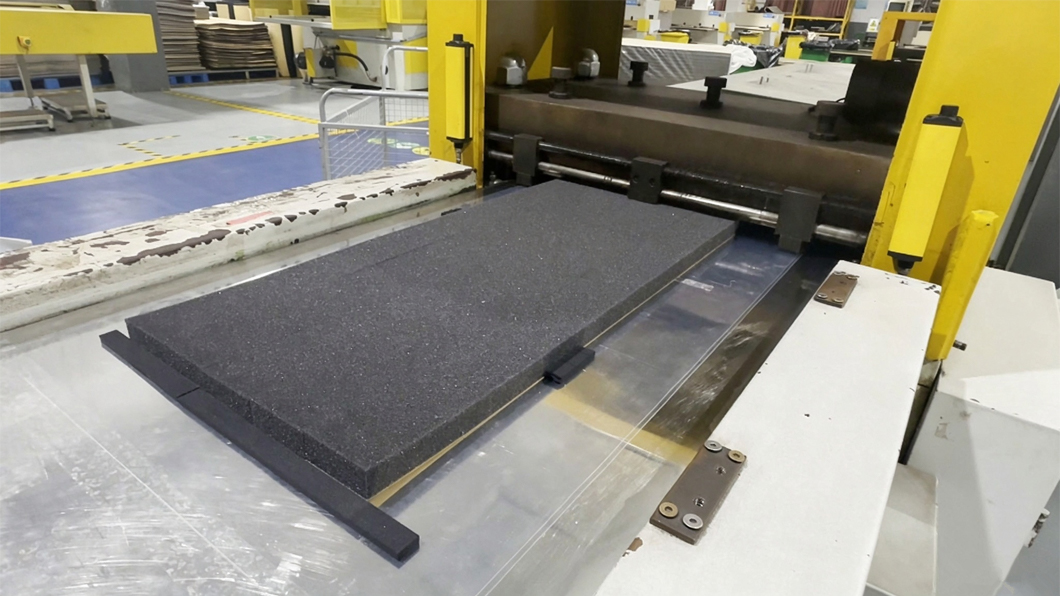
According to Market Research Future, the global packaging foams market is expected to grow from $19.7 billion in 2025 to $34.23 billion by 2035. This expansion reflects several forces reshaping the packaging industry, including rising shipping costs, growing parcel volumes, and evolving state-level packaging regulations. As manufacturers adapt to these changes, four key foam packaging trends are emerging for 2027. This article explores these developments and how TOPSUN's custom foam solutions can help businesses stay ahead of industry demands.
Right-Sized Packaging Materials
Oversized cartons drive up shipping costs. Carriers calculate freight charges based on both package weight and dimensions, meaning unused space can increase costs without adding value. Excessive void fill also consumes additional materials while providing limited protection. Right-sized packaging minimizes dimensional weight, reduces material waste, and helps keep products secure throughout transit.
Effective packaging design starts with understanding the product and selecting the right foam materials. Different foam types offer distinct performance characteristics, so balancing cushioning, structural support, weight, and cost is essential. Foam lamination allows two or more materials to be combined to meet specific performance requirements. For example, a firmer foam layer can support a heavy base, while a softer layer protects delicate or finished surfaces. Precision-cut inserts tailored to product dimensions allow cartons to fit more closely, eliminating unnecessary space and reducing the need for additional void fill. Custom insert designs can also accommodate products with multiple components, keeping every part organized and protected.
Customer-Ready Components for E-Commerce
As direct-to-consumer shipping continues to expand, packaging must do more than protect products during delivery. It also plays an important role in the customer experience. Unlike palletized freight, parcel shipments typically undergo more frequent handling, sorting, and impact events. Packaging must withstand these conditions while creating a professional and positive first impression when customers open the box.
Closed-cell materials such as expanded polyethylene (EPE) foam provide excellent cushioning, recover quickly after compression, and resist moisture during transportation. Their lightweight structure helps reduce overall package weight, optimize shipping dimensions, and improve handling ergonomics. Precision-cut foam inserts with clean, product-specific cavities keep individual components securely positioned while creating a neat, organized presentation. For premium products, Zotefoams materials are another option, offering custom color possibilities that can complement brand identity and enhance packaging aesthetics.
Beyond foam fabrication, TOPSUN also provides kitting and sub-assembly services to streamline packaging operations. Custom inserts and components can arrive pre-assembled and ready for final pack-out, reducing manual handling, eliminating additional assembly steps, and integrating more efficiently into existing manufacturing and fulfillment workflows.
Precision-Engineered Protective Packaging
For manufacturers shipping sensitive electronics, medical devices, and other high-value products, even minor impacts and continuous transit vibrations can cause costly damage. Choosing the right foam material is essential to providing consistent cushioning, minimizing movement, and protecting products at every contact point throughout shipping, storage, and handling.
Material selection is the foundation of precision protective packaging:
●Cross-Linked Polyethylene (XLPE): Its uniform closed-cell structure supports precise dimensional tolerances and consistent cushioning performance. Available in various densities, XLPE offers excellent water and chemical resistance, along with reliable shock absorption.
●Polyurethane (PU) Foam: Its ability to conform to complex shapes makes PU foam suitable for protecting lightweight, fragile components and dampening vibration. It can be formulated in flexible or rigid grades to meet different application requirements.
●Beaded Expanded Polyethylene (EPE): EPE provides a smooth, Class A surface finish for protecting abrasion-sensitive components, including automotive parts. Its consistent cushioning properties help absorb impact and protect products during shipping, storage, and handling.
●Extruded Polyethylene (PE): Available in a broad range of densities and thicknesses, PE foam delivers dependable cushioning and protective performance for diverse packaging applications.
Precision fabrication ensures every insert fits as intended. CNC routing and waterjet cutting translate digital designs into accurately shaped cavities, allowing each insert to match the product's dimensions and maintain consistent quality across production runs. With comprehensive in-house fabrication capabilities, TOPSUN can handle projects ranging from straightforward protective inserts to highly complex custom packaging designs.
Our facility maintains an inventory of more than 90 foam materials, helping shorten material sourcing and production lead times. TOPSUN's customer service and engineering teams work closely with you to evaluate application requirements, recommend suitable foam materials, and develop custom packaging solutions. From initial material selection to final fabrication, we deliver protective packaging designed to meet your exact specifications.
Packaging Solutions Designed for EPR Requirements
Packaging regulations are moving beyond policy discussions and into active enforcement. Extended Producer Responsibility (EPR) laws shift the financial and operational responsibility for packaging waste management from taxpayers to manufacturers and other producers. Businesses selling packaged products in states with EPR programs may be required to register, report packaging volumes, and pay fees based on their packaging materials and usage.
In states where EPR programs are already being implemented, fees can vary depending on the types of packaging materials used and the quantities placed on the market. Manufacturers and shippers can use the EPR Fee Check website to review potential packaging fees and better understand their financial obligations.
TOPSUN helps manufacturers reduce packaging waste and support more sustainable packaging strategies in two key ways:
●Using Less Material: Custom foam inserts designed around exact product dimensions eliminate unnecessary void space, reduce carton sizes, and minimize overall packaging material consumption.
●Preventing Product Damage: Better-fitting protective packaging reduces the risk of damage during transportation. Fewer damaged products mean fewer replacements, return shipments, and additional packaging materials, helping lower the overall environmental footprint.
Durable packaging is a form of waste prevention. By combining precise product fit with reliable cushioning and impact protection, manufacturers can reduce unnecessary material use, prevent shipping damage, and move toward more sustainable packaging practices while preparing for evolving EPR requirements.
Preparing Your Packaging for 2027
These four emerging trends highlight a common direction for the packaging industry. Manufacturers are under increasing pressure to reduce material consumption, protect high-value products, meet the demands of direct-to-consumer shipping, and adapt to evolving packaging regulations. Achieving these goals starts with selecting the right foam materials and fabrication processes for each application.
With more than 40 years of experience in foam manufacturing and fabrication, TOPSUN provides customized foam packaging solutions to meet diverse industry requirements. Whether you want to optimize shipping dimensions, improve product protection, reduce packaging waste, or prepare for changing regulatory standards, our team can help you develop the right material selection and packaging design.
Contact the TOPSUN team to evaluate your current packaging and discover opportunities to improve protection, shipping efficiency, and sustainability as you prepare for 2027.

 English
 العربية
 Français
 Русский
 Español
 Português
 Deutsch
 italiano
 日本語
 한국어
 Nederlands
 Tiếng Việt
 ไทย
 Polski
 Türkçe
 ភាសាខ្មែរ
 Bahasa Melayu
 ဗမာစာ
 தமிழ்
 Filipino
 Bahasa Indonesia
 magyar
 Română
 Čeština
 қазақ
 Српски
 हिन्दी
 فارسی
 Kiswahili
 Norsk
 Svenska
 українська
 Ελληνικά
 Suomi
 עברית
 Latine
 Dansk
 اردو
 বাংলা
 Afrikaans
 नेपाली
 Oʻzbekcha
 Azərbaycan dili
 Български
 guarani
 Hausa
 Kurdî
 Kurdî
 Lietuvių
 Wikang Tagalog
 isiZulu


