Adhesive Closed Cell EPDM Foam Tape for Weather-Resistant Sealing
Topsun adhesive closed cell EPDM foam tape is a flexible sponge rubber sealing material for HVAC equipment, construction joints, automotive assemblies, appliances, machinery, doors, panels and custom industrial gaskets.
The closed-cell structure provides very low water absorption and helps limit the movement of water and air through the foam. When the correct density, thickness and compression are selected, EPDM foam tape can provide a conformable sealing interface between mating components.
EPDM rubber also provides useful resistance to ageing, ozone, UV exposure and weathering, making it suitable for many indoor and outdoor sealing applications.
Topsun can supply closed cell EPDM foam as rolls, strips, tapes, sheets, pads, gaskets, blocks and custom die-cut parts. Pressure-sensitive adhesive and release liner can be applied according to the bonding surface and assembly requirements.
Request EPDM Foam Tape Quote
Closed Cell EPDM Foam Tape Product Information
| Property | Product Information |
| Material | EPDM Sponge Rubber Foam |
| Cell Structure | Closed Cell |
| Grades | 9008 / 9010 / 9015 / 9016 |
| Listed Density Results | 110 / 130±15 / 150±15 / 160±15 kg/m³ |
| Hardness | Shore C 7 / 10±3 / 15±3 / 25±5 |
| Water Absorption | Listed values ≤0.01% |
| Supply Form | Roll / Strip / Tape / Sheet / Pad / Gasket / Block / Die-Cut Part |
| Adhesive Options | With or Without Adhesive; Single-Side or Double-Side Adhesive Can Be Evaluated |
| Typical Applications | HVAC Seals, Construction Joints, Automotive Seals, Equipment Gaskets, Appliance Seals and Weather-Resistant Interfaces |
| Custom Processing | Cutting, Slicing, Lamination, Laser Cutting, Die Cutting, Compression Molding, Engraving, Printing and Adhesive Backing |
Key Features of Closed Cell EPDM Foam Tape
Closed-cell structure: helps limit water absorption and supports environmental sealing under suitable compression.
Low water absorption: current listed values are below 0.01% for the tested grades.
Weather resistance: EPDM provides useful resistance to ozone, UV exposure and ageing.
Compressible sealing: suitable grades can conform to joints, gaps and irregular mating surfaces.
Multiple hardness levels: allows selection according to required compression and sealing force.
Adhesive backing: pressure-sensitive adhesive and release liner can simplify positioning during assembly.
Vibration cushioning: sponge rubber can provide cushioning between equipment and adjacent components.
Flexible converting: available as rolls, strips, tapes, gaskets and custom die-cut shapes.
Closed Cell EPDM Foam Technical Specifications
The following values reproduce the current listed technical information for grades 9008, 9010, 9015 and 9016. Final grade selection should consider density, hardness, foam thickness, compression, installation gap, environmental exposure and sealing requirements.
| EPDM Foam Technical Specification |
| Testing Item | Reference / Requirement | Unit | 9008 | 9010 | 9015 | 9016 | Source-Listed Block Sizes |
| Density | 100±15 | kg/m³ | 110 | 130±15 | 150±15 | 160±15 | 1000 × 2000 × 50 mm
1000 × 2000 × 40 mm
1000 × 2000 × 50 mm
1000 × 2000 × 45 mm |
| Tensile Strength | >400 | kPa | 560 | >400 | >400 | >400 |
| Hardness | 8 | Shore C | 7 | 10±3 | 15±3 | 25±5 |
| Compressive Strength | / | kPa | 230±10 | / | / | / |
| Elongation | >150 | % | 203 | >150 | >150 | >150 |
| Compression Deformation CT | <25 | % Relative to Original Thickness | 22.4 | <0.3 | <0.3 | <0.03 |
| Compression Deformation CD | <50 | % Relative Compression | 45.5 | <0.3 | <0.3 | <0.03 |
| Water Absorption Rate | <0.01 | % | 0.009 | <0.01 | <0.01 | <0.01 |
| Heat Shrinkage Rate | / | % | / | <4 | <4 | <4 |
| Ozone Ageing Test | / | / | / | No Crack | No Cracks | No Cracks |
| 25% Compression Load | / | kPa | / | 230±10 | 240±10 | 260±10 |
The values above reproduce the current product data. Confirm the selected grade and applicable test requirements for your project before final approval.
How Closed Cell EPDM Foam Creates a Seal
EPDM foam tape is normally installed between two mating surfaces. When the assembly closes, the foam is compressed and conforms to surface variation, helping fill the joint and reduce paths through which water, air, dust or light may pass.
The correct foam thickness must be matched to the actual gap. Density and hardness influence the compression force, while the final joint design determines how much pressure is applied to the foam.
Sealing performance should therefore be evaluated as part of the complete assembly rather than from the foam material alone.
| Sealing Factor | Why It Matters |
| Foam Thickness | Must accommodate the actual gap and expected dimensional variation. |
| Density | Influences firmness, mechanical support and compression behavior. |
| Hardness | Affects the force required to compress the foam. |
| Installed Compression | Determines how closely the foam conforms to mating surfaces. |
| Surface Geometry | Flatness, corners, joints and surface irregularities affect sealing contact. |
| Water and Weather Exposure | Exposure conditions should be defined before final material selection. |
| Adhesive System | Must be compatible with the substrate and service environment. |
Closed Cell EPDM Foam Tape for Water-Resistant Sealing
The current EPDM grades list very low water absorption values, including 0.009% for grade 9008 and values below 0.01% for the other listed grades.
This closed-cell structure makes EPDM foam suitable for evaluation in joints requiring resistance to water migration and environmental exposure.
A finished water-resistant seal still depends on continuous foam contact, compression, corners, joints, fasteners, adhesive performance and the complete assembly design.
Adhesive-Backed EPDM Foam Tape
Pressure-sensitive adhesive can be laminated to closed cell EPDM foam to simplify positioning during production and installation.
Depending on the project, single-side or double-side adhesive constructions can be evaluated together with suitable release liners.
Adhesive performance depends on the exact bonding substrate, surface condition, installation temperature, operating temperature, moisture exposure and mechanical load.
Choosing Adhesive Backing for Different Surfaces
| Bonding Surface | Information to Provide |
| Bare or Coated Metal | Identify the metal and any plating, coating or surface treatment. |
| Painted Metal | Provide paint or coating information where available. |
| Plastic | Identify ABS, PP, PE or other plastic type where known. |
| Glass | Provide installation and environmental conditions. |
| Textured Surface | Surface roughness should be identified because it can reduce adhesive contact area. |
| Other Substrates | Provide material details or a substrate sample where practical. |
Closed Cell EPDM Foam Tape Applications
HVAC Seals
Closed cell EPDM foam tape can be evaluated for HVAC housings, equipment interfaces, access panels and other joints requiring compressible sealing and vibration cushioning.
Construction Joints
EPDM foam strips and tapes can be used in suitable construction interfaces, panels, doors and joints requiring weather-resistant cushioning and sealing.
Automotive Seals
EPDM foam can be converted into strips, pads, gaskets and tapes for suitable automotive interfaces requiring environmental sealing, cushioning or vibration isolation.
Appliance Seals
Custom EPDM tape and gasket parts can provide compressible interfaces around suitable appliance panels, housings and assemblies.
Machinery and Equipment
Closed cell EPDM foam can provide sealing, cushioning and vibration isolation between suitable machinery panels, covers and equipment components.
Doors and Access Panels
Foam tape can be installed around suitable door and panel interfaces where a compressible environmental seal is required.
Closed Cell EPDM Foam Tape Video
What Is Closed Cell EPDM Foam?
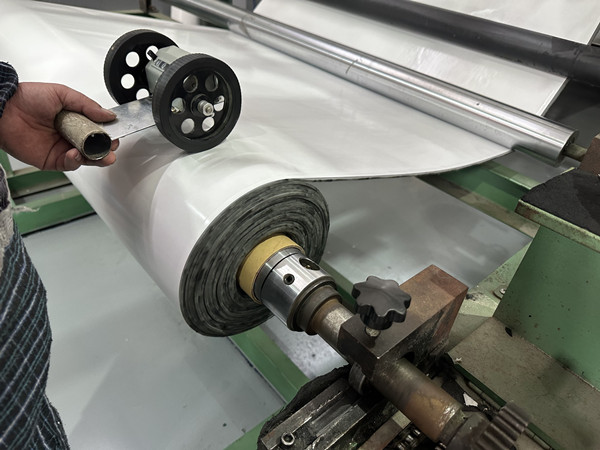
EPDM stands for ethylene propylene diene monomer. EPDM foam is a synthetic sponge rubber material used in sealing, cushioning and protective applications.
In closed cell EPDM foam, the internal cells are predominantly isolated from one another. This structure limits water absorption and makes the material particularly useful for compressible environmental seals.
The current product information lists thickness options from 0.5 mm to 40 mm. EPDM can be supplied as sheets, rolls, strips, adhesive tapes, blocks, seals and custom gaskets.
Final sealing performance depends on foam grade, thickness, hardness, installed compression, joint geometry, adhesive backing and environmental exposure.
Closed Cell vs. Open Cell EPDM Foam
| Comparison | Closed Cell EPDM | Open Cell EPDM |
| Cell Structure | Predominantly isolated cells | Interconnected cells |
| Water Absorption | Very low for current listed grades | Higher than closed-cell material |
| Primary Function | Environmental sealing, weather stripping and gasketing | Cushioning, acoustic absorption, anti-rattle and gap filling |
| Water-Resistant Sealing | Generally more suitable | Not normally the first choice |
| Typical Products | Sealing tape, gasket, weather strip, pad and die-cut seal | Cushioning pad, acoustic foam, anti-rattle strip and vibration pad |
How to Select EPDM Foam Density and Hardness
| Grade | Listed Density | Shore C Hardness | 25% Compression Load |
| 9008 | 110 kg/m³ | 7 | Not listed in current 25% compression row |
| 9010 | 130±15 kg/m³ | 10±3 | 230±10 kPa |
| 9015 | 150±15 kg/m³ | 15±3 | 240±10 kPa |
| 9016 | 160±15 kg/m³ | 25±5 | 260±10 kPa |
Softer grades can require less force to conform around a joint, while firmer grades can provide greater resistance to compression. The appropriate grade depends on the joint gap, available closing force and required sealing performance.
Custom EPDM Foam Tape, Strip and Gasket Options
| Customization | Available Options |
| Grade | Multiple density and hardness grades according to compression and sealing requirements. |
| Thickness | Current product information lists thickness options from 0.5 mm to 40 mm. |
| Tape Width | Custom strip and tape widths can be evaluated according to finished-part requirements. |
| Length | Roll and strip lengths can be evaluated according to the selected specification. |
| Adhesive | With or without adhesive; single-side or double-side adhesive constructions can be evaluated. |
| Release Liner | Selected according to adhesive and converting requirements. |
| Finished Shape | Tape, strip, gasket, pad, block and custom die-cut part. |
| Drawing-Based Conversion | Custom components can be evaluated from drawings, CAD data, dimensions or physical samples. |
Send Your EPDM Gasket Drawing
How to Specify Closed Cell EPDM Foam Tape
| Project Information | Details to Provide |
| Application | HVAC, automotive, construction, appliance, machinery or another sealing application. |
| Gap Size | Provide minimum, nominal and maximum gap where available. |
| Foam Thickness | Specify uncompressed tape thickness. |
| Density / Hardness | Specify grade or required compression characteristics if known. |
| Sealing Requirement | Describe water, air, dust or weather exposure relevant to the project. |
| Tape Width / Part Dimensions | Provide required tape, strip, gasket or finished component dimensions. |
| Bonding Substrate | Identify the metal, plastic, glass, painted or coated surface. |
| Adhesive Requirement | Specify no adhesive, single-side adhesive or double-side adhesive. |
| Operating Conditions | Provide temperature, moisture, outdoor exposure and relevant environmental conditions. |
| Quantity | Provide sample, trial and estimated production quantities. |
Topsun Foam Processing Capabilities
Cutting
Foam sheets, blocks, rolls, strips and finished components can be cut according to customer dimensions.
Slicing
Foam material can be sliced according to required thickness specifications.
Lamination
Hot-melt film lamination, flame lamination and pressure-sensitive adhesive lamination can be evaluated for compatible materials.
Laser Cutting
Suitable customized foam shapes can be cut from digital drawings without dedicated cutting dies.
Die Cutting
Dedicated tooling can be used for repeated production of foam gaskets, seals, pads and custom parts.
Compression Molding
Compression molding can be evaluated for suitable three-dimensional foam and foam-composite parts requiring defined geometry.
Engraving
Engraving can be used for suitable protective inserts and custom foam components.
Silk-Screen Printing
Logos, identification marks and suitable graphics can be printed on compatible foam surfaces.
Adhesive Backing
Adhesive and release liner can be laminated to suitable EPDM foam to produce self-adhesive tapes, strips, gaskets and pads.
About Topsun Foam
Topsun supplies foam materials and custom converted foam components for sealing, cushioning, insulation, packaging and industrial applications.
Customers can provide drawings, samples, dimensions, density, hardness, installation gap, sealing requirements and bonding-surface information for material and processing evaluation.
Our facility is located in Changzhou City, Jiangsu Province, China, with convenient access to Shanghai Port for international shipments.
Adhesive Closed Cell EPDM Foam Tape FAQ
What is adhesive closed cell EPDM foam tape?
It is closed cell EPDM sponge rubber supplied with pressure-sensitive adhesive and release liner. It is used for compressible sealing, gasketing, weather-resistant interfaces, cushioning and vibration isolation.
What is closed cell EPDM foam tape used for?
Typical applications include HVAC seals, construction joints, automotive interfaces, appliance seals, machinery gaskets, access panels, weather strips and custom die-cut sealing components.
Is closed cell EPDM foam tape waterproof?
The current closed cell EPDM grades have very low listed water absorption and can support water-resistant sealing under suitable compression. Final sealing performance depends on foam grade, compression, joint design, corners, adhesive and installation conditions.
What is the water absorption of the EPDM foam?
The current technical table lists 0.009% for grade 9008 and values below 0.01% for grades 9010, 9015 and 9016.
What density grades are available?
The current technical table lists grade 9008 at 110 kg/m³ and grades 9010, 9015 and 9016 at 130±15, 150±15 and 160±15 kg/m³ respectively.
What hardness options are available?
Current listed Shore C results are 7 for 9008, 10±3 for 9010, 15±3 for 9015 and 25±5 for 9016.
What is the 25% compression load?
The current table lists 230±10 kPa for grade 9010, 240±10 kPa for 9015 and 260±10 kPa for 9016 in the 25% compression-load row. No corresponding value is listed for grade 9008 in that row.
Can EPDM foam tape be used outdoors?
EPDM rubber provides useful resistance to ageing, ozone, UV exposure and weathering. Final suitability should still be evaluated according to temperature, moisture, mechanical loading and the adhesive system.
Can EPDM foam tape be used for HVAC sealing?
Yes, suitable grades can be evaluated for HVAC housings, access panels and equipment interfaces requiring a compressible foam seal.
Can the tape width and thickness be customized?
Yes. Tape width, foam thickness, strip length and finished geometry can be evaluated according to customer requirements.
Can you supply single-sided adhesive EPDM foam?
Yes. Single-side adhesive constructions can be evaluated together with the required release liner and bonding substrate.
Can you supply double-sided adhesive EPDM foam?
Double-side adhesive constructions can also be evaluated according to the installation method, bonding surfaces and finished component requirements.
Can Topsun make custom EPDM foam gaskets?
Yes. EPDM foam can be cut, sliced, laminated, adhesive backed, laser cut and die cut into gaskets, seals, pads, strips and custom parts according to drawings or samples.
What is the difference between closed cell and open cell EPDM?
Closed cell EPDM is generally more suitable for environmental sealing and moisture-resistant gasket applications. Open cell EPDM is generally softer and is more commonly selected for cushioning, sound absorption, anti-rattle and low-compression gap filling.
How do I select the correct EPDM foam tape?
Confirm the joint gap, foam thickness, density, hardness, required compression, water or weather exposure, operating conditions, tape dimensions, adhesive requirement and bonding substrate.
What information should I provide for a quotation?
Provide the application, required thickness, width, length, density or hardness if known, joint gap, sealing requirement, adhesive type, bonding substrate, environmental conditions, drawing or sample and estimated quantity.
How can I request EPDM foam tape samples?
Send your requirements to july@topsunfoam.com, including foam thickness, density, hardness, tape width, adhesive requirement, bonding surface, application and estimated quantity.
Get EPDM Foam Tape Sample & Quote

 English
 العربية
 Français
 Русский
 Español
 Português
 Deutsch
 italiano
 日本語
 한국어
 Nederlands
 Tiếng Việt
 ไทย
 Polski
 Türkçe
 ភាសាខ្មែរ
 Bahasa Melayu
 ဗမာစာ
 தமிழ்
 Filipino
 Bahasa Indonesia
 magyar
 Română
 Čeština
 қазақ
 Српски
 हिन्दी
 فارسی
 Kiswahili
 Norsk
 Svenska
 українська
 Ελληνικά
 Suomi
 עברית
 Latine
 Dansk
 اردو
 বাংলা
 Afrikaans
 नेपाली
 Oʻzbekcha
 Azərbaycan dili
 Български
 guarani
 Hausa
 Kurdî
 Kurdî
 Lietuvių
 Wikang Tagalog
 isiZulu