6–8 lb/ft³ Closed Cell EPDM Foam Roll for Sealing and Gaskets
Topsun supplies closed cell EPDM foam roll for weather-resistant sealing, HVAC systems, construction joints, automotive gaskets, equipment protection, vibration cushioning and custom industrial foam conversion.
The 6–8 lb/ft³ designation represents an approximate density range of 96–128 kg/m³. It is commonly selected where buyers require a medium-density closed cell sponge rubber with a balance of flexibility, compression resistance, sealing performance and convertibility.
The closed-cell structure limits water absorption and helps reduce the movement of air and moisture through the foam. EPDM rubber also provides useful resistance to ageing, ozone, UV exposure and outdoor weather conditions.
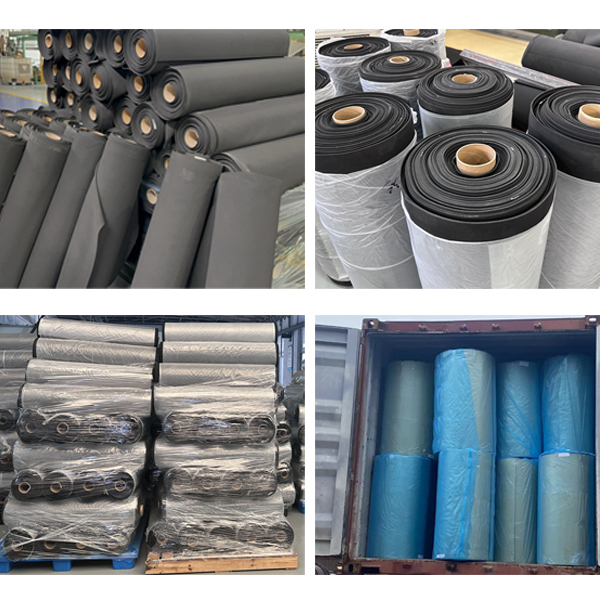
Material can be supplied as full rolls or further converted into sheets, strips, sealing tapes, pads, gaskets and custom die-cut components. Pressure-sensitive adhesive backing and release liner can also be added according to assembly requirements.
Request 6–8 lb EPDM Foam Roll Quote
6–8 lb Closed Cell EPDM Foam Roll Product Information
| Item | Product Information |
| Product Name | 6–8 lb/ft³ Closed Cell EPDM Foam Roll |
| Material | Closed Cell EPDM Sponge Rubber Foam |
| Brand | TOPSUN |
| Nominal 6–8 lb Density | Approximately 96–128 kg/m³ |
| General Listed Density Range | 50–150 kg/m³; additional grades are listed in the technical table below |
| Thickness | 1–50 mm |
| Available Forms | Rolls, Sheets, Blocks, Strips, Gaskets, Pads and Adhesive Tapes |
| Adhesive Backing | Optional Pressure-Sensitive Adhesive with Release Liner |
| Typical Applications | Weather Sealing, HVAC, Construction, Automotive Gaskets, Equipment Seals and Vibration Cushioning |
| Custom Processing | Cutting, Slicing, Lamination, Die Cutting, Laser Cutting, Compression Molding, Engraving, Printing and Adhesive Backing |
What Does 6–8 lb/ft³ EPDM Foam Mean?
Foam density is commonly specified in pounds per cubic foot in North American markets. A density of 6–8 lb/ft³ corresponds to approximately 96–128 kg/m³.
Density influences foam firmness, support, compression behavior and the amount of force required to compress a gasket or sealing strip. Density alone, however, does not determine sealing performance.
Buyers should also consider foam hardness, thickness, compression load, installation gap, compression recovery and environmental exposure when selecting an EPDM foam roll.
| Density Reference | Approximate Metric Equivalent | Selection Note |
| 6 lb/ft³ | Approx. 96 kg/m³ | Lower end of the nominal 6–8 lb range |
| 7 lb/ft³ | Approx. 112 kg/m³ | Close to the listed 9008 grade density |
| 8 lb/ft³ | Approx. 128 kg/m³ | Close to the listed 9010 nominal density |
Actual production density should be confirmed according to the selected grade and applicable tolerance.
Closed Cell EPDM Foam Roll Features
Closed-cell structure: helps limit water absorption and supports air and moisture sealing when properly compressed.
Weather resistance: EPDM provides useful resistance to ozone, UV exposure, ageing and outdoor weather conditions.
Multiple density and hardness grades: allows selection according to sealing pressure, support and compression requirements.
Low water absorption: current listed technical grades show very low water absorption values.
Compression performance: suitable grades can conform around joints and irregular mating surfaces.
Roll-stock format: suitable for slitting, strip cutting and volume conversion.
Optional adhesive backing: PSA and release liner can simplify positioning during installation.
Custom fabrication: can be converted into sealing strips, gaskets, pads and custom die-cut parts.
Closed Cell EPDM Foam Technical Specifications
The current product data includes four EPDM grades: 9008, 9010, 9015 and 9016. Grades 9008 and 9010 are closest to the nominal 6–8 lb/ft³ density range, while 9015 and 9016 provide higher-density alternatives for applications requiring different firmness and compression characteristics.
| EPDM Foam Technical Specification |
| Testing Item | Testing Standard / Unit | Testing Results | Block Size |
| 9008 | 9010 | 9015 | 9016 |
| Density | 100±15 | kg/m³ | 110 | 130±15 | 150±15 | 160±15 | 1000 × 2000 × 50 mm
1000 × 2000 × 40 mm
1000 × 2000 × 50 mm
1000 × 2000 × 45 mm |
| Tensile Strength | >400 | kPa | 560 | >400 | >400 | >400 |
| Hardness | 8 | Shore C | 7 | 10±3 | 15±3 | 25±5 |
| Compressive Strength | — | kPa | 230±10 | — | — | — |
| Elongation | >150 | % | 203 | >150 | >150 | >150 |
| Compression Deformation | <25 | Relative to Original Thickness (CT) % | 22.4 | <0.3 | <0.3 | <0.03 |
| <50 | Relative Compression (CD) % | 45.5 |
| Water Absorption Rate | <0.01 | % | 0.009 | <0.01 | <0.01 | <0.01 |
| Heat Shrinkage Rate | — | % | — | <4 | <4 | <4 |
| Ozone Aging Test | — | / | — | No Crack | No Cracks | No Cracks |
| 25% Compression Load | — | kPa | — | 230±10 | 240±10 | 260±10 |
The technical values above reproduce the currently listed product data. Confirm the final production grade, density tolerance, thickness and required test conditions before approval for a specific application.
How to Choose Between 9008, 9010, 9015 and 9016
| Grade | Listed Density | Shore C | 25% Compression Load | Selection Position |
| 9008 | 110 kg/m³ | 7 | Not listed in current row | Within the nominal 6–8 lb/ft³ range and relatively soft |
| 9010 | 130±15 kg/m³ | 10±3 | 230±10 kPa | Near the upper end of the nominal 6–8 lb/ft³ range |
| 9015 | 150±15 kg/m³ | 15±3 | 240±10 kPa | Higher-density option for increased firmness |
| 9016 | 160±15 kg/m³ | 25±5 | 260±10 kPa | Higher-density and firmer option |
Closed Cell EPDM Foam Roll for Weather Sealing
Closed cell EPDM is widely used where a compressible foam must remain exposed to outdoor weather, ozone, sunlight and moisture.
When installed under suitable compression, the closed-cell structure helps fill gaps between mating surfaces and reduce paths for air and moisture migration.
Finished sealing performance depends on foam thickness, density, hardness, compression level, joint geometry, corners, fasteners, adhesive system and installation conditions.
Low Water Absorption for Sealing Applications
The current technical data lists a water absorption result of 0.009% for grade 9008 and values below 0.01% for grades 9010, 9015 and 9016.
These low listed values support use of the material in suitable moisture-resistant gaskets, weather seals, HVAC interfaces and construction joints.
The foam material alone does not determine the water-tightness of a finished assembly. Compression, continuity of the gasket, corners and joint design should also be evaluated.
EPDM Foam Roll for Slitting and Strip Conversion
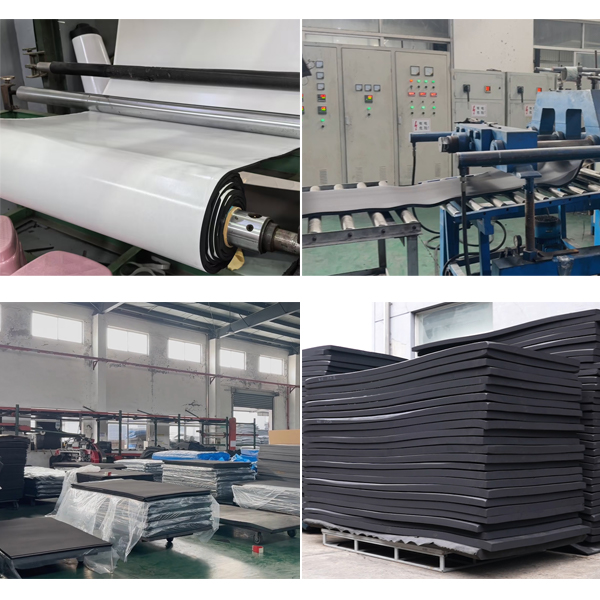
Roll stock is suitable for converters and OEM manufacturers that require continuous EPDM foam for repeated slitting, strip production and downstream gasket fabrication.
Buyers can specify required foam thickness, finished strip width, density, hardness and downstream processing requirements.
Strips can also be laminated with pressure-sensitive adhesive and release liner before being converted into weather strips, sealing tapes, pads and custom gasket components.
Adhesive-Backed Closed Cell EPDM Foam Roll
Pressure-sensitive adhesive can be laminated to suitable EPDM foam roll stock to simplify placement during manufacturing and installation.
Adhesive-backed material can be slit into tape or converted into pads, sealing strips and custom die-cut gaskets.
Adhesive selection should consider the actual bonding substrate, surface condition, installation temperature, service temperature, moisture exposure and mechanical load.
Applications of Closed Cell EPDM Foam Roll
| Application | Typical Function |
| HVAC Equipment | Compressible sealing, equipment interfaces and vibration cushioning. |
| Construction Joints | Weather-resistant sealing strips, joint cushioning and gap sealing. |
| Glazing Interfaces | Compressible spacer or sealing components where suitable for the assembly. |
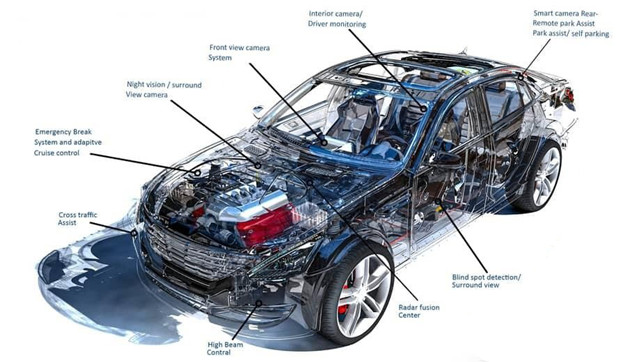
| Automotive | Gaskets, sealing strips, vibration pads and suitable interior or exterior interfaces. |
| Appliances | Panel seals, vibration cushions and protective interfaces. |
| Machinery | Equipment gaskets, pads, panel seals and vibration isolation. |
| Protective Packaging | Shock cushioning, surface protection and protective pads. |
Closed Cell EPDM Foam Roll Video
Why Choose EPDM Foam for Outdoor Sealing?
EPDM rubber is particularly useful in outdoor applications because of its resistance to ozone, UV exposure, ageing and changing weather conditions.
The closed-cell sponge structure adds low water absorption and compressibility, allowing suitable grades to be used in weather seals, equipment interfaces, HVAC assemblies, construction joints and gasket systems.
For long-term sealing projects, density alone should not determine the foam grade. Compression load, recovery, hardness, thickness, joint geometry and environmental conditions must also be considered.
How to Select Closed Cell EPDM Foam Roll
| Selection Factor | Information to Confirm |
| Density | Confirm whether the project specifically requires 6–8 lb/ft³ or another density grade. |
| Hardness | Determine the required firmness and available closing force. |
| Thickness | Match foam thickness to the actual installation gap. |
| Installed Compression | Confirm how much the foam will be compressed in the assembled joint. |
| Sealing Requirement | Identify water, air, dust or weather exposure relevant to the application. |
| Operating Environment | Provide temperature, UV, ozone, moisture and other relevant exposure conditions. |
| Roll or Strip Dimensions | Provide required width, length and finished format. |
| Adhesive Requirement | Identify the bonding substrate if PSA backing is required. |
Discuss Your EPDM Sealing Application
Custom EPDM Foam Converting Services
Cutting
EPDM foam can be cut to required length, width and finished dimensions.
Slicing
Foam blocks and suitable material can be sliced according to required thickness specifications.
Slitting and Strip Cutting
Roll stock can be converted into narrow strips for weather sealing, gasket production and assembly applications.
Lamination
Hot-melt film lamination, flame lamination and pressure-sensitive adhesive lamination can be evaluated for compatible constructions.
Laser Cutting
Suitable custom foam shapes can be produced from digital drawings without dedicated cutting dies.
Die Cutting
Dedicated cutting tools can be used for repeated production of gaskets, sealing pads and custom foam components.
Compression Molding
Compression molding can be evaluated for suitable three-dimensional foam and foam-composite components.
Engraving
Engraving can be used for suitable protective inserts and customized foam components.
Silk-Screen Printing
Logos, identification and suitable graphics can be printed on compatible foam surfaces.
Adhesive Backing
Pressure-sensitive adhesive and release liner can be laminated to suitable EPDM foam for sealing tapes, strips, gaskets and stick-on pads.
Information Required for an EPDM Foam Roll Quote
| Requirement | Information to Provide |
| Density | Specify 6–8 lb/ft³, kg/m³ value or preferred grade where known. |
| Thickness | Provide required foam thickness or installation gap. |
| Width and Length | Provide required roll, strip or finished gasket dimensions. |
| Application | Describe the sealing, cushioning or gasket application. |
| Compression | Provide joint gap and expected installed compression where relevant. |
| Environment | Provide temperature, moisture, UV, ozone and outdoor exposure requirements. |
| Adhesive | Specify whether adhesive backing is required and identify the bonding substrate. |
| Drawing or Sample | Provide drawings, CAD data, dimensions or physical samples for custom gaskets. |
| Quantity | Provide sample, trial and estimated production quantities. |
Request Custom EPDM Roll & Gasket Quote
Foam Materials Available from Topsun
Topsun supplies EVA foam, PE foam, XPE foam, IXPE foam, CR foam, EPDM foam, neoprene foam, SBR foam, NBR foam and microcellular soft PVC foam.
Materials can be supplied as sheets, rolls and blocks or converted into strips, tapes, pads, gaskets, protective components and custom die-cut parts.
About Topsun Foam
Topsun supplies foam materials and custom converted components for sealing, cushioning, insulation, packaging, automotive, HVAC, construction and industrial applications.
Customers can provide density, hardness, thickness, roll dimensions, installation gap, drawings, samples and service conditions for material and processing evaluation.
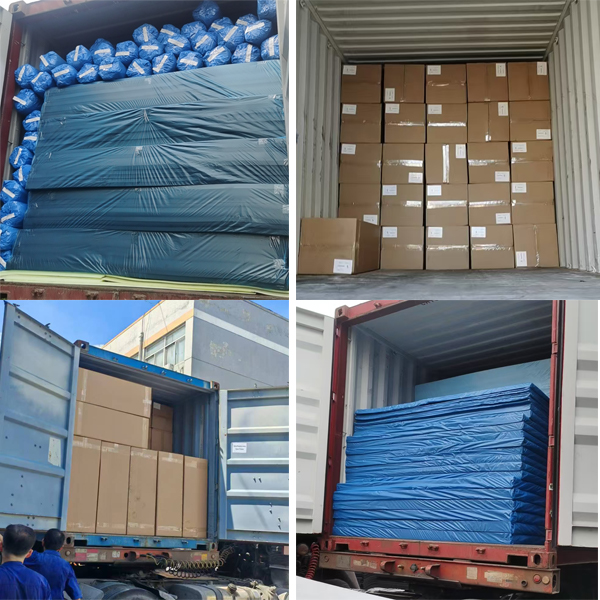
Our facility is located in Changzhou City, Jiangsu Province, China, with convenient access to Shanghai Port for international shipments.
6–8 lb Closed Cell EPDM Foam Roll FAQ
What is 6–8 lb closed cell EPDM foam?
It is closed cell EPDM sponge rubber with a nominal density range of approximately 6–8 lb per cubic foot, equivalent to roughly 96–128 kg/m³.
Is 6–8 lb the weight of the roll?
No. In this product description, 6–8 lb refers to foam density in pounds per cubic foot rather than the total shipping weight of a roll.
What density is 6–8 lb EPDM foam in kg/m³?
The nominal range is approximately 96–128 kg/m³. Actual production density should be confirmed according to the selected grade and tolerance.
Which listed Topsun grades are closest to 6–8 lb/ft³?
Grade 9008 is listed at 110 kg/m³ and grade 9010 at 130±15 kg/m³, making these the closest current grades to the nominal 6–8 lb/ft³ range.
What are grades 9015 and 9016?
They are higher-density options in the current technical table. Grade 9015 is listed at 150±15 kg/m³ and grade 9016 at 160±15 kg/m³.
What thicknesses are available?
The current product information lists thicknesses from 1 mm to 50 mm. Final available dimensions should be confirmed according to density, roll format and converting requirements.
Is closed cell EPDM foam waterproof?
The closed-cell structure provides very low water absorption and supports water-resistant sealing. Final water-tight performance depends on compression, gasket continuity, joint design and installation conditions.
What is the listed water absorption?
The current technical table lists 0.009% for grade 9008 and values below 0.01% for grades 9010, 9015 and 9016.
Can closed cell EPDM foam be used outdoors?
EPDM rubber provides useful resistance to ozone, UV exposure, weathering and ageing, making it suitable for many outdoor sealing applications.
Can EPDM foam roll be used for HVAC sealing?
Yes. Suitable grades can be evaluated for HVAC housings, panels, equipment interfaces, vibration cushioning and compressible sealing applications.
Can EPDM foam rolls be slit into sealing strips?
Yes. Full roll stock can be slit and cut into narrower sealing strips according to required width, thickness and finished length.
Can adhesive backing be added?
Yes. Pressure-sensitive adhesive and release liner can be laminated to suitable EPDM foam for sealing tape, strips, pads and custom gasket components.
Can Topsun make custom EPDM gaskets?
Yes. EPDM foam can be cut, sliced, laminated, laser cut and die cut into gaskets, sealing pads, strips and custom parts according to drawings or samples.
How do I choose the correct density?
Select density together with hardness, thickness, installation gap, required compression, available closing force and service environment rather than using density alone.
What information should I provide for a quotation?
Provide density or grade, thickness, roll width, preferred length, application, required compression, environmental conditions, adhesive requirement, drawings or samples and estimated quantity.
How can I request an EPDM foam sample?
Send your requirements to july@topsunfoam.com, including density, thickness, roll or strip dimensions, application, adhesive requirement and estimated quantity.
Get EPDM Foam Roll Sample & Quote

 English
 العربية
 Français
 Русский
 Español
 Português
 Deutsch
 italiano
 日本語
 한국어
 Nederlands
 Tiếng Việt
 ไทย
 Polski
 Türkçe
 ភាសាខ្មែរ
 Bahasa Melayu
 ဗမာစာ
 தமிழ்
 Filipino
 Bahasa Indonesia
 magyar
 Română
 Čeština
 қазақ
 Српски
 हिन्दी
 فارسی
 Kiswahili
 Norsk
 Svenska
 українська
 Ελληνικά
 Suomi
 עברית
 Latine
 Dansk
 اردو
 বাংলা
 Afrikaans
 नेपाली
 Oʻzbekcha
 Azərbaycan dili
 Български
 guarani
 Hausa
 Kurdî
 Kurdî
 Lietuvių
 Wikang Tagalog
 isiZulu