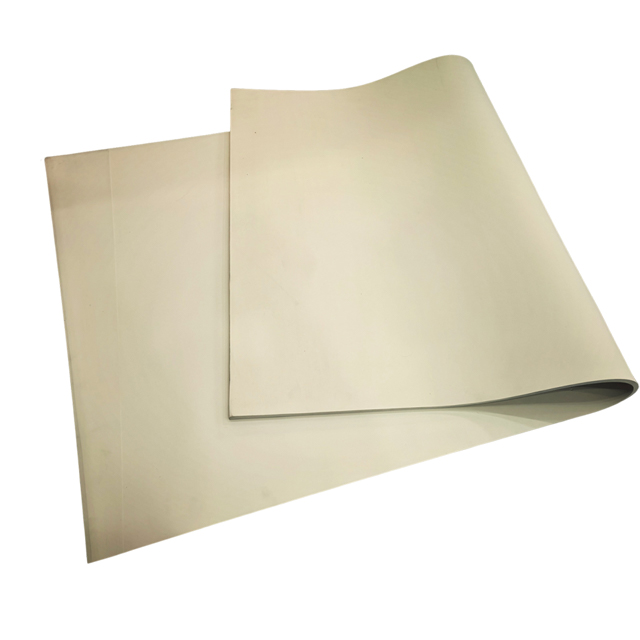
Closed Cell EPDM Rubber Foam Roll for Sealing and Gaskets
Topsun closed cell EPDM rubber foam roll is a flexible sponge material for weather sealing, HVAC systems, automotive components, industrial equipment, construction joints, appliance gaskets and custom converted foam parts.
The closed-cell structure limits water absorption and helps reduce the movement of air and moisture through the foam. When the correct density, thickness and compression are selected, EPDM foam can conform to mating surfaces and provide a durable sealing interface.
EPDM rubber provides useful resistance to ageing, ozone, UV exposure and outdoor weather conditions. The current product information also lists a temperature resistance range from -40°C to 120°C.
Topsun can supply EPDM foam as full rolls or convert it into sheets, strips, sealing tapes, pads, gaskets and custom die-cut components. Pressure-sensitive adhesive backing and release liner can also be added according to the bonding surface and assembly requirements.
Request EPDM Foam Roll Quote
Closed Cell EPDM Foam Roll Product Information
| Property | Product Information |
| Material | Closed Cell EPDM Sponge Rubber Foam |
| Cell Structure | Closed Cell |
| Listed Grades | 9008 / 9010 / 9015 / 9016 |
| Listed Density | 100±15 / 130±15 / 150±15 / 160±15 kg/m³ |
| Tensile Strength | More than 400 kPa for listed grades |
| Shore C Hardness | 8 / 10+3 / 15+3 / 25±5 |
| Water Absorption | Below 0.01% for listed grades |
| Temperature Resistance | Source-Listed Range: -40°C to 120°C |
| Supply Forms | Full Roll / Sheet / Strip / Tape / Pad / Gasket / Block / Custom Part |
| Adhesive Backing | Optional Pressure-Sensitive Adhesive with Release Liner |
| Typical Applications | Weather Sealing / HVAC / Automotive / Construction / Equipment Gaskets / Industrial Components |
| Custom Processing | Cutting / Slicing / Lamination / Laser Cutting / Die Cutting / Compression Molding / Engraving / Printing / Adhesive Backing |
Why Choose Closed Cell EPDM Foam Roll?
Roll stock is suitable for manufacturers, gasket converters and distributors that require continuous EPDM foam material for slitting, strip cutting, adhesive lamination and high-volume component conversion.
| Roll Stock Advantage | Benefit for Buyers and Converters |
| Continuous Material | Suitable for repeated production and downstream converting. |
| Custom Slitting | Rolls can be converted into narrower strips according to required width. |
| Adhesive Lamination | Pressure-sensitive adhesive can be added before tape or gasket conversion. |
| Multiple Finished Formats | One foam grade can be converted into strips, tapes, pads, gaskets and custom parts. |
| OEM Production | Suitable for recurring production programs requiring consistent foam specifications. |
Closed Cell EPDM Foam Roll Features
Closed-cell structure: limits water absorption and supports environmental sealing under suitable compression.
UV and ozone resistance: EPDM is suitable for many indoor and outdoor applications.
Weather resistance: useful for components exposed to changing environmental conditions.
Low water absorption: current listed grades show values below 0.01%.
Multiple density grades: allows selection according to firmness and compression requirements.
Elastic cushioning: sponge construction provides a compliant layer between mating components.
Vibration isolation: suitable grades can provide cushioning between equipment and panels.
Roll conversion: suitable for slitting, strip cutting, adhesive lamination and gasket production.
Closed Cell EPDM Foam Technical Specifications
The following table preserves the current technical data for grades 9008, 9010, 9015 and 9016. Final material selection should consider density, hardness, thickness, compression requirements, joint design and operating environment.
| EPDM Foam Technical Specification |
| Testing Item | Testing Standard | Unit | 9008 | 9010 | 9015 | 9016 | Block Size |
| Density | ASTM D3574 | kg/m³ | 100±15 | 130±15 | 150±15 | 160±15 | 1000 × 2000 × 50 mm
1000 × 2000 × 50 mm
1000 × 2000 × 45 mm
1000 × 2000 × 40 mm |
| Tensile Strength | ASTM D412 | kPa | >400 | >400 | >400 | >400 |
| Hardness | ASTM D2240 | Shore C | 8 | 10+3 | 15+3 | 25±5 |
| Compressive Strength | / | kPa | 230+/10 | — | — | — |
| Elongation | ASTM D412 | % | >150 | >150 | >150 | >150 |
| Compression Deformation CT | GB/T 6669 | Relative to Original Thickness % | <25 | <0.3 | <0.3 | <0.03 |
| Compression Deformation CD | GB/T 6669 | Relative Compression % | <50 | <0.3 | <0.3 | <0.03 |
| Water Absorption Rate | ASTM D1056 | % | <0.01 | <0.01 | <0.01 | <0.01 |
| Heat Shrinkage Rate | / | % | — | <4 | <4 | <4 |
| Ozone Ageing Test | / | / | — | No Crack | No Cracks | No Cracks |
| 25% Compression Load | ASTM D1056 | kPa | — | 230+/10 | 240+/10 | 260+/10 |
The technical values above reproduce the currently listed product data. Final grade, tolerances and applicable test requirements should be confirmed for the selected production specification.
How to Select EPDM Foam Density and Hardness
| Grade | Listed Density | Shore C | 25% Compression Load | Relative Position |
| 9008 | 100±15 kg/m³ | 8 | Not listed in current row | Lowest-density listed grade |
| 9010 | 130±15 kg/m³ | 10+3 | 230+/10 kPa | Lower firmness |
| 9015 | 150±15 kg/m³ | 15+3 | 240+/10 kPa | Medium firmness |
| 9016 | 160±15 kg/m³ | 25±5 | 260+/10 kPa | Firmest listed grade |
Density alone should not determine foam selection. Thickness, hardness, available closing force, installation gap, required compression and service environment should also be considered.
EPDM Foam Roll for Weather-Resistant Sealing
Closed cell EPDM is particularly useful where a flexible gasket or sealing strip must withstand outdoor weather, ozone, sunlight and moisture.
When installed under suitable compression, the foam can conform to surface variation and help reduce pathways for air, moisture and dust through the joint.
Final sealing performance depends on foam density, thickness, compression, gasket continuity, joint geometry, corners, fasteners and installation conditions.
Low Water Absorption Closed Cell Structure
The current technical data lists water absorption below 0.01% for all four listed EPDM foam grades.
Low water absorption makes closed cell EPDM suitable for evaluation in HVAC seals, construction joints, automotive gaskets, outdoor equipment and other applications exposed to moisture.
Foam material data alone does not guarantee that a completed assembly is waterproof or airtight. The complete gasketed joint should be evaluated according to the required sealing level.
EPDM Foam Roll for Slitting and Strip Conversion
Full EPDM foam rolls can be converted into narrower strips for weather sealing, panel interfaces, equipment gaskets, appliance assemblies and industrial production.
Buyers can specify foam grade, thickness, finished strip width and cut length according to the required production process.
Strips can also be laminated with pressure-sensitive adhesive and release liner for easier positioning during assembly.
Adhesive-Backed Closed Cell EPDM Foam Roll
Pressure-sensitive adhesive can be laminated to suitable EPDM roll stock before further slitting, cutting or die-cut conversion.
Adhesive-backed material can be converted into sealing tapes, strips, pads and custom gaskets.
Adhesive selection should consider the bonding substrate, surface cleanliness, installation temperature, operating temperature, moisture exposure and mechanical load.
Request Custom EPDM Roll & Slitting Quote
Applications of Closed Cell EPDM Foam Roll
| Application | Typical Function |
| Automotive | Gaskets, sealing strips, cushioning pads and vibration-control components. |
| HVAC Equipment | Panel seals, equipment interfaces, access-door gaskets and vibration cushioning. |
| Construction | Weather-resistant joints, panel seals, door interfaces and compressible strips. |
| Industrial Equipment | Equipment gaskets, covers, pads and sealing interfaces. |
| Appliances | Panel gaskets, vibration cushioning and protective interfaces. |
| Manufacturing Lines | Converted strips, pads, tapes and custom machine components. |
| Packaging and Protection | Protective pads, cushioning and surface separation for suitable industrial products. |
Closed Cell EPDM Foam Roll Video
What Is Closed Cell EPDM Foam?
EPDM stands for ethylene propylene diene monomer. EPDM foam is a synthetic sponge rubber used for sealing, cushioning, insulation and protective industrial applications.
In closed cell EPDM foam, the internal cells are predominantly isolated from one another. This structure limits moisture absorption and makes the material suitable for compressible gasket and sealing applications.
EPDM also provides useful resistance to light, ozone, ageing and weathering, making it suitable for many outdoor and semi-outdoor applications.
The original product information lists thickness options from 0.5 mm to 40 mm for EPDM sponge products. Topsun can process the material into sheets, rolls, strips, tapes, blocks and custom gaskets.
The appropriate density, thickness and compression should be selected according to the actual assembly rather than relying on one material property alone.
How Compression Affects EPDM Gasket Performance
Closed cell EPDM foam normally performs as a gasket by being compressed between two mating surfaces. Compression allows the foam to follow surface variation and fill the joint.
If the foam is too thin for the gap, insufficient contact may occur. If the foam is too thick or too firm, excessive closing force may be required.
| Design Factor | Why It Matters |
| Gap Size | Determines the foam thickness required to maintain contact. |
| Density | Influences firmness and compression behavior. |
| Hardness | Affects the force required to compress the foam. |
| Compression Load | Helps determine whether the assembly can apply sufficient closing force. |
| Surface Variation | Foam must accommodate tolerances and irregular mating surfaces. |
| Environment | Temperature, water, UV and ozone exposure can influence material selection. |
How to Specify Closed Cell EPDM Foam Roll
| Requirement | Information to Provide |
| Application | Describe the sealing, cushioning, gasket or protection application. |
| Density / Grade | Specify 9008, 9010, 9015, 9016 or required density where known. |
| Thickness | Provide required foam thickness or actual joint gap. |
| Roll Width / Strip Width | Provide full roll width or required slit width. |
| Length | Provide preferred roll or finished strip length where applicable. |
| Compression | Provide expected installed compression or available closing force. |
| Sealing Requirement | Describe relevant air, water, dust or weather exposure. |
| Adhesive | Specify whether adhesive backing is required and identify the bonding substrate. |
| Drawing or Sample | Provide drawings, dimensions, CAD data or a physical sample for converted parts. |
| Quantity | Provide sample, trial and estimated production quantities. |
Send Your EPDM Roll Requirements
Topsun Foam Processing Capabilities
Cutting
Foam rolls, sheets, blocks and finished components can be cut according to customer dimensions.
Slicing
Foam material can be sliced to the required thickness for suitable downstream conversion.
Slitting and Strip Cutting
Roll stock can be converted into narrower sealing strips according to customer width requirements.
Lamination
Hot-melt film lamination, flame lamination and pressure-sensitive adhesive lamination can be evaluated for compatible constructions.
Laser Cutting
Suitable customized foam shapes can be cut according to digital drawings without dedicated cutting dies.
Die Cutting
Dedicated cutting tools can be used for repeat production of gaskets, pads, seals and custom foam parts.
Compression Molding
Compression molding can be evaluated for suitable three-dimensional foam and foam-composite parts requiring defined geometry.
Engraving
Engraving can be used for suitable protective inserts and customized foam components.
Silk-Screen Printing
Logos, identification and suitable graphics can be printed on compatible foam surfaces.
Adhesive Backing
Pressure-sensitive adhesive and release liner can be laminated to suitable EPDM foam for sealing tapes, strips, gaskets and pads.
Foam Materials Available from Topsun
Topsun supplies EVA foam, PE foam, XPE foam, IXPE foam, CR foam, EPDM foam, neoprene foam, SBR foam, NBR foam and microcellular soft PVC foam.
Materials can be supplied as sheets and rolls or further converted into strips, tapes, pads, gaskets, protective components and custom die-cut parts.
About Topsun Foam
Topsun supplies foam materials and custom converted components for sealing, cushioning, insulation, packaging, automotive, HVAC, construction and industrial applications.
Customers can provide drawings, dimensions, foam grade, density, hardness, thickness, installation gap and operating conditions for material and processing evaluation.
Our facility is located in Changzhou City, Jiangsu Province, China, with convenient access to Shanghai Port for international shipments.
Closed Cell EPDM Foam Roll FAQ
What is closed cell EPDM foam?
Closed cell EPDM foam is a flexible sponge rubber material with predominantly isolated internal cells. It is commonly used for sealing, gasketing, cushioning and weather-resistant industrial components.
Why buy EPDM foam in roll form?
Roll stock is suitable for manufacturers and converters requiring continuous material for slitting, adhesive lamination, strip production, gasket fabrication and recurring production.
What density grades are listed?
The current technical table lists densities of 100±15, 130±15, 150±15 and 160±15 kg/m³ for grades 9008, 9010, 9015 and 9016 respectively.
What is the tensile strength?
The current ASTM D412 table lists tensile strength above 400 kPa for all four grades.
What hardness options are available?
The current ASTM D2240 table lists Shore C values of 8, 10+3, 15+3 and 25±5 for the four respective grades.
What is the 25% compression load?
The current ASTM D1056 table lists 230+/10 kPa for grade 9010, 240+/10 kPa for grade 9015 and 260+/10 kPa for grade 9016. No corresponding value is listed for grade 9008 in that row.
What is the water absorption rate?
The current ASTM D1056 table lists water absorption below 0.01% for all four grades.
Is closed cell EPDM foam waterproof?
Closed cell EPDM has low water absorption and can support water-resistant sealing when correctly compressed. Final water-tight performance depends on gasket continuity, compression, corners, joint design and installation.
Can EPDM foam roll be used outdoors?
EPDM provides useful resistance to UV exposure, ozone, weathering and ageing, making it suitable for many outdoor and semi-outdoor sealing applications.
What temperature range is currently listed?
The current product content lists temperature resistance from -40°C to 120°C. Confirm the selected grade and required service conditions before final approval.
Can EPDM foam rolls be slit into narrow strips?
Yes. Full roll material can be converted into narrower strips according to required foam thickness, width and finished length.
Can adhesive backing be added?
Yes. Pressure-sensitive adhesive and release liner can be laminated to suitable EPDM foam before slitting or conversion into tapes, pads and gaskets.
Can Topsun manufacture custom EPDM foam gaskets?
Yes. EPDM foam can be cut, sliced, laminated, laser cut and die cut into custom gaskets, strips, pads and seals according to drawings or physical samples.
How do I choose the correct EPDM foam grade?
Consider density, hardness, thickness, installation gap, expected compression, available closing force, sealing requirements and environmental exposure.
What information should I provide for a quotation?
Provide the application, required density or grade, thickness, roll or strip dimensions, joint gap, compression requirement, adhesive requirement, bonding substrate, environmental conditions and estimated quantity.
How can I request an EPDM foam sample?
Send your requirements to july@topsunfoam.com, including grade, density, thickness, dimensions, application, adhesive requirement and estimated quantity.
Get EPDM Foam Roll Sample & Quote

 English
 العربية
 Français
 Русский
 Español
 Português
 Deutsch
 italiano
 日本語
 한국어
 Nederlands
 Tiếng Việt
 ไทย
 Polski
 Türkçe
 ភាសាខ្មែរ
 Bahasa Melayu
 ဗမာစာ
 தமிழ்
 Filipino
 Bahasa Indonesia
 magyar
 Română
 Čeština
 қазақ
 Српски
 हिन्दी
 فارسی
 Kiswahili
 Norsk
 Svenska
 українська
 Ελληνικά
 Suomi
 עברית
 Latine
 Dansk
 اردو
 বাংলা
 Afrikaans
 नेपाली
 Oʻzbekcha
 Azərbaycan dili
 Български
 guarani
 Hausa
 Kurdî
 Kurdî
 Lietuvių
 Wikang Tagalog
 isiZulu


