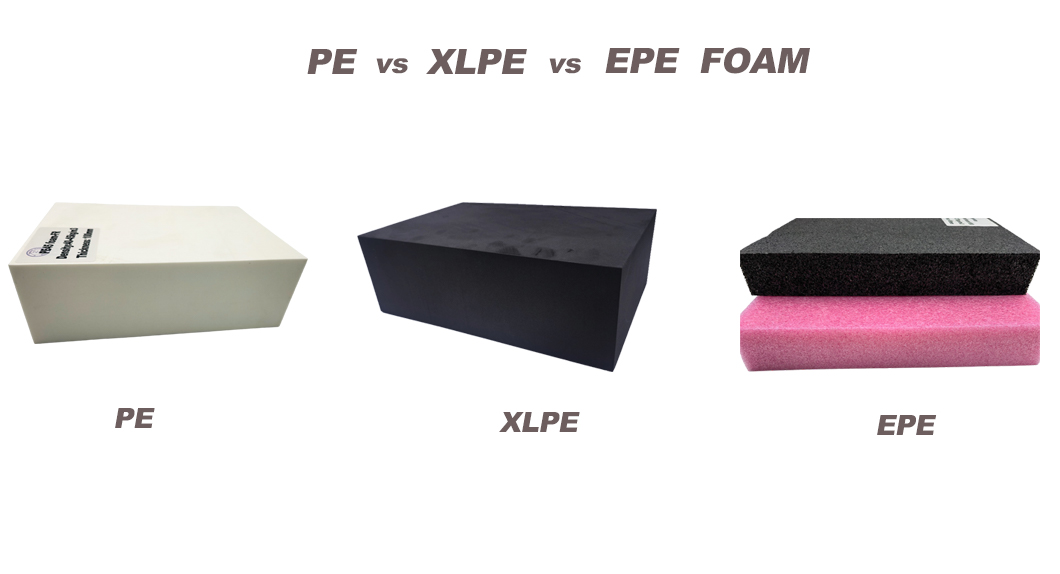
When selecting foam for a packaging application, one of the most common questions is: which foam material is the best?
The answer depends on the specific requirements of the application, as each foam type offers different performance advantages. In this comparison, the team at Foam Industries explores three of the most widely used packaging foams — XLPE, PE, and EPE — to help determine the most suitable solution for different packaging needs.
What Is XLPE Foam?
Cross-Linked Polyethylene (XLPE) foam combines exceptional durability with a clean, premium appearance. As an enhanced form of standard polyethylene (PE) foam, XLPE is manufactured using a cross-linking process that strengthens the internal foam structure, resulting in improved toughness, resilience, and long-term performance.
Compared with standard PE foam, XLPE offers greater rigidity, higher resistance to wear and impact, and superior dimensional stability, while still being gentle enough to protect painted or delicate surfaces from scratches.
Thanks to its strength and refined finish, XLPE foam is widely used in protective packaging applications where both product protection and presentation matter. It is especially suitable for influencer kits, premium product packaging, marketing displays, and custom presentation cases where safe transportation, an enhanced unboxing experience, and visual appeal are equally important.
Key Benefits of XLPE Foam Packaging
●Exceptional durability and long-lasting performance
●Resistant to scratches and surface damage
●Smooth, clean, and professional appearance
Best suited for: Heavy or high-value products that require both strong protection and scratch resistance.
What Is PE Foam?
Polyethylene (PE) foam is a cost-effective packaging material known for its durability, chemical resistance, moisture resistance, and recyclability. It is widely used across many packaging applications, including end caps, case inserts, protective pads, and general cushioning solutions.
PE foam is produced by expanding melted polyethylene resin with gas, creating a lightweight closed-cell foam structure. The result is a flexible, cushioning material that provides reliable shock absorption and product protection during storage and transportation.
Key Benefits of PE Foam Packaging
●Cost-effective and easy to source
●Excellent resistance to chemicals and moisture
●Recyclable through industrial recycling processes
Best suited for: Versatile, economical, and recyclable protective packaging applications.
What Is EPE Foam?
Expanded Polyethylene (EPE) foam is a lightweight and flexible packaging material designed for applications that require both cushioning performance and design versatility. It offers a balance of softness, resilience, and structural support, making it suitable for a wide range of protective packaging and product fabrication applications.
EPE foam is manufactured by expanding polyethylene resin with air, creating a closed-cell foam structure filled with tiny air pockets. These air cells reduce material weight while providing excellent shock absorption, cushioning, and impact protection. The resulting foam has a soft, sponge-like texture that can be easily shaped and customized for different industrial, commercial, and consumer applications.
Because of its lightweight structure and protective properties, EPE foam is commonly used in packaging, inserts, insulation, and fabricated foam products across multiple industries.
Key Benefits of EPE Foam Packaging
●Lightweight with a soft cushioning structure
●Flexible while maintaining its shape
●Resistant to moisture, chemicals, and mold growth
Best suited for: Lightweight protective packaging applications that require flexibility, cushioning, and shape retention.
Comparing XLPE, PE, and EPE Foam
With several foam materials available, choosing the right option for your packaging project can sometimes feel challenging. Each foam type offers unique advantages depending on the level of protection, appearance, durability, flexibility, and cost required.
To simplify the selection process, it is helpful to compare XLPE, PE, and EPE foam based on key performance factors such as cost efficiency, cushioning performance, moisture resistance, strength, thermal insulation properties, and environmental impact. Understanding these differences can help determine the most suitable foam solution for your specific packaging and product protection needs.
Quick Comparison
| Foam Type | XPLE | PE | EPE |
| Cost | High | Very Low | Low |
| Durability | High | Medium | Low |
| Color Options | Many | Many | Many |
| Recyclability | None | Recyclable | Limited |
Temperature Resistance
●XLPE Foam: Highest thermal resistance, up to 194°F continuously and 266°F for short periods
●PE Foam: Moderate resistance, up to 176°F continuously
●EPE Foam: Lower resistance, up to 158°F continuously
Moisture Resistance
●XLPE Foam: Highly water-resistant with strong barrier performance
●PE Foam: Good resistance to water and mold, especially in closed-cell formats
●EPE Foam: Resistant to water, chemicals, and fungal growth
Strength and Durability
●XLPE Foam: Extremely strong and highly durable
●PE Foam: Moderately strong with reliable durability
●EPE Foam: Softer structure with lower strength and durability
Electrical Insulation
●XLPE Foam: Excellent insulation due to its cross-linked structure
●PE Foam: Moderate insulation performance
●EPE Foam: Lower insulation effectiveness due to its more open cellular structure
Thermal Insulation
●XLPE Foam: Excellent insulation performance thanks to its closed-cell structure
●PE Foam: Good insulation, better than EPE but below XLPE
●EPE Foam: Provides basic insulation, but not its strongest feature
Environmental Impact
●XLPE Foam: More energy-intensive to produce and less recyclable
●PE Foam: Recyclable and lower energy consumption in manufacturing
●EPE Foam: Recyclable with relatively low energy requirements
Which Foam Type Is Best for Packaging?
There is no single"best"foam type for every application. The right choice depends on your product type, budget, shipping conditions, and whether the packaging will be reused or displayed.
At TOPSUN, we recognize that each foam type serves a specific purpose. Heavier or highly fragile products typically benefit from the superior protection of XLPE foam, while lightweight or general-purpose packaging often performs well with PE or EPE foam. EPE and XLPE are both strong choices when thermal insulation is required, while PE foam offers a strong balance of cost and performance.
For many applications, Polyethylene (PE) foam is often the preferred choice due to several advantages:
●It provides a strong balance of durability, moisture resistance, and chemical resistance, making it suitable for most packaging needs
●It is cost-effective, especially for reusable inserts and large-scale production
●It is highly recyclable and can be reused efficiently in a circular manufacturing process, including repurposing scrap material without significant loss in performance
Ultimately, the best foam choice depends on finding the right balance between protection, performance, and cost for your specific application.
Need Help Choosing the Right Packaging Foam?
As a trusted leader in the packaging industry, Foam Industries is committed to delivering consistent quality, outstanding customer support, and continuous innovation. With a broad range of fully customizable foam solutions, we make it easy to find the right material tailored to your specific packaging needs.

 English
 العربية
 Français
 Русский
 Español
 Português
 Deutsch
 italiano
 日本語
日本語 한국어
한국어 Nederlands
 Tiếng Việt
 ไทย
ไทย Polski
 Türkçe
 ភាសាខ្មែរ
 Bahasa Melayu
 ဗမာစာ
ဗမာစာ தமிழ்
தமிழ் Filipino
 Bahasa Indonesia
 magyar
 Română
 Čeština
 қазақ
қазақ Српски
 हिन्दी
 فارسی
فارسی Kiswahili
 Norsk
Norsk Svenska
 українська
 Ελληνικά
 Suomi
Suomi עברית
עברית Latine
 Dansk
Dansk اردو
اردو বাংলা
বাংলা Afrikaans
 नेपाली
 Oʻzbekcha
 Azərbaycan dili
 Български
 guarani
 Hausa
Hausa Kurdî
Kurdî Kurdî
Kurdî Lietuvių
 Wikang Tagalog
 isiZulu


