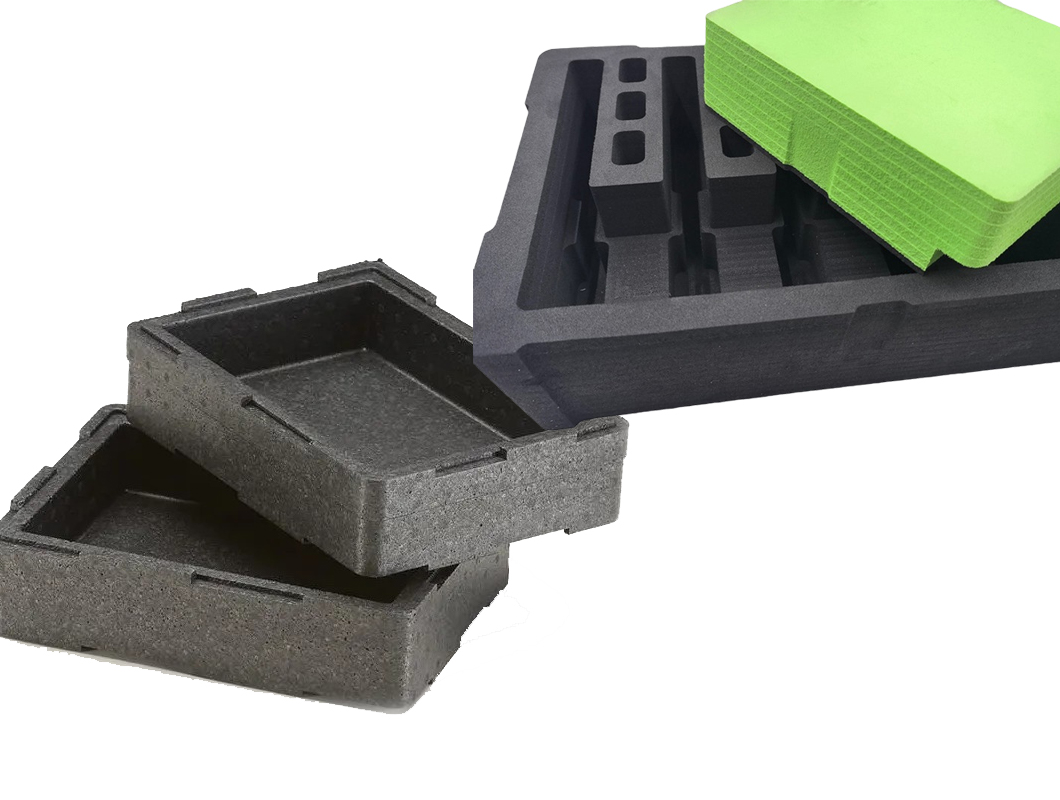
Choosing foam for a case insert or custom package usually means deciding between polyethylene (PE) and polypropylene (PP). While both provide strong shock and vibration protection, their performance varies under load, stress, moisture, and long-term use.
This guide compares the most important characteristics so you can choose the right foam for your application.
What Is PE Foam?
PE foam is a closed-cell polyethylene material known for its flexibility, strength, and reliable performance under repeated impact. It's the go-to choice for engineers who need cushioning that can withstand the demands of shipping, handling, and long transport cycles.
Key Characteristics
●High shock absorption
●Excellent vibration damping
●Resistant to moisture and many chemicals
●Lightweight
●Offered in a wide range of densities
●Easy to cut, contour, or rout
●Compatible with laminates and pressure-sensitive adhesives
PE remains a cornerstone of industrial packaging because it absorbs everyday transit impacts without permanent deformation.
What Is PP Foam?
PP foam is a closed-cell polypropylene material that is naturally stiffer than PE and offers greater heat resistance. Its quick rebound and strong shape memory make it ideal for applications where parts must snap, lock, or return to position precisely.
Key Characteristics
●Higher rigidity for secure part holding
●Superior heat resistance
●Rapid rebound and excellent shape retention
●Good chemical resistance
●Strong performance even at thin gauges
PP is a strong fit for packaging that requires structural support as well as protective performance.
PE vs. PP Foam: How They Compare
Here's how these two materials perform in real-world packaging environments.
Cushioning Performance
PE provides softer, more forgiving energy absorption. It disperses impact over a wider area, offering better protection for fragile or sensitive components. PP is firmer and transfers more force unless used at greater thickness.
If your product can't tolerate impact, PE is typically the better choice.
Durability and Compression Set
PE withstands repeated loading without developing permanent dents. PP rebounds faster, but its added rigidity means it can crease or deform if pushed beyond its limits.
For reusable packaging or inserts that will be handled frequently, PE generally offers more reliable long-term performance.
Temperature Resistance
PP has a higher heat tolerance overall. PE performs well in standard shipping environments but is not suited for applications involving continuous heat exposure.
If your product encounters elevated temperatures or is stored near equipment that generates heat, PP is likely the better choice.
Weight and Density Options
Both foams are available in multiple densities, but PE offers a broader selection in the mid-density range commonly used for protective packaging. This makes it easier to fine-tune the exact cushioning characteristics required for your application.
When to Choose PE Foam
Choose PE when you need:
●Strong shock absorption
●Effective vibration control
●General-purpose protective packaging
●Reusable inserts that maintain their shape
●Cost-efficient cushioning
●Flexibility for complex or contoured geometries
PE is widely used for electronics, medical devices, instruments, consumer goods, and any product that requires reliable, impact-safe cushioning.
When to Choose PP Foam
Choose PP when you need:
●A rigid, supportive structure
●Better performance in higher temperatures
●Fast rebound and strong shape memory
●Thinner walls that still hold their form
●Compatibility with components that snap, lock, or press-fit into place
PP is commonly used for automotive parts, industrial tools, precision equipment, and reusable containers where structural stability matters more than softness.
Which Is Better for Protective Packaging?
For the majority of protective packaging applications, PE foam is the preferred option. It delivers safer impact absorption, resists permanent compression, and provides predictable performance across a wide range of densities and product types.
PP excels when stiffness, heat resistance, or structural support are top priorities. It's less common for pure cushioning but performs well for engineered fits and rigid holding requirements.
Not Sure Which Foam You Need?
Every product reacts differently to load, shock, and vibration. Factors like density, part geometry, and handling conditions all influence the best material choice. A quick engineering review is the most reliable way to determine the right foam.
TOPSUN can perform impact testing, review your drawings, and recommend the ideal material based on your product, shipping environment, and budget.
TOPSUN provides custom protective packaging solutions with a focus on precision foam fabrication. From concept to finished product, we design and build tailored foam packaging, displays, and support components to protect your products.

 English
 العربية
 Français
 Русский
 Español
 Português
 Deutsch
 italiano
 日本語
日本語 한국어
한국어 Nederlands
 Tiếng Việt
 ไทย
ไทย Polski
 Türkçe
 ភាសាខ្មែរ
 Bahasa Melayu
 ဗမာစာ
ဗမာစာ தமிழ்
தமிழ் Filipino
 Bahasa Indonesia
 magyar
 Română
 Čeština
 қазақ
қазақ Српски
 हिन्दी
 فارسی
فارسی Kiswahili
 Norsk
Norsk Svenska
 українська
 Ελληνικά
 Suomi
Suomi עברית
עברית Latine
 Dansk
Dansk اردو
اردو বাংলা
বাংলা Afrikaans
 नेपाली
 Oʻzbekcha
 Azərbaycan dili
 Български
 guarani
 Hausa
Hausa Kurdî
Kurdî Kurdî
Kurdî Lietuvių
 Wikang Tagalog
 isiZulu


