You are here:Home » Blog » Selecting Anti-Static Vs. Conductive Foams: What You Need To Know
Selecting Anti-Static Vs. Conductive Foams: What You Need To Know
Views: 0 Author: Site Editor Publish Time: 2026-02-28 Origin: Site
Specialized ESD foam is essential for protecting static-sensitive electronic devices, components, and assemblies during shipping and storage. When selecting foam for these applications, it is important to confirm compliance with EIA-541 packaging material standards for ESD-sensitive items. Understanding the differences between anti-static and conductive foams will help you choose the most appropriate solution for your specific application.
What Is Anti-Static Foam?
Anti-static (ESD) foam is designed to reduce and dissipate electrostatic charges that can damage sensitive electronic components. It typically has a surface resistivity ranging from 10⁹ to 10⊃1;⊃2; ohms and is commonly manufactured from static-dissipative polyurethane or polyethylene materials.
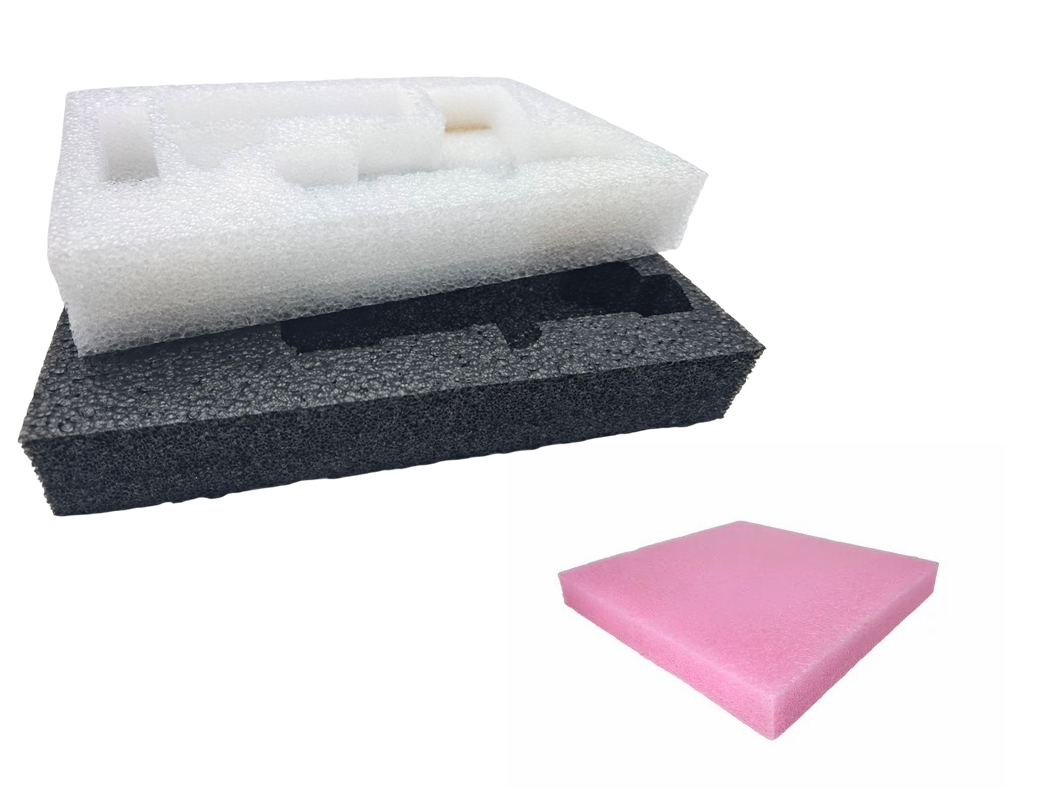
Most anti-static foam is easily recognized by its pink color. It is chemically treated with anti-static additives that minimize the generation of static electricity. This treatment helps prevent static buildup caused by friction when items move against the foam during handling or transit. However, while the foam reduces static generation, it does not provide shielding and allows external static charges to pass through.
For complete protection during shipping, static-sensitive items should be placed inside a metalized shielding bag before being packed in anti-static foam. In general, anti-static foam is intended for limited use and is not typically reusable.
Static Dissipative Foam
Static dissipative foam is engineered to control the flow of electrostatic charges by allowing them to move to ground in a slow, controlled manner—slower than fully conductive materials. By regulating the discharge rate, the foam helps protect sensitive components from sudden electrostatic discharge (ESD) events.
This foam is typically carbon-impregnated and black in color, or surface-treated and pink. It generally carries little to no initial charge and helps prevent discharges caused by human contact. Static dissipative foam usually has a surface resistivity ranging from 10⁵ to 10⁹ ohms.
What Is Conductive Foam?
Conductive foam is commonly made from polyethylene infused with carbon to create a highly conductive structure. It is usually black and has a surface resistivity of less than 10⁶ ohms.
This type of foam protects electronic devices and components by functioning like a Faraday cage, blocking electromagnetic fields and shielding contents from external static charges. Because of this shielding capability, additional static-protective packaging is often not required.
However, conductive foam can drain batteries if their terminals come into direct contact with the material. When using conductive foam for shipping or storage, batteries should be insulated with a protective barrier or separated using a layer of non-conductive or static dissipative material.

 English
 العربية
 Français
 Русский
 Español
 Português
 Deutsch
 italiano
 日本語
日本語 한국어
한국어 Nederlands
 Tiếng Việt
 ไทย
ไทย Polski
 Türkçe
 ភាសាខ្មែរ
 Bahasa Melayu
 ဗမာစာ
ဗမာစာ தமிழ்
தமிழ் Filipino
 Bahasa Indonesia
 magyar
 Română
 Čeština
 қазақ
қазақ Српски
 हिन्दी
 فارسی
فارسی Kiswahili
 Norsk
Norsk Svenska
 українська
 Ελληνικά
 Suomi
Suomi עברית
עברית Latine
 Dansk
Dansk اردو
اردو বাংলা
বাংলা Afrikaans
 नेपाली
 Oʻzbekcha
 Azərbaycan dili
 Български
 guarani
 Hausa
Hausa Kurdî
Kurdî Kurdî
Kurdî Lietuvių
 Wikang Tagalog
 isiZulu