10 Packaging Trends for 2026 and Their Impact on Foam Protective Packaging
Packaging expectations continue to rise as products become more intricate and distribution channels grow more demanding. Across industries, there is a clear movement toward engineered packaging solutions that deliver consistent, repeatable performance throughout the shipping cycle.
Packaging challenges often appear late in the process—after damage claims increase or freight costs climb. In many cases, the root cause can be traced back to early design decisions within the supply chain. Foam material selection, part geometry, and load interaction all play critical roles in how a package performs once it enters real-world distribution. These emerging trends reflect a broader industry shift toward an engineering-driven mindset—an approach long used by TOPSUN to design and validate protective packaging systems.
Packaging Is Designed as an Integrated System
Protective packaging is increasingly viewed as a complete system rather than a collection of separate components. Foam inserts, corrugated cartons, pallets, and outer containers must work together under compression, vibration, and impact. Overall performance depends on how energy transfers through the entire assembly.
Beaded Expanded Polyethylene (EPE) demonstrates this system-level performance particularly well. Its closed-cell, isotropic structure disperses impact forces evenly in multiple directions, helping manage shock energy across the full package. When EPE components are engineered to complement corrugated structures, the result is improved shock absorption during handling, stacking, and transportation.
Packaging Geometry Is Driving Freight Efficiency
Shipping efficiency is increasingly influenced by how accurately packaging supports and contains a product. Excess void space, oversized cartons, and unnecessary materials increase dimensional weight and drive up freight expenses.
Lightweight materials such as Expanded Polyethylene (EPE) and Expanded Polypropylene (EPP) support cost control by reducing overall package weight without compromising protective performance. Material selection and structural geometry must work together. When foam maintains its shape, recovers consistently after compression, and performs predictably under load, packaging can be engineered with tighter tolerances—minimizing volume while maintaining impact resistance and load stability.
Sustainability Is Closely Linked to Damage Prevention
In protective packaging, sustainability begins with preventing product damage during transit.
Non-crosslinked EPE directly supports this objective. It is fully recyclable and can be reprocessed into base resin multiple times. When incorporated into well-engineered designs that prevent shipping damage, EPE helps reduce the need for replacement manufacturing, reshipping, and additional packaging materials.
Designing packaging systems that perform correctly the first time also lowers environmental impact across the supply chain. A single damaged unit carries a disproportionate footprint, requiring additional raw materials, labor, warehousing, and transportation. Transit damage contributes to landfill waste, higher carbon emissions, increased production demand, and added packaging consumption.
By prioritizing material performance, precision fit, and system reliability, sustainable packaging strategies align environmental responsibility with operational efficiency.
Foam Selection Is Becoming More Application-Specific
Foam materials are increasingly chosen as engineered components with clearly defined performance characteristics.
Rigid materials such as high-density polyethylene and EPP provide structural support and resist compression in stacked shipping conditions. More flexible options, including polyethylene foam and urethane foam, offer controlled deformation to absorb shock during impact events. Polystyrene foam remains suitable for applications requiring rigidity, dimensional stability, and, in some cases, thermal insulation.
Selecting foam based on application-specific requirements ensures packaging systems perform consistently under real-world distribution stresses.
Packaging Must Withstand Multiple Transportation Modes
Products often travel through a combination of truck, rail, air, and ocean freight within a single supply chain. Each mode introduces unique forces—vibration, compression, shock, and environmental changes—that accumulate over time.
EPP performs well in these demanding environments due to its ability to absorb repeated impacts while maintaining structural integrity. Neoprene foam helps dampen vibration in applications sensitive to mechanical stress and noise. EPE retains its cushioning properties and dimensional stability across extended distribution cycles, contributing to predictable and repeatable performance.
As distribution networks grow more complex, packaging systems must be engineered to endure the full journey—not just a single leg of transport.
Higher-Value Products Require Tighter Packaging Tolerances
As product value rises, packaging must deliver greater precision and tighter control over contact surfaces and fit.
Expanded Polyethylene (EPE) offers a Class A surface finish and strong dimensional stability, making it well suited for abrasion-sensitive applications, tight-tolerance case inserts, and critical-fit components—especially in environments exposed to temperature variation. Polyethylene foam and polyurethane foam provide controlled cushioning for delicate components commonly found in consumer electronics and medical equipment.
Precision Foam Inserts Protect Electronic and Medical Equipment
As devices become more advanced and more expensive, packaging must precisely control movement, surface contact, and shock exposure. This is particularly important for electronic equipment and medical devices, where even minor impact can lead to performance degradation, calibration shifts, or costly replacement.
Custom foam inserts are engineered around a product's fragility, weight, and distribution environment, as well as the case or carton used for shipment. Well-designed inserts cradle components securely, absorb shock, dampen vibration, and reduce the risk of cosmetic or functional damage during transit and storage.
Material selection and surface finishing contribute to both protection and presentation. Flexible foams can be laminated or finished to provide non-marring surfaces and a refined appearance while maintaining consistent cushioning performance. These solutions scale efficiently—from prototype development to high-volume production—without compromising fit or reliability.
Reusable Dunnage Continues to Expand in Manufacturing
Reusable packaging systems are playing a growing role in closed-loop manufacturing and internal distribution networks.
EPE has long been used in Class A automotive dunnage applications to protect painted, chrome, glass, and powder-coated components through repeated handling cycles. Its resilience and chemical resistance support extended service life in demanding industrial environments. Expanded Polypropylene (EPP) also performs well in returnable systems due to its durability and resistance to repeated impacts.
Fabrication Methods Align with Scale and Design Complexity
Protective packaging programs vary widely in product size, geometry, and production volume. Fabrication methods are selected to match these requirements.
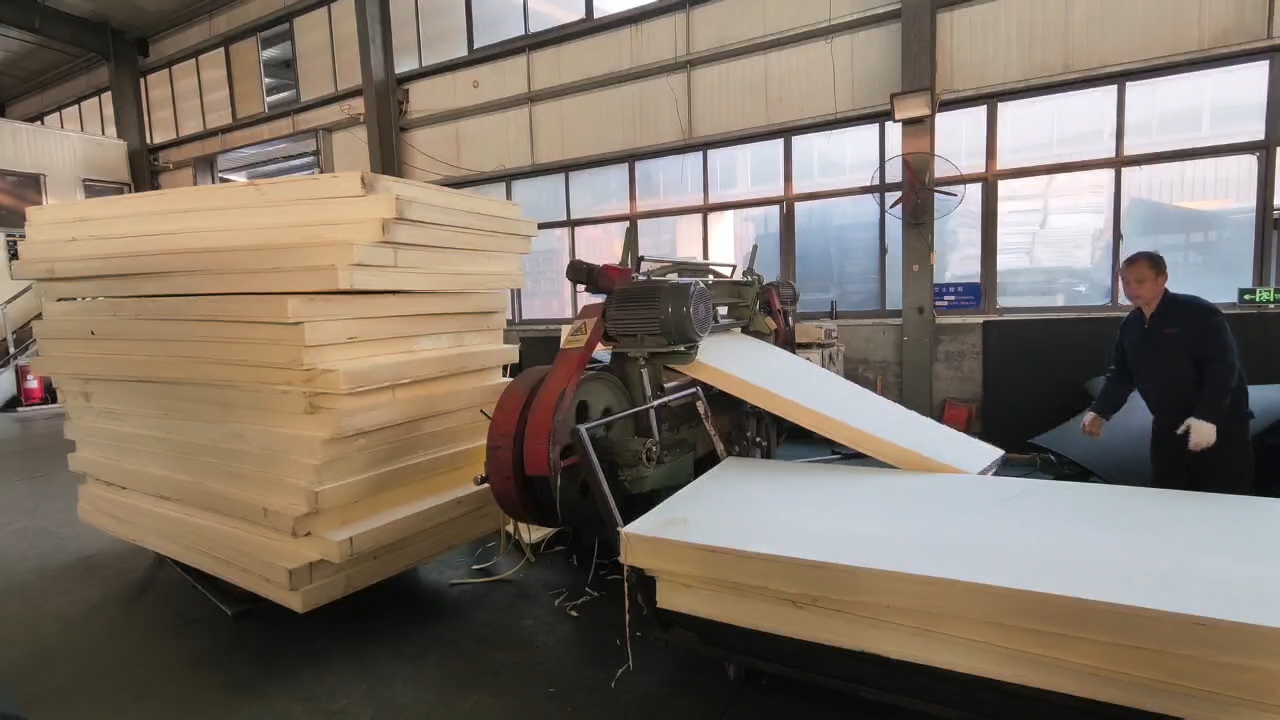
EPE, polyethylene foam (PE), cross-linked polyethylene (XLPE), and polyurethane foam can be die-cut, waterjet-cut, contour-cut, laminated, or heat-welded depending on design complexity and tolerance needs. Beaded foams such as EPE and EPP are molded into planks prior to secondary fabrication, while polyethylene foams are typically extruded and/or laminated into planks before conversion into finished inserts.
Packaging Plays a Greater Role in Product Presentation
In retail and display environments, packaging significantly influences first impressions and brand perception.
Polyethylene foam, Expanded Polyethylene (EPE), and polyurethane foam provide clean surface finishes and non-marring contact, making them well suited for point-of-purchase displays and premium presentation packaging. Within e-commerce distribution, presentation packaging also serves a functional purpose—helping prevent damage during high-volume parcel handling while reinforcing brand expectations upon delivery.
Engineering Discipline Continues to Shape Packaging Decisions
Throughout the protective packaging industry, disciplined engineering practices increasingly guide design decisions. Material performance data, structural geometry, fabrication limitations, and lifecycle requirements all influence how packaging systems are developed and validated.
Foam materials such as EPE, XLPE, EPP, PE, polyurethane (PU), and neoprene each serve defined functions based on properties like impact absorption, durability, thermal stability, chemical resistance, and vibration control. Effective packaging design applies these materials within their intended performance ranges, accounting for compression loads, environmental exposure, and cumulative transit stresses.
Turning Trends into Real-World Packaging Programs
Collectively, these trends point to earlier engineering involvement, tighter integration between material selection and geometry, and packaging systems designed around actual distribution conditions—not assumptions.
Successful protective packaging programs combine foam selection, fabrication strategy, and full-system design to deliver consistent performance across shipping, storage, and handling. Reliable outcomes directly support customer satisfaction, especially in applications where downtime, replacement costs, or regulatory risks carry significant consequences.
As packaging requirements continue to advance, engineered foam solutions—grounded in material science and real distribution data—remain central to building effective and sustainable protection strategies.
Ready to Assess Your Packaging Performance?
Packaging trends may evolve, but performance ultimately depends on material behavior and system-level design. TOPSUN collaborates with engineering, packaging, and operations teams to evaluate current packaging systems, review foam material options, and develop custom solutions aligned with real-world shipping and handling conditions.

 English
 العربية
 Français
 Русский
 Español
 Português
 Deutsch
 italiano
 日本語
日本語 한국어
한국어 Nederlands
 Tiếng Việt
 ไทย
ไทย Polski
 Türkçe
 ភាសាខ្មែរ
 Bahasa Melayu
 ဗမာစာ
ဗမာစာ தமிழ்
தமிழ் Filipino
 Bahasa Indonesia
 magyar
 Română
 Čeština
 қазақ
қазақ Српски
 हिन्दी
 فارسی
فارسی Kiswahili
 Norsk
Norsk Svenska
 українська
 Ελληνικά
 Suomi
Suomi עברית
עברית Latine
 Dansk
Dansk اردو
اردو বাংলা
বাংলা Afrikaans
 नेपाली
 Oʻzbekcha
 Azərbaycan dili
 Български
 guarani
 Hausa
Hausa Kurdî
Kurdî Kurdî
Kurdî Lietuvių
 Wikang Tagalog
 isiZulu


