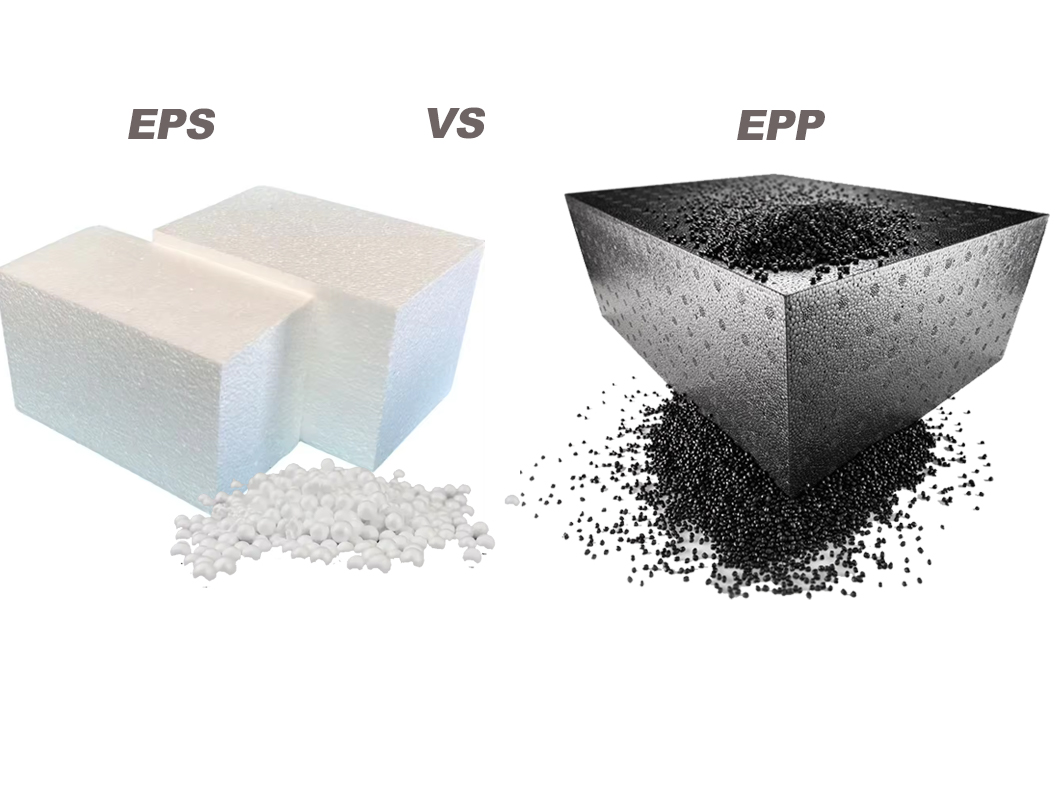
EPS and EPP are two widely used foam materials in packaging, automotive, and construction industries. Although both are lightweight and provide cushioning protection, they differ in structure and performance, which influences their durability, flexibility, and ideal applications.
EPS (Expanded Polystyrene) is a rigid foam known for its excellent thermal insulation and strong impact protection. In contrast, EPP (Expanded Polypropylene) is highly flexible, resilient, and capable of withstanding repeated impacts and stress. This makes EPP a preferred choice for applications that require long-term durability and energy absorption. Understanding the differences between EPS and EPP can help you select the most suitable material for your specific application.
What is EPS Foam?
EPS foam, or Expanded Polystyrene, is a lightweight, rigid, and durable material widely used in packaging, insulation, and construction applications. Produced by expanding polystyrene beads with steam, EPS foam provides excellent thermal insulation, impact resistance, and moisture protection. These qualities make it an effective solution for product protection and energy-efficient applications across multiple industries.
Applications Across Industries
EPS foam is commonly used in protective packaging, building insulation, automotive components, and decorative products. Its lightweight structure, versatility, and cost-effectiveness make it a popular choice for industries requiring dependable and easily customized foam materials.
Composition and Structure
EPS foam is made from small polystyrene beads fused together to create a rigid, closed-cell structure. This design delivers strength while maintaining a low weight, allowing the material to be easily cut, shaped, and fabricated for packaging inserts, construction panels, and transportation protection.
Thermal Insulation Performance
The closed-cell structure of EPS foam traps air, giving it excellent thermal insulation properties. It helps reduce heat transfer and improve energy efficiency in buildings, refrigeration systems, and temperature-sensitive shipping applications by maintaining stable internal conditions.
Impact Protection and Cushioning
EPS foam offers reliable shock absorption, helping protect fragile products during handling and transportation. Its cushioning ability reduces the risk of damage to electronics, glass items, and other delicate products, making it widely used in protective packaging solutions.
Moisture and Chemical Resistance
EPS foam has low water absorption and good resistance to moisture and mild chemicals. Its stability and durability make it suitable for applications such as insulation, food packaging, and construction environments where long-term performance is important.
What is EPP Foam?
EPP foam, or Expanded Polypropylene, is a lightweight, flexible, and highly resilient material commonly used in automotive, packaging, and industrial applications. It is valued for its outstanding impact resistance, durability, and thermal insulation properties. EPP foam can be molded or fabricated into complex shapes, making it an excellent choice for protective packaging, reusable transport systems, and energy-absorbing components across a wide range of industries.
Applications Across Industries
EPP foam is widely used in automotive components, reusable shipping trays, protective packaging, insulation systems, and sports equipment. Its durability, versatility, and ability to be custom molded or cut make it ideal for demanding industrial and commercial applications.
Composition and Structure
EPP foam is produced by expanding polypropylene beads into a closed-cell structure with high flexibility and resilience. This structure provides excellent elasticity, low weight, and long-term durability, allowing the foam to absorb impacts and recover its original shape after repeated compression.
Impact Resistance and Energy Absorption
EPP foam is highly effective at absorbing impact energy, making it suitable for automotive safety parts, protective packaging, and protective gear. Its ability to withstand repeated impacts without losing performance ensures reliable and long-lasting protection.
Thermal and Chemical Resistance
EPP foam offers good thermal insulation and resistance to moisture, oils, and many chemicals. These properties make it suitable for temperature-sensitive packaging, insulation applications, and environments exposed to heat, humidity, or mild chemical contact.
Lightweight Yet Durable
Despite its low density, EPP foam maintains excellent structural strength and durability. Its combination of lightweight performance, flexibility, and toughness allows for easier handling and transportation while providing dependable cushioning and long-term use.
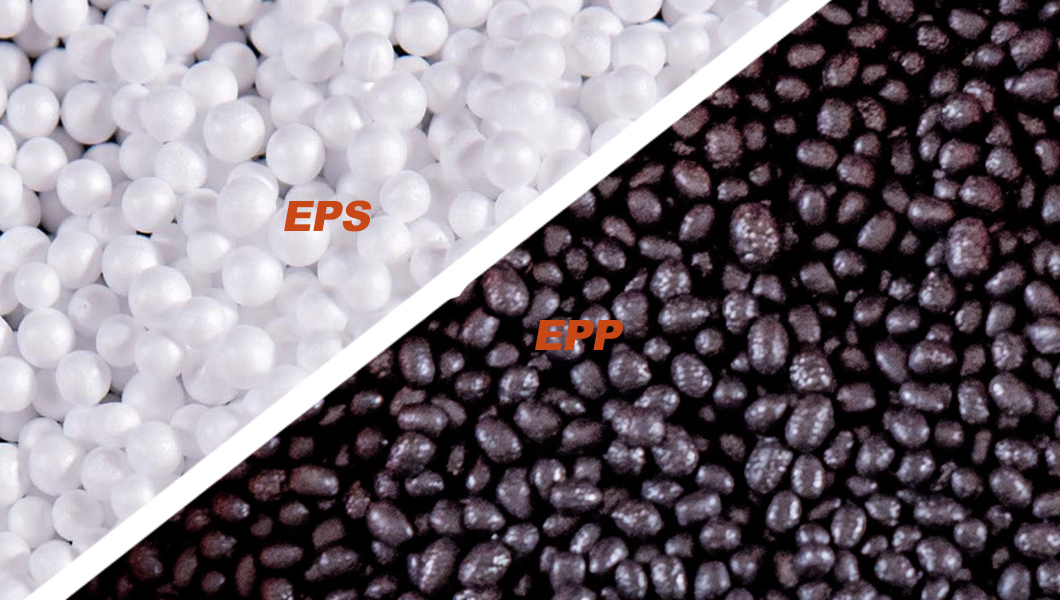
EPS vs EPP Foam
EPS and EPP foams are lightweight and durable materials commonly used in packaging, automotive, and insulation applications. Although both are produced from expanded polymer beads, they differ significantly in flexibility, impact resistance, thermal performance, and long-term durability.
Understanding the differences between EPS and EPP helps manufacturers select the most suitable material based on performance requirements, cost efficiency, and application demands.
Material Composition
EPS foam is manufactured from expanded polystyrene beads fused into a rigid, closed-cell structure. This gives the material excellent lightweight and insulation properties. EPP foam, on the other hand, is made from expanded polypropylene beads, creating a more flexible and resilient structure capable of withstanding repeated compression and impact without losing its shape.
These material differences influence their ideal applications. EPS is commonly used for disposable packaging, insulation boards, and low-impact protective solutions. EPP's flexibility and resilience make it better suited for reusable packaging, automotive safety components, and industrial applications that require repeated impact resistance.
Impact Resistance
EPS foam provides good cushioning and impact absorption for single-use applications. However, it can crack, compress, or permanently deform under repeated stress or heavy impacts. This makes it suitable for protective packaging and products designed for limited use.
EPP foam offers superior energy absorption and can recover its original shape after repeated compression. Its long-term resilience makes it ideal for automotive crash protection, reusable transport packaging, and industrial cushioning systems exposed to constant vibration or repeated impacts.
Thermal Insulation
EPS foam delivers excellent thermal insulation due to its rigid, closed-cell structure. It is widely used in building insulation panels, food containers, and cold-chain packaging because it effectively reduces heat transfer and helps maintain stable temperatures.
EPP foam also provides reliable thermal insulation, although its insulating performance is generally slightly lower than EPS. However, its added flexibility and durability make it suitable for applications requiring both insulation and mechanical strength, such as automotive insulation parts and reusable food packaging.
Flexibility and Reusability
EPS foam is rigid and less resistant to bending or repeated compression, which limits its reusability. While this rigidity works well for static or disposable applications, it is not suitable for products requiring repeated handling or long-term durability.
EPP foam is highly flexible and elastic, allowing it to withstand repeated impacts, bending, and compression without permanent damage. This makes it the preferred material for reusable packaging, automotive energy absorbers, and industrial protective components.
Cost and Manufacturing Considerations
EPS foam is generally more affordable and easier to manufacture in large sheets or molded forms. Its low production cost makes it an economical solution for disposable packaging and large-scale insulation applications.
EPP foam typically has a higher production cost due to its more advanced manufacturing process and enhanced performance characteristics. However, its durability, reusability, and long service life often provide greater long-term value for demanding industrial and automotive applications.
Here are the key differences between EPS foam and EPP foam:
| Properties | EPS Foam | EPP Foam |
| Density | Higher density | Lower density |
| Strength | Less resilient | More resilient |
| Flexibility | More rigid | More flexible |
| Impact Resistance | Lower impact resistance | Higher impact resistance |
| Thermal Conductivity | Low thermal conductivity | Moderate thermal conductivity |
| Temperature Resistance | Susceptible to high temperatures | Maintains integrity across a wider temperature range |
| Cost | Generally more cost-effective | Typically more expensive |
| Recyclability | Can be recycled but less common | Recyclable and reusable |
Applications of EPS and EPP Foam
EPS and EPP foams are widely used across various industries because of their lightweight structure, durability, and insulating performance. While EPS is best suited for rigid, protective, and thermal insulation applications, EPP is preferred for flexible, reusable, and high-impact environments.
Understanding their different applications helps manufacturers choose the most suitable foam for packaging, automotive, construction, consumer goods, and industrial use.
Packaging Solutions
EPS foam is commonly used for single-use packaging to protect fragile items such as electronics, glassware, and appliances during shipping. Its rigid structure provides strong shock absorption, helping reduce damage and transportation risks at a low cost.
EPP foam, in contrast, is widely used in reusable packaging systems such as transport trays and custom protective inserts. Its flexibility and resilience allow it to withstand repeated impacts, making it ideal for supply chains that require long-term durability and repeated handling.
Automotive Components
EPS foam is often used in lightweight interior components such as headrests, dashboard fillers, and insulation parts. Its structure helps improve comfort and thermal efficiency while keeping vehicle weight low.
EPP foam is commonly used in safety and energy-absorbing components like bumpers, crash protection systems, and seat structures. Its ability to absorb repeated impacts without deformation makes it highly suitable for safety-critical automotive applications.
Construction and Insulation
EPS foam is widely used in building insulation, wall panels, and roofing systems. Its excellent thermal performance helps improve energy efficiency and maintain stable indoor temperatures in residential and commercial buildings.
EPP foam is also used in construction, particularly in vibration damping, lightweight structural components, and reusable modular systems. Its durability and flexibility make it suitable for applications that require repeated use and resistance to physical stress.
Consumer Goods and Sports Equipment
EPS foam is commonly found in disposable consumer products such as coolers, protective packaging, and household appliance insulation. Its cost-effectiveness and insulating ability make it ideal for everyday applications.
EPP foam is used in protective sports gear such as helmets, padding, and impact-resistant equipment. Its ability to recover after repeated impacts ensures long-lasting protection, comfort, and safety in high-performance products.
Industrial Applications
EPS foam is used for temporary protective packaging, shipping inserts, and thermal insulation in industrial settings. It is a cost-efficient solution for large-scale, single-use protective needs.
EPP foam is preferred for reusable industrial solutions such as transport pallets, protective trays, and vibration-damping components for machinery and electronics. Its durability and resilience help reduce replacement costs and improve long-term operational efficiency.
Here are some uses of EPS and EPP foam:
| Aspect | EPS Foam | EPP Foam |
| Packaging Solutions | Single-use protective packaging | Reusable and durable packaging |
| Automotive Components | Cushions, insulation panels | Crash absorption, energy-absorbing |
| Construction & Insulation | Wall panels, roof boards | Lightweight panels, vibration damping |
| Consumer Goods & Sports | Cups, coolers, appliance protection | Helmets, sports padding, protective gear |
| Industrial Applications | Shipping inserts, insulation | Reusable trays, pallets, machine protection |
How to Choose Between EPS and EPP Foam
Selecting between EPS and EPP foam depends on your project’s specific requirements, including impact resistance, flexibility, thermal performance, durability, and production needs. Carefully evaluating these factors helps ensure the right material is chosen for optimal performance, cost efficiency, and long-term reliability across packaging, automotive, construction, and industrial applications.
Application Requirements
Start by identifying the intended application. Whether it is automotive safety components, protective packaging, insulation panels, or consumer products, the foam should match the functional demands of the use case. Choosing the right material ensures proper performance and prevents unnecessary material waste or product failure.
Impact Resistance
Impact performance is a key factor in material selection. EPS foam is suitable for single-impact protection, making it ideal for disposable packaging and short-term cushioning. In contrast, EPP foam is designed to withstand repeated impacts while maintaining its structure, making it more suitable for automotive parts, reusable packaging systems, and protective equipment that require long-term durability.
Flexibility and Reusability
EPS foam is rigid and can become damaged or broken under repeated stress, which limits it to single-use applications. EPP foam is highly flexible and elastic, allowing it to compress and recover multiple times without permanent deformation. This makes EPP a better choice for reusable trays, industrial components, and high-durability applications.
Thermal Insulation Requirements
EPS foam offers excellent thermal insulation and is widely used in construction panels, cold-chain packaging, and temperature-sensitive storage. EPP foam also provides insulation but combines it with greater mechanical strength and resilience, making it suitable for applications where insulation must be paired with durability and repeated use.
Production Volume and Cost
EPS foam is generally more cost-effective and easier to produce in large volumes, making it ideal for disposable and mass-market applications. EPP foam has a higher initial cost due to its advanced properties, but its long lifespan and reusability often result in lower overall lifecycle costs for high-performance applications.
Conclusion
The choice between EPS and EPP foam ultimately depends on performance requirements, usage conditions, and budget considerations. EPS foam is best suited for cost-sensitive, single-use, and insulation-focused applications, while EPP foam excels in demanding environments that require durability, flexibility, and repeated impact resistance.
For businesses seeking reliable foam solutions, selecting the right supplier is essential. Wholesale EPS and EPP foam options are available for applications ranging from packaging and insulation to automotive and industrial use, ensuring consistent quality, strength, and performance.
Choosing the appropriate foam material and supplier not only improves product protection and efficiency but also helps reduce long-term costs and enhances overall operational performance.

 English
 العربية
 Français
 Русский
 Español
 Português
 Deutsch
 italiano
 日本語
日本語 한국어
한국어 Nederlands
 Tiếng Việt
 ไทย
ไทย Polski
 Türkçe
 ភាសាខ្មែរ
 Bahasa Melayu
 ဗမာစာ
ဗမာစာ தமிழ்
தமிழ் Filipino
 Bahasa Indonesia
 magyar
 Română
 Čeština
 қазақ
қазақ Српски
 हिन्दी
 فارسی
فارسی Kiswahili
 Norsk
Norsk Svenska
 українська
 Ελληνικά
 Suomi
Suomi עברית
עברית Latine
 Dansk
Dansk اردو
اردو বাংলা
বাংলা Afrikaans
 नेपाली
 Oʻzbekcha
 Azərbaycan dili
 Български
 guarani
 Hausa
Hausa Kurdî
Kurdî Kurdî
Kurdî Lietuvių
 Wikang Tagalog
 isiZulu


