PE Foam EVA Foam with Heat Lamination
TOPSUN supplies cross-linked polyethylene foam and PE foam laminated with EVA foam for protective case inserts, industrial packaging, tool organization, automotive components, construction insulation, seals, pads and other custom applications. Heat lamination combines multiple foam layers without relying solely on liquid adhesive, helping create thicker, multi-density or multi-color foam structures for CNC routing, die cutting and compression molding.
The closed-cell structure provides low water absorption, good cushioning, thermal insulation, chemical resistance and dimensional stability. PE foam and EVA foam can be selected by density, hardness, thickness, color and surface finish to match the required impact protection, appearance and processing method.
Available materials: cross-linked PE foam, EVA foam, XPE foam, IXPE foam and laminated foam composites.
Standard PE foam grades: PE25, PE30, PE40, PE45, PE60, PE90, PE120 and PE140.
Standard block sizes: 1000 × 2000 mm, 1200 × 2400 mm and 1500 × 2500 mm.
Custom processing: heat lamination, CNC routing, die cutting, slicing, adhesive backing, engraving, molding, embossing and screen printing.
Key Features of Cross-Linked PE Foam
Lightweight and resilient: provides cushioning while adding limited weight to cases, packaging and fabricated parts.
Impact and shock absorption: helps protect tools, electronics, instruments and other products during handling and transportation.
Closed-cell moisture resistance: absorbs very little water and helps resist moisture-related deterioration.
Thermal and acoustic insulation: the fine cell structure helps reduce heat transfer, vibration and sound transmission in suitable assemblies.
Chemical resistance: offers resistance to many acids, alkalis, oils and common industrial chemicals.
Non-abrasive surface protection: helps reduce scratching, denting and surface damage when an appropriate grade is selected.
Easy fabrication: suitable for cutting, laminating, routing, engraving, die cutting, molding and adhesive conversion.
PE Foam and EVA Foam Heat Lamination
Heat lamination bonds compatible PE and EVA foam layers by controlled heating and pressure. The process can produce multilayer foam blocks with different densities, colors or functional layers. These blocks can then be converted into custom case inserts, tool trays, packaging supports, gaskets and molded components.
A harder PE or EVA layer can provide shape retention and load support, while a softer layer can improve cushioning and contact protection. Contrasting colors can also create a visual tool-control system: when a tool is removed, the lower layer becomes visible.
Advantages of Multi-Layer Foam Lamination
Combines different densities and hardness levels in one foam structure.
Creates thicker blocks for deep CNC-routed cavities and equipment cases.
Supports dual-color or multi-color tool organization and visual inventory control.
Allows the surface layer and support layer to be optimized separately.
Can be combined with adhesive backing, films, fabrics or other compatible facings.
Cross-Linked Polyethylene Foam Specifications
The following values are typical test results for TOPSUN PE foam grades. Actual performance may vary with formulation, color, thickness, test conditions and production tolerance. Confirm the final technical specification before ordering.
| PE Foam Technical Specification |
| Testing Item | Testing Standard / Unit | Testing Results | Block Size |
| PE25 | PE30 | PE40 | PE45 | PE60 | PE90 | PE120 | PE140 |
| Density | GB/T 6343 | kg/m³ | 25 | 32 | 42 | 49 | 62 | 96 | 128 | 144 | 1000 × 2000 mm
1200 × 2400 mm
1500 × 2500 mm |
| Tensile Strength | GB/T 6344 | kPa | 160 | 170 | 305 | 305 | 305 | 350 | 380 | 400 |
| Elongation | GB/T 6344 | % | 165 | 174 | 190 | 190 | 190 | 160 | 160 | 160 |
| Hardness | — | Shore C | 18 | 23 | 26 | 30 | 42 | 55 | 60 | 72 |
| Tear Strength | ASTM D3575 | N/mm | 1 | 1.2 | 1.3 | 1.5 | 2.3 | 4.4 | 5 | 6 |
| 25% Compression Force Deflection | GB/T 8813 | kPa | 35 | 45 | 60 | 70 | 70 | 80 | 95 | 95 |
| Compression Set | GB/T 6669 | % | 2 | 2 | 2 | 2 | 2 | 2 | 3 | 3 |
| Water Absorption Rate | — | g/cm³ | 0.002 | 0.001 | 0.001 | 0.001 | 0.001 | 0.001 | 0.001 | 0.001 |
| Thermal Conductivity | — | W/m·K | 0.037 | 0.038 | 0.038 | 0.038 | 0.038 | 0.038 | 0.037 | 0.037 |
What Is PE Foam?
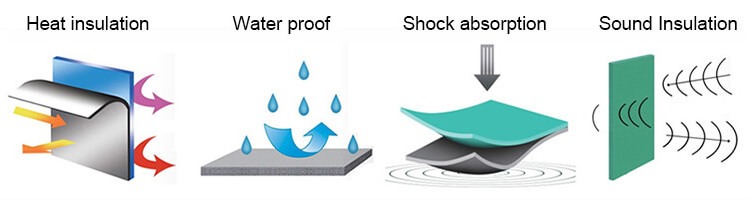
PE foam, or polyethylene foam, is a lightweight closed-cell foam manufactured from polyethylene resin. Cross-linked grades have a fine and uniform cellular structure, smooth surface, good elasticity and higher dimensional stability than many non-cross-linked foams. The material is used where cushioning, moisture resistance, insulation, buoyancy and clean fabrication are required.
PE foam can be supplied as sheets, blocks, rolls, laminated structures or finished components. Depending on the application, it can be cut, routed, thermoformed, die-cut, laminated, engraved, printed or supplied with pressure-sensitive adhesive.
TOPSUN PE Foam Process Flow
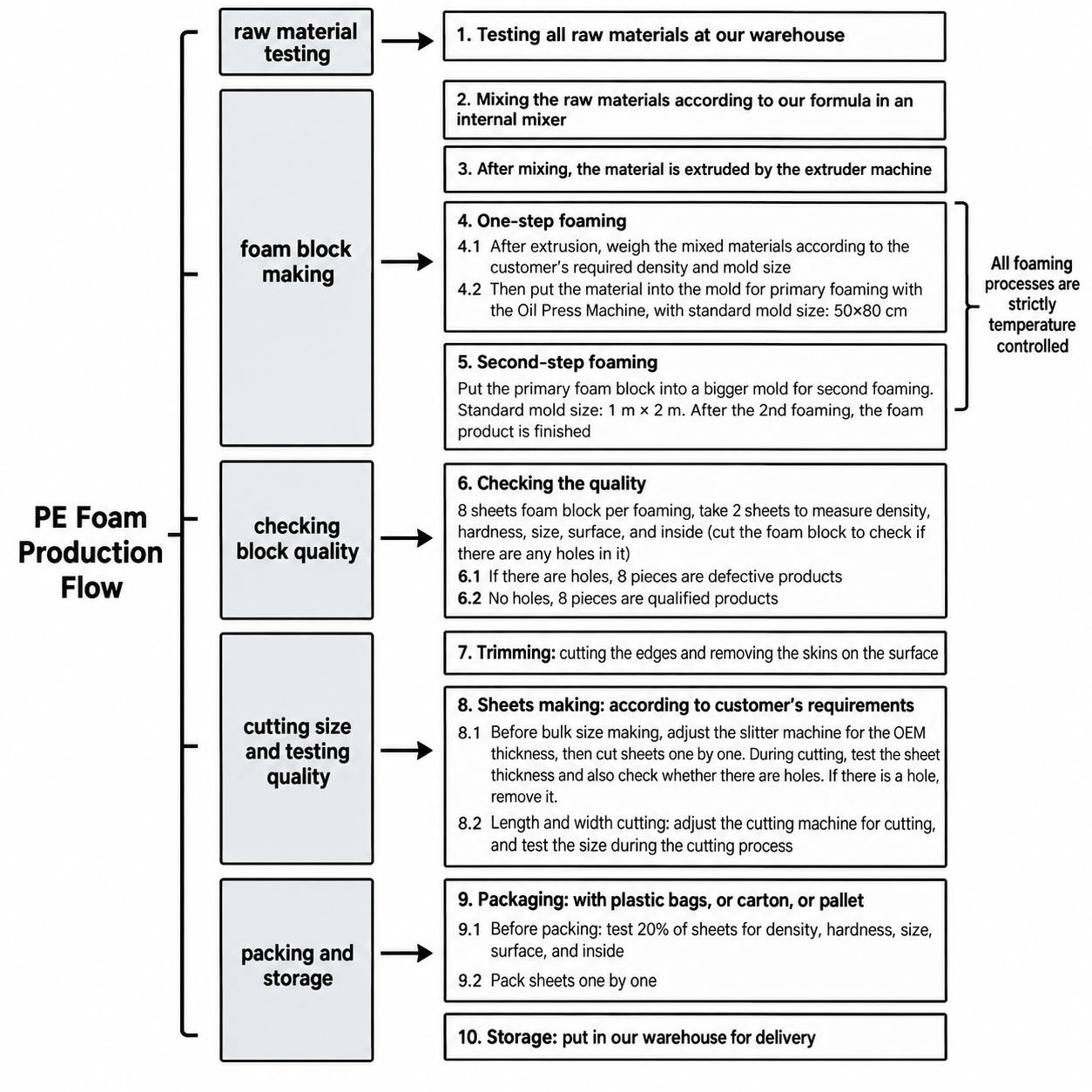
The production and conversion workflow can include raw-material formulation, foaming, cross-linking, block or sheet preparation, slicing, heat lamination, CNC routing, die cutting, adhesive application, inspection and packing. The exact process depends on foam density, final thickness, part geometry and end-use requirements.
Benefits of PE Foam
Wide Density and Hardness Range
PE foam is available from lower-density cushioning grades to higher-density structural grades. This allows the firmness, support, cut quality and compression resistance to be matched to the product weight and protection requirement.
Resilience and Impact Protection
The material absorbs impact energy and recovers after compression, making it useful for reusable packaging, transport cases, protective padding and blocking-and-bracing systems.
Thermal and Moisture Performance
The closed-cell structure helps limit heat transfer and water absorption. PE foam is therefore used in thermal packaging, pipe insulation, construction joints, floor underlayment and other environments where moisture resistance is important.
Chemical and Environmental Resistance
Cross-linked PE foam resists many chemicals, oils and solvents and does not readily support mold or mildew. Suitability should still be confirmed against the actual chemical concentration, temperature and exposure duration.
Buoyancy and Low Weight
Its low density and closed-cell structure provide buoyancy for marine, sports and recreational components while keeping the finished product lightweight.
Applications of PE Foam and EVA Foam
Protective Packaging and Case Inserts
Custom PE and EVA foam inserts protect tools, electronics, test instruments, medical devices, optics and other sensitive products. CNC-routed cavities can be produced from customer drawings, CAD files or physical samples.
Construction and Insulation
PE foam can be used for expansion-joint fillers, sill gaskets, floor underlayment, insulation boards, pipe insulation, sealing strips and vibration-isolation layers. The complete assembly must be designed according to the relevant thermal, fire and building requirements.
Automotive and Transportation
Applications include interior padding, seals, gaskets, anti-rattle pads, acoustic layers, vibration-control components and protective transport packaging.
Medical and Healthcare
Selected foam grades can be converted into orthopedic padding, positioning supports, equipment-case inserts and medical-device packaging. Required compliance and skin-contact specifications must be confirmed before material selection.
Sports, Recreation and Marine
PE and EVA foams are used in exercise mats, flotation components, protective sports padding, targets, pool products, boat components and recreational cushioning.
Electronics and Industrial Components
Converted foam parts can provide cushioning, spacing, sealing, insulation and vibration control for electronic devices, cabinets, machinery and precision instruments. Antistatic or conductive performance should be specified where electrostatic control is required.
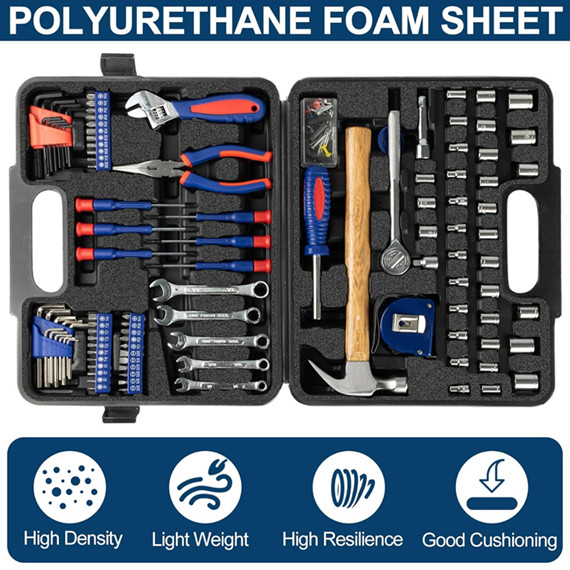
PE Foam Tool Box Insert
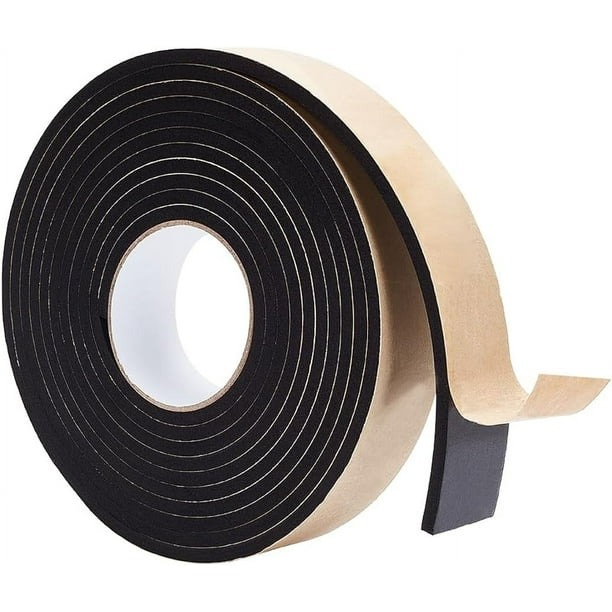
PE Foam Tape
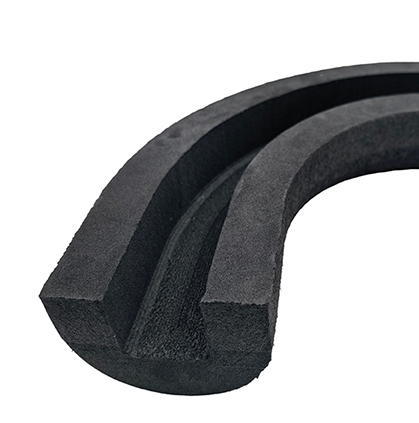
PE Foam
Specific Uses for PE Foam
Common uses include protective packaging, surface protection, cold-chain packaging, automotive components, sports and leisure products, void fill, medical supports, construction seals, military cases, blocking and bracing, floor underlayment, agriculture products, archery targets, flotation parts, tool-control inserts and adhesive foam tapes.
Custom PE Foam Processing Capabilities
Cutting and Thickness Slicing
Blocks, sheets and rolls can be cut to the requested length and width, then sliced to the required thickness within the applicable manufacturing tolerance.
Heat, Flame and Adhesive Lamination
Available lamination methods include heat lamination, hot-melt film lamination, flame lamination and pressure-sensitive adhesive lamination. The process is selected according to material compatibility, bond strength, temperature exposure and end use.
CNC Routing and Digital Cutting
CNC equipment can produce cavities, profiles, channels and custom contours directly from digital drawings, making it suitable for prototypes, tool inserts and complex low-to-medium-volume parts.
Die Cutting
Steel-rule or custom tooling can produce repeatable foam pads, seals, gaskets and inserts efficiently for medium-to-high-volume production.
Compression Molding and Thermoforming
Three-dimensional foam and foam-composite parts can be molded where defined geometry, contoured surfaces, variable wall thickness or dimensional control is required.
Engraving, Printing and Adhesive Backing
Foam surfaces can be engraved or screen printed with logos, labels and tool positions. Pressure-sensitive adhesive and release liners can be added for installation-ready tapes, pads and seals.
Why Choose TOPSUN as Your PE Foam Supplier?
TOPSUN supplies and converts EVA foam, PE foam, XPE foam, IXPE foam, CR foam, EPDM foam, neoprene foam, SBR foam, NBR foam and microcellular PVC foam. Materials are available in sheets, rolls, blocks and finished custom parts.
Multiple PE foam densities and hardness levels for cushioning or structural support.
PE-to-EVA and multilayer foam heat-lamination capability.
CNC, die-cut, molded and adhesive-backed custom components.
Support for material selection based on density, hardness, compression and end-use conditions.
Sample and prototype evaluation before bulk production.
Our facility is located in Changzhou, Jiangsu Province, with convenient access to Shanghai Port for international shipments.
Need custom PE foam, EVA foam lamination or a case insert?
Send your material, density, hardness, thickness, size, color, quantity, drawing and application details to july@topsunfoam.com. For custom inserts, include the case dimensions, product weight, cavity depth and CAD file or product sample.
Request a Quote
PE Foam and EVA Foam FAQ
What Is the Difference Between PE Foam and EVA Foam?
PE foam is generally lightweight, moisture resistant and available across a wide density range. EVA foam typically provides a softer feel, flexible resilience, good color options and strong suitability for molded or precision-cut parts. The better material depends on cushioning, hardness, appearance, temperature, chemical exposure and processing requirements.
Can PE Foam and EVA Foam Be Heat Laminated Together?
Yes. Compatible PE and EVA foam grades can be heat laminated into multi-layer structures. A production trial may be required to confirm bonding performance because foam formulation, surface condition, density and operating temperature affect the result.
Which Foam Density Is Best for a Custom Case Insert?
Lower-density foam provides softer cushioning, while higher-density foam offers greater load support, cleaner machining and improved shape retention. Many inserts use multiple densities: a firm base or structural layer combined with a softer contact layer. The product weight, drop risk, cavity depth and case dimensions should be reviewed before selection.
Is Cross-Linked PE Foam Waterproof?
Cross-linked PE foam has a closed-cell structure and very low water absorption, making it suitable for moisture-resistant cushioning, insulation and flotation applications. However, fabricated joints, cut edges and the complete product assembly still need to be designed for the actual exposure conditions.
Can TOPSUN CNC-Cut Foam from a CAD Drawing?
Yes. CNC routing and digital cutting can produce custom cavities and contours from suitable CAD files. Provide the file format, finished dimensions, tolerance, cavity depth, foam specification and expected quantity for review.
Can PE Foam Be Supplied with Adhesive Backing?
Yes. Pressure-sensitive adhesive and release liner can be laminated to one or both sides. The adhesive should be selected according to the substrate, temperature range, humidity, expected service life and required peel strength.
Is PE Foam Suitable for Thermal Insulation?
The listed PE foam grades have typical thermal conductivity values of approximately 0.037–0.038 W/m·K. Suitability depends on thickness, temperature, assembly design and the required thermal resistance. Confirm the test method and final grade for insulation projects.
Is PE Foam Fireproof?
Standard PE foam should not be described as fireproof. Flame-retardant grades may be available for specific test methods, but the required standard must be supplied before material selection. Final compliance can depend on foam thickness, density and the complete product assembly.
How Do I Request Samples and a Quotation?
Email july@topsunfoam.com with the foam type, density, hardness, thickness, size, color, quantity, processing method and destination country. For custom parts, include a drawing, CAD file or physical sample. TOPSUN will review the specification and provide sample and quotation details.

 English
 العربية
 Français
 Русский
 Español
 Português
 Deutsch
 italiano
 日本語
日本語 한국어
한국어 Nederlands
 Tiếng Việt
 ไทย
ไทย Polski
 Türkçe
 ភាសាខ្មែរ
 Bahasa Melayu
 ဗမာစာ
ဗမာစာ தமிழ்
தமிழ் Filipino
 Bahasa Indonesia
 magyar
 Română
 Čeština
 қазақ
қазақ Српски
 हिन्दी
 فارسی
فارسی Kiswahili
 Norsk
Norsk Svenska
 українська
 Ελληνικά
 Suomi
Suomi עברית
עברית Latine
 Dansk
Dansk اردو
اردو বাংলা
বাংলা Afrikaans
 नेपाली
 Oʻzbekcha
 Azərbaycan dili
 Български
 guarani
 Hausa
Hausa Kurdî
Kurdî Kurdî
Kurdî Lietuvių
 Wikang Tagalog
 isiZulu


