48 × 96 Inch Closed-Cell XLPE Foam Sheets
Topsun supplies 48 × 96 inch closed-cell cross-linked polyethylene foam sheets for protective packaging, case inserts, tool organization, industrial cushioning, surface protection, automotive components, thermal insulation and custom fabricated foam parts.
The 48 × 96 inch format is equivalent to a standard 4 × 8 ft sheet size and is convenient for North American fabricators, packaging converters and industrial users working with inch-based drawings and cutting equipment.
The current PE foam technical range includes PE25, PE30, PE40, PE45, PE60, PE90, PE120 and PE140 grades, with listed densities from 25 kg/m³ to 144 kg/m³. Different grades provide different levels of hardness, compression resistance, tensile strength and tear resistance.
Topsun can also convert PE foam sheets into pads, strips, packaging inserts, tool-case inserts, gaskets and custom die-cut parts through cutting, slicing, lamination, laser cutting, die cutting, engraving, printing and adhesive backing.
48 × 96 Inch PE Foam Sheet Specifications
| Property | Specification |
| Material | Cross-Linked Polyethylene Foam / XLPE / PE Foam |
| Cell Structure | Closed Cell |
| US Sheet Size | 48 × 96 in / 4 × 8 ft |
| Nominal Metric Equivalent | Approximately 1220 × 2440 mm |
| Other Listed Block Sizes | 1000 × 2000 mm, 1200 × 2400 mm, 1500 × 2500 mm |
| Density Grades | 25, 32, 42, 49, 62, 96, 128 and 144 kg/m³ |
| Available Forms | Sheet, Block, Roll, Strip, Pad, Insert and Custom Converted Part |
| Typical Applications | Packaging, Case Inserts, Tool Inserts, Surface Protection, Automotive, Construction and Insulation |
| Processing | Cutting, Slicing, Lamination, Laser Cutting, Die Cutting, Engraving, Printing and Adhesive Backing |
Why Use 48 × 96 Inch PE Foam Sheets?
The 48 × 96 inch sheet format is commonly referred to as a 4 × 8 ft sheet. It is convenient for customers whose case dimensions, drawings, CNC programs, die-cutting layouts and production systems are based on imperial units.
Convenient US format: 4 × 8 ft sheets fit naturally into many North American industrial cutting and fabrication workflows.
Large cutting area: suitable for nesting multiple packaging inserts, pads, strips or components within one sheet.
Multiple density grades: select softer or firmer foam according to cushioning and support requirements.
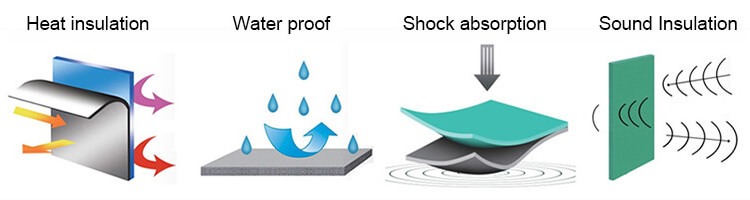
Closed-cell structure: provides low water absorption and useful moisture resistance.
Lightweight cushioning: useful for protecting equipment without adding excessive package weight.
Compression recovery: current listed compression-set values range from 2% to 3% depending on grade.
Thermal insulation: current listed thermal conductivity values are approximately 0.037–0.038 W/m·K.
Easy fabrication: XLPE sheets can be cut, die cut, laminated, engraved and converted into custom parts.
PE Foam Technical Specifications
The following table shows the current listed performance data for Topsun PE25, PE30, PE40, PE45, PE60, PE90, PE120 and PE140 grades. Density should be considered together with hardness, compression force, tensile strength, tear strength and the requirements of the finished component.
| Testing Item | Testing Standard | Unit | PE25 | PE30 | PE40 | PE45 | PE60 | PE90 | PE120 | PE140 | Block Size |
| Density | GB/T 6343 | kg/m³ | 25 | 32 | 42 | 49 | 62 | 96 | 128 | 144 | 1000 × 2000 mm
1200 × 2400 mm
1500 × 2500 mm |
| Tensile Strength | GB/T 6344 | kPa | 160 | 170 | 305 | 305 | 305 | 350 | 380 | 400 |
| Elongation | GB/T 6344 | % | 165 | 174 | 190 | 190 | 190 | 160 | 160 | 160 |
| Hardness | — | Shore C | 18 | 23 | 26 | 30 | 42 | 55 | 60 | 72 |
| Tear Strength | ASTM D3575 | N/mm | 1.0 | 1.2 | 1.3 | 1.5 | 2.3 | 4.4 | 5.0 | 6.0 |
| 25% Compression Force Deflection | GB/T 8813 | kPa | 35 | 45 | 60 | 70 | 70 | 80 | 95 | 95 |
| Compression Set | GB/T 6669 | % | 2 | 2 | 2 | 2 | 2 | 2 | 3 | 3 |
| Water Absorption Rate | — | g/cm³ | 0.002 | 0.001 | 0.001 | 0.001 | 0.001 | 0.001 | 0.001 | 0.001 |
| Thermal Conductivity | — | W/m·K | 0.037 | 0.038 | 0.038 | 0.038 | 0.038 | 0.038 | 0.037 | 0.037 |
The values above reproduce the current listed PE foam technical data. Confirm the exact grade, sheet dimensions, thickness and required performance for the finished application before production.
PE Foam Video
What Is Closed-Cell XLPE Foam?
XLPE foam is cross-linked polyethylene foam with a closed-cell cellular structure. It combines low weight with cushioning, resilience, low water absorption and useful thermal insulation.
Cross-linking creates a more stable polymer network and helps produce a fine, consistent foam structure suitable for sheets, blocks and fabricated components.
The material is easy to cut and convert, making it suitable for packaging inserts, equipment cases, pads, spacers, insulation components, automotive parts and industrial applications.
Topsun PE Foam Process Flow
Foam conversion can include block preparation, thickness slicing, sheet cutting, lamination, die cutting, engraving, adhesive application, inspection and finished-product packing.
The required processing route depends on foam density, sheet thickness, finished dimensions, part geometry and production quantity.
Choosing the Right PE Foam Density
| Grade | Density | Shore C | 25% CFD |
| PE25 | 25 kg/m³ | 18 | 35 kPa |
| PE30 | 32 kg/m³ | 23 | 45 kPa |
| PE40 | 42 kg/m³ | 26 | 60 kPa |
| PE45 | 49 kg/m³ | 30 | 70 kPa |
| PE60 | 62 kg/m³ | 42 | 70 kPa |
| PE90 | 96 kg/m³ | 55 | 80 kPa |
| PE120 | 128 kg/m³ | 60 | 95 kPa |
| PE140 | 144 kg/m³ | 72 | 95 kPa |
Lower-density grades provide lighter and softer cushioning. Higher-density grades generally provide greater hardness, tensile strength and tear resistance and can provide more support for heavier products or narrow cavity walls.
Density alone should not determine material selection. Product weight, foam thickness, available cushioning distance, expected impacts and finished-part geometry should also be considered.
48 × 96 PE Foam Sheets for Protective Packaging
Large-format 4 × 8 ft PE foam sheets can be converted into protective packaging for industrial equipment, electronics, tools, instruments, appliances and other products requiring cushioning during transportation and storage.
A large sheet allows converters to nest multiple pads, corner protectors, spacers and packaging inserts within the same cutting layout.
Foam density and thickness should be selected according to product weight, fragility, expected handling conditions and the cushioning distance available inside the package.
4 × 8 ft PE Foam for Case Inserts and Tool Control
48 × 96 inch PE foam sheets and blocks can be fabricated into equipment-case inserts, tool box inserts, protective trays and reusable transport packaging.
Custom cavities can be produced according to tool dimensions, product drawings, CAD data or physical reference samples.
Different PE foam densities can be selected according to tool weight, cavity depth, wall thickness and the amount of support required from the insert.
Optimizing a 48 × 96 Foam Sheet Cutting Layout
Buyers ordering 4 × 8 ft foam sheets can improve material utilization by providing the finished-part dimensions or complete cutting drawing.
| Design Input | Why It Matters |
| Finished Part Size | Determines how many parts can be nested within a 48 × 96 inch sheet. |
| Foam Thickness | Influences cushioning, cutting method and finished-part rigidity. |
| Foam Density | Influences support, hardness and cutting behavior. |
| Cutting Tolerance | Affects spacing between parts and usable sheet area. |
| Cavity Layout | Important for case inserts and multi-part packaging designs. |
| Production Quantity | Helps determine whether digital cutting, laser cutting or die cutting is more appropriate. |
PE Foam for Surface Protection
Suitable PE foam grades can provide a cushioning layer between a finished product and harder packaging or equipment surfaces.
Correctly selected foam can help reduce direct contact, scratching, dents and handling damage during storage, assembly and transportation.
Painted, polished, optical or other sensitive surfaces should be evaluated with the actual foam grade and intended contact conditions before production use.
PE Foam for Thermal Insulation
The current PE foam technical table lists thermal conductivity values of approximately 0.037–0.038 W/m·K.
Combined with the closed-cell structure, this makes XLPE suitable for evaluation in thermal insulation, packaging, floor systems, pipe-related components and other applications where low thermal conductivity and moisture resistance are useful.
Finished thermal performance depends on foam thickness, compression, joints, installation method and the complete insulation assembly.
PE Foam for Automotive and Industrial Components
Closed-cell polyethylene foam can be converted into pads, spacers, seals, anti-rattle components, protective layers and vibration-control parts for suitable automotive and industrial assemblies.
For these applications, specify density, thickness, compression requirements, operating conditions and adhesive substrate where applicable.
PE Foam for Construction and Flooring
PE foam sheets can be evaluated for suitable expansion-joint fillers, floor underlayment, insulation layers, sealing strips and other construction components.
Construction projects should specify thickness, density, long-term compression conditions, moisture exposure and applicable performance requirements before material selection.
Marine and Flotation Applications
The low-density closed-cell structure of polyethylene foam provides buoyancy and low water absorption, allowing selected grades to be evaluated for flotation, recreational and marine-related foam components.
Safety-critical flotation products should be evaluated and tested as complete finished products according to the applicable requirements for their destination market.
Typical PE Foam Applications
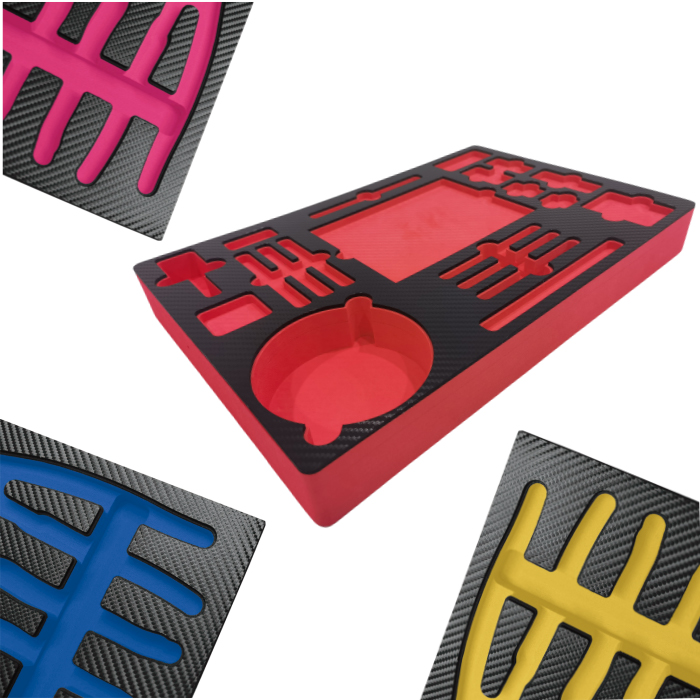
PE Foam Tool Box Insert
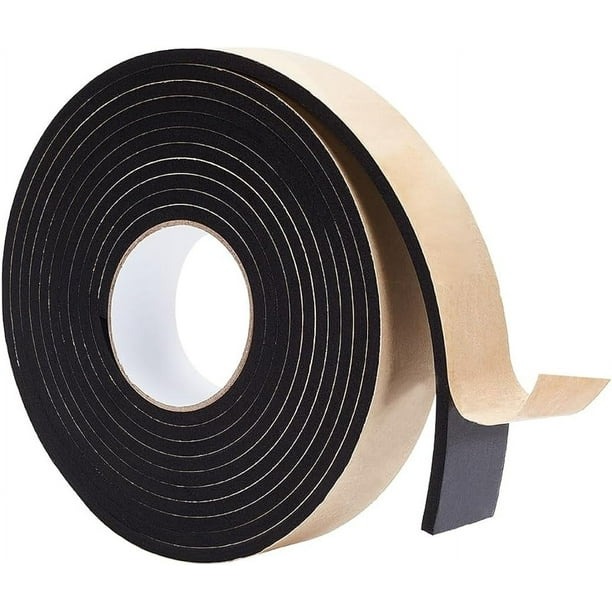
PE Foam Tape
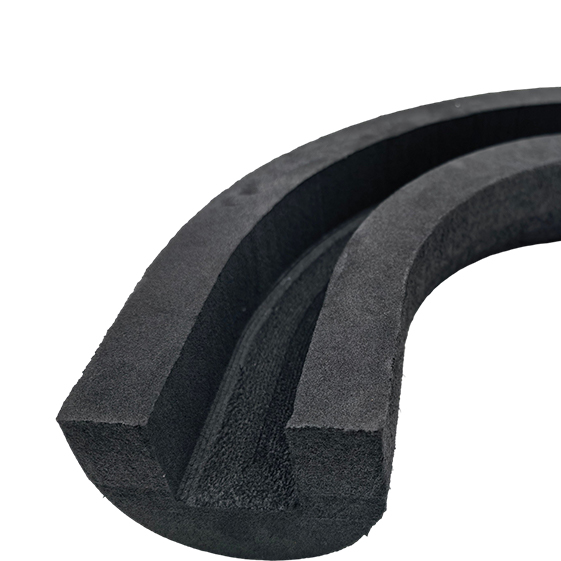
PE Foam Sheet
Custom 48 × 96 PE Foam Sheet Processing
Sheet Cutting
Full sheets can be cut into smaller rectangular or custom-sized pieces according to customer drawings and finished dimensions.
Thickness Slicing
Larger foam blocks can be sliced to suitable thicknesses for sheets, packaging inserts, pads and other converted products.
Lamination
Suitable foam layers can be laminated to increase thickness or create multilayer foam structures. Hot-melt film, flame and pressure-sensitive adhesive lamination can be evaluated according to the material combination.
Laser and Digital Cutting
Suitable foam parts can be cut from digital drawings without dedicated cutting dies, making the process useful for prototypes and selected custom production requirements.
Die Cutting
Die cutting is suitable for repeated production of pads, gaskets, strips, seals and packaging components where dedicated tooling is appropriate.
Compression Molding
Compression molding can be evaluated for suitable three-dimensional foam and foam-composite components with defined geometry.
Engraving
Engraving is suitable for customized tool box inserts, case inserts, product cavities and identification features.
Silk-Screen Printing
Logos, product identification and suitable patterns can be printed on compatible foam surfaces.
Adhesive Backing
Pressure-sensitive adhesive and release liner can be applied to suitable PE foam sheets, strips, pads and custom parts.
Information Required for a 48 × 96 PE Foam Quote
| Requirement | Information to Provide |
| Application | Packaging, case insert, insulation, automotive, construction or other use. |
| Sheet Size | Confirm 48 × 96 inch or required metric/custom dimensions. |
| Thickness | Specify required finished thickness. |
| Density | Specify PE grade or required firmness and compression performance. |
| Color | Specify required foam color where applicable. |
| Finished Part Size | Provide dimensions where sheets will be converted into smaller components. |
| Packaging Product | Provide product dimensions, weight and required cavity layout. |
| Drawing | Provide a 2D drawing, CAD file or reference sample for custom parts. |
| Adhesive | Specify adhesive requirement and bonding substrate if required. |
| Quantity | Provide prototype, trial and estimated production quantities. |
About Topsun Foam
Topsun supplies PE foam, EVA foam, XPE foam, IXPE foam, CR foam, EPDM foam, neoprene foam, SBR foam, NBR foam and microcellular soft PVC foam for packaging, automotive, construction, insulation and industrial applications.
Foam materials can be supplied as sheets, rolls, blocks and custom converted parts according to customer dimensions, drawings and finished-product requirements.
Our facility is located in Changzhou City, Jiangsu Province, China, with convenient access to Shanghai Port for international shipments.
48 × 96 Inch Closed-Cell PE Foam FAQ
What size is a 48 × 96 inch PE foam sheet?
A 48 × 96 inch sheet is a standard 4 × 8 ft format, with a nominal metric equivalent of approximately 1220 × 2440 mm.
Is this foam XLPE?
Yes. The material on this page is cross-linked closed-cell polyethylene foam, commonly abbreviated as XLPE foam.
What PE foam densities are available?
The current technical table includes listed densities of 25, 32, 42, 49, 62, 96, 128 and 144 kg/m³.
Which PE foam density should I choose?
The correct density depends on product weight, required firmness, compression resistance, foam thickness, cavity geometry and cushioning requirements. Density should not be selected independently from the finished application.
What is the Shore C hardness range?
Current listed Shore C values range from 18 for PE25 to 72 for PE140.
What is the 25% Compression Force Deflection range?
Current listed 25% Compression Force Deflection values range from 35 kPa to 95 kPa depending on PE foam grade.
What is the compression set of the PE foam?
The current table lists 2% compression set for PE25 through PE90 and 3% for PE120 and PE140.
Is closed-cell PE foam waterproof?
Closed-cell PE foam has low water absorption and good moisture resistance. Finished water resistance depends on cut edges, joints, compression, adhesive systems and the complete product construction.
What is the thermal conductivity?
The current PE foam technical table lists thermal conductivity values of approximately 0.037–0.038 W/m·K depending on grade.
Can 48 × 96 PE foam sheets be used for case inserts?
Yes. Large PE foam sheets can be cut or engraved into custom case inserts, tool box inserts, equipment trays and protective packaging according to product dimensions or drawings.
Can Topsun cut the 4 × 8 ft sheets into smaller pieces?
Yes. Sheets can be converted into smaller dimensions, pads, strips or custom profiles according to customer requirements.
Can custom cavities be produced?
Yes. Custom insert cavities can be evaluated according to CAD drawings, product dimensions or physical reference samples.
Can PE foam sheets be laminated?
Yes. Suitable PE foam layers can be laminated to create thicker blocks or multilayer constructions according to project requirements.
Can adhesive backing be added?
Yes. Pressure-sensitive adhesive and release liner can be applied to suitable PE foam sheets, strips, pads and custom die-cut parts.
Can the foam be die cut?
Yes. Die cutting can be used for repeated production of suitable pads, gaskets, seals, spacers and packaging components.
Is standard PE foam fireproof?
Standard PE foam should not automatically be described as fireproof. If a project requires defined flame-retardant performance, provide the required test standard and material thickness so an appropriate grade can be evaluated.
What information should I provide for a quotation?
Please provide the required sheet size, density or firmness, thickness, color, application, finished-part dimensions, processing requirements and estimated quantity.
How can I request a PE foam sample?
Send your requirements to july@topsunfoam.com, including size, density, thickness, application, processing requirements and estimated quantity for evaluation.

 English
 العربية
 Français
 Русский
 Español
 Português
 Deutsch
 italiano
 日本語
 한국어
 Nederlands
 Tiếng Việt
 ไทย
 Polski
 Türkçe
 ភាសាខ្មែរ
 Bahasa Melayu
 ဗမာစာ
 தமிழ்
 Filipino
 Bahasa Indonesia
 magyar
 Română
 Čeština
 қазақ
 Српски
 हिन्दी
 فارسی
 Kiswahili
 Norsk
 Svenska
 українська
 Ελληνικά
 Suomi
 עברית
 Latine
 Dansk
 اردو
 বাংলা
 Afrikaans
 नेपाली
 Oʻzbekcha
 Azərbaycan dili
 Български
 guarani
 Hausa
 Kurdî
 Kurdî
 Lietuvių
 Wikang Tagalog
 isiZulu