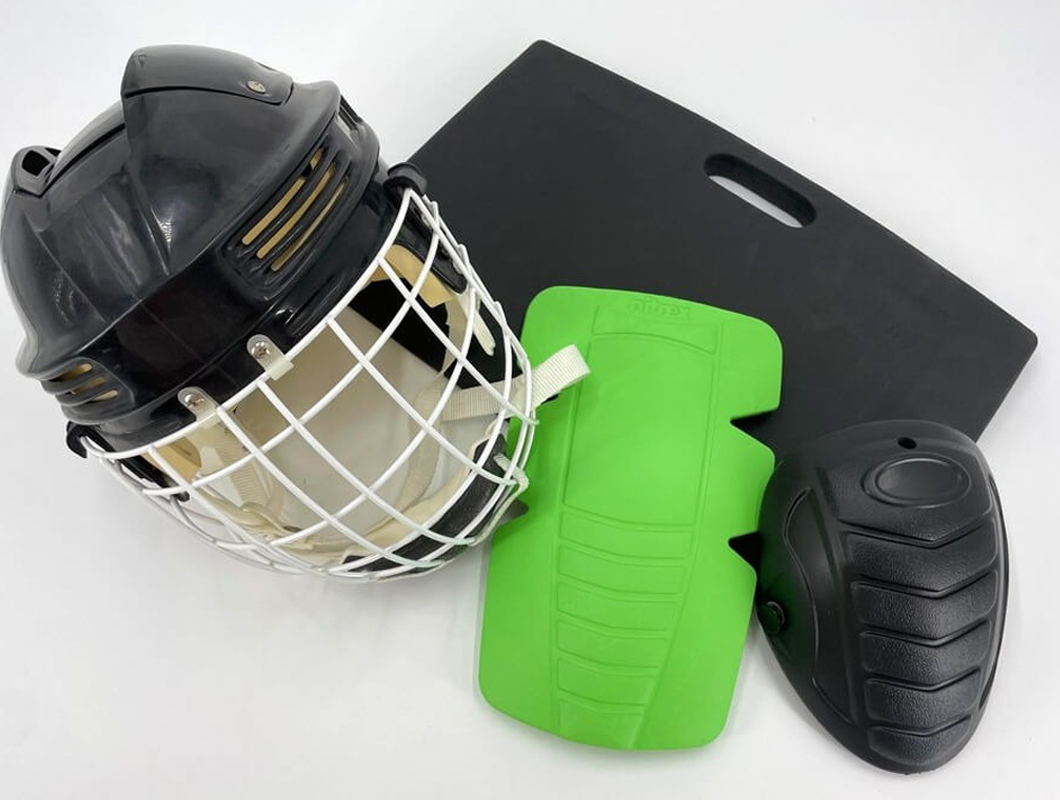
Protective gear plays a vital role in safeguarding individuals across a wide range of activities—from sports and outdoor recreation to demanding industrial environments. While protection is the primary function, effective gear must also preserve comfort, flexibility, and freedom of movement. This is where EVA foam stands out.
Ethylene-vinyl acetate (EVA) foam has become a widely trusted material in protective equipment thanks to its unique balance of impact protection, lightweight structure, and wearer comfort. Commonly used in helmets, padding, and protective armor, EVA foam delivers reliable performance without restricting mobility. In this article, we explore why EVA foam has become the preferred solution for enhancing both safety and performance in modern protective gear.
Why EVA Foam Is Widely Used in Protective Gear?
EVA foam is widely used in protective gear due to its exceptional performance characteristics. One of its key advantages is its superior shock absorption. Under impact or pressure, EVA foam compresses and disperses force, helping to reduce impact energy and minimize the risk of injury. This makes it an ideal cushioning material for protective equipment used in sports, recreation, and high-impact activities.
In addition to protection, EVA foam offers lightweight flexibility that enhances wearer comfort and freedom of movement. It can be easily molded into a variety of shapes and densities, allowing designers to tailor protection for specific applications. EVA foam is also water-resistant, maintaining its performance in wet or humid environments. Combined with its durability and resistance to chemicals and repeated use, these qualities make EVA foam a reliable and long-lasting choice for protective gear.
Properties of EVA Foam
EVA foam is a highly durable material valued for its performance-driven properties, making it a preferred choice across many industries—particularly in protective gear manufacturing. Key characteristics include:
●Density Versatility: EVA foam is available in a broad range of densities, allowing it to be precisely matched to application requirements. Density can be adjusted to achieve the ideal balance of protection, rigidity, and flexibility for specific uses.
●Impact Absorption: EVA foam effectively absorbs and dissipates impact energy, reducing the force transmitted to the body. This makes it especially suitable for protective applications such as pads and guards.
●Durability: Designed to withstand repeated stress, EVA foam offers excellent resistance to wear and deformation, supporting long service life in demanding environments.
●Flexibility: Known for its exceptional flexibility, EVA foam conforms easily to complex shapes and contours, ensuring a secure and comfortable fit without sacrificing safety.
●Moisture Resistance: EVA foam resists water absorption, maintaining its protective performance in wet or outdoor conditions.
●Chemical Resistance: In addition to moisture resistance, EVA foam withstands exposure to many chemicals, expanding its usability across a wide range of industrial and protective applications.
Applications of EVA Foam in Protective Gear
The unique behavior of polymer foams makes them highly effective for protective applications, and EVA foam is no exception. Available in sheets and custom-molded forms, EVA foam is widely used in the design and manufacture of protective equipment across multiple industries. Key applications include:
Knee Pads
EVA foam performs exceptionally well in knee pads, where impact absorption and energy dispersion are critical. Its ability to reduce impact forces helps protect the knee joint during high-stress activities such as sports, construction, and industrial work.
Head Protection
Helmets and headgear used in sports, automotive, and industrial applications commonly incorporate EVA foam to enhance safety. The foam's cushioning properties help minimize the effects of high-velocity impacts and dynamic forces on the head.
Body Armor
In body armor systems, EVA foam provides a balance of impact resistance and flexibility. It enhances protection while allowing natural movement, improving both safety and wearer comfort.
Sports Equipment
EVA foam is extensively used in sports equipment, including padding for boxing gloves and protective gear for contact sports. Its durability and ability to withstand repeated dynamic loads make it a reliable material for athletic protection.
Equipment Protection
Beyond personal protection, EVA foam is also used to safeguard sensitive equipment. In packaging applications, it protects electronics such as headsets and tablets from shock, vibration, and compressive stress during handling and transport.
EVA Foam's Role in Enhancing Safety
Impact and Weight Testing
EVA foam undergoes rigorous testing to verify its ability to withstand varying levels of stress and impact. Weight and impact tests—often conducted using head dummies or simulated human forms—evaluate how effectively the foam absorbs and distributes energy during collisions.
Advanced Impact Mitigation
The mechanical performance of EVA foam, combined with its compressive strength and resilience, enables superior impact mitigation. These properties play a critical role in reducing injury risk across high-impact applications and demanding environments.
Environmental Responsibility
Beyond safety performance, EVA foam is increasingly engineered with sustainability in mind. Responsible manufacturers and suppliers, such as Foam Creations, adopt environmentally conscious practices to minimize waste and reduce the overall environmental footprint of their foam solutions.
The Future of EVA Foam Technology
The future of EVA foam technology continues to evolve as advances in material science drive improved performance and sustainability. Ongoing research focuses on enhancing shock absorption and energy dispersion, allowing EVA foam to deliver even higher levels of protection. As a result, next-generation helmets, body armor, and protective padding will offer superior safety without sacrificing comfort or mobility.
At the same time, innovation is paving the way for more sustainable EVA foam solutions. Researchers are exploring recycled content, lower-emission formulations, and energy-efficient manufacturing processes to reduce environmental impact. These developments position EVA foam as not only a high-performance protective material, but also a more responsible choice for the future.
FAQ
How do polymer foam properties, including EVA foam, influence performance in protective gear?
The performance of polymer foams in protective equipment is largely determined by how they absorb and disperse impact energy. EVA foam's closed-cell structure allows it to effectively manage impact forces, helping reduce stress on the body and lower the risk of injury.
Is closed-cell polyethylene foam the same as EVA foam, and can they be used interchangeably in protective gear?
While closed-cell polyethylene foam shares some similarities with EVA foam, the two materials are not interchangeable. EVA foam offers superior flexibility, cushioning, and impact resistance, making it the preferred material for many protective gear applications where comfort and performance are critical.

 English
 العربية
 Français
 Русский
 Español
 Português
 Deutsch
 italiano
 日本語
日本語 한국어
한국어 Nederlands
 Tiếng Việt
 ไทย
ไทย Polski
 Türkçe
 ភាសាខ្មែរ
 Bahasa Melayu
 ဗမာစာ
ဗမာစာ தமிழ்
தமிழ் Filipino
 Bahasa Indonesia
 magyar
 Română
 Čeština
 қазақ
қазақ Српски
 हिन्दी
 فارسی
فارسی Kiswahili
 Norsk
Norsk Svenska
 українська
 Ελληνικά
 Suomi
Suomi עברית
עברית Latine
 Dansk
Dansk اردو
اردو বাংলা
বাংলা Afrikaans
 नेपाली
 Oʻzbekcha
 Azərbaycan dili
 Български
 guarani
 Hausa
Hausa Kurdî
Kurdî Kurdî
Kurdî Lietuvių
 Wikang Tagalog
 isiZulu


