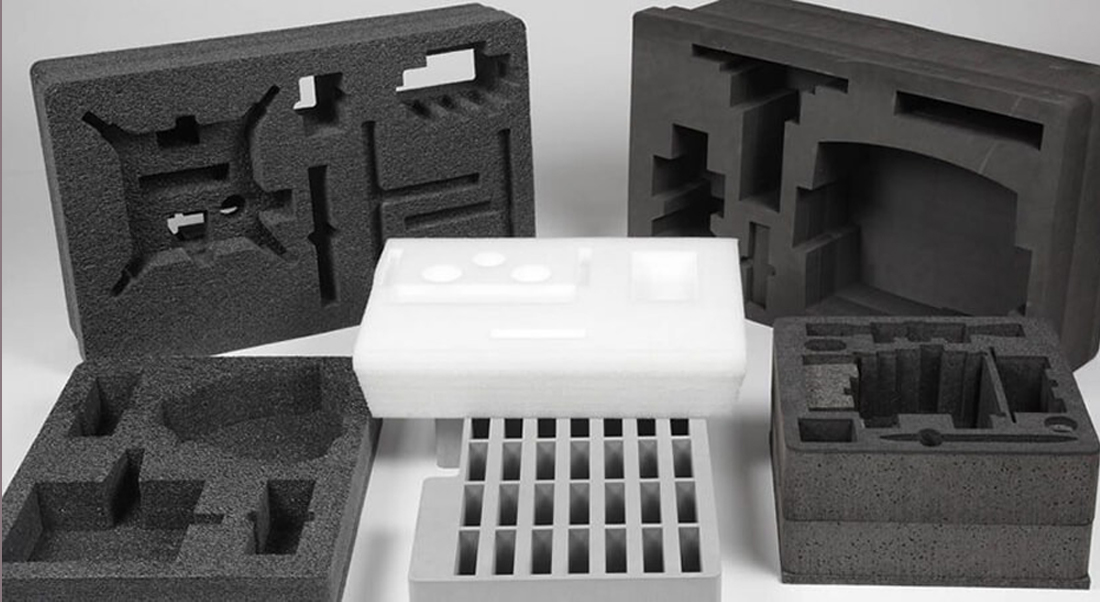
Foam is essential in the packaging industry, effectively managing the variety of forces products face during shipping, handling, storage, and daily use. It cushions, stabilizes, absorbs impact, supports weight, and protects components from both mechanical and environmental stress.
At TOPSUN, our engineers select foam materials tailored to the specific performance requirements of each application. By optimizing material type, density, and fabrication method, our foam inserts deliver reliable protection for equipment, electronics, medical devices, and precision components.
We work with a comprehensive range of engineered foams, including beaded expanded polyethylene (EPE), cross-linked polyethylene (XLPE), expanded polypropylene (EPP), standard polyethylene and polyurethane foams, as well as specialty materials like neoprene. This allows every design to balance impact protection, durability, weight, and sustainability.
Forces Products Encounter
During transport and storage, products are exposed to a variety of forces. Understanding these forces is essential for designing protective materials and foam packaging that perform reliably.
Key Forces Include:
●Impact from Drops and Collisions
●Compression Loads from Stacking and Shipping
●Vibration During Transit
●Thermal Variations
●Exposure to Moisture and Chemicals
●Surface Contact and Abrasion
How Foam Protects
Foam plays a critical role in preventing damage during handling and shipping. Its ability to absorb impact energy depends on material type, density, and design.
Foam Types and Their Protective Benefits:
●Beaded Expanded Polyethylene (EPE) Foam: Provides dynamic cushioning and strong shock absorption for fragile products. Its non-crosslinked structure makes it fully recyclable.
●Cross-Linked Polyethylene (XLPE) Foam: Features a uniform cell structure with excellent durability, chemical resistance, and long-term stability. Ideal for precision-cut components, resilient cushioning, and applications requiring clean edges.
●Expanded Polypropylene (EPP) Foam: Excels at impact energy management, shape recovery, and long-term durability. Perfect for reusable packaging, industrial kits, and components exposed to repeated impacts.
●Polyethylene (PE) Foam: Offers versatile cushioning across a wide density range. Combines resilience, chemical resistance, buoyancy, and moisture resistance, supporting numerous industrial and packaging applications.
●Polyurethane (PU) Foam: Delivers superior vibration dampening, flexible cushioning, and comfort. Conforms to complex shapes, making it suitable for sensitive electronics, medical devices, and precision equipment.
●Neoprene Foam: Provides durable sealing, water resistance, and vibration control. Its flexibility and environmental stability make it ideal for applications requiring shock absorption alongside chemical resistance and NVH (noise, vibration, and harshness) performance.
Load-Bearing Performance and Compression Control
Products experience compression forces during stacking, storage, and transit. Foam density and cell structure determine how well packaging foam retains thickness, stability, and protective performance under load.
Density and Structural Performance
•Closed-cell foams like PE, XLPE, EPE, and EPP maintain structural integrity under weight, supporting stacked shipments, long storage, and precise packaging designs.
•Higher-density foams such as XLPE, PE plank, EPP, EPE, and firm PE provide greater ILD or CFD values, delivering stronger structural support.
•EVA foam combines durable cushioning with resilience, ideal for applications requiring both comfort and impact absorption.
•Lower-density foams offer softer protection for fragile products.
Beyond mechanical protection, some applications also require shielding from electrical hazards, particularly for electronics and precision assemblies.
Static Control and ESD Protection
Sensitive electronic assemblies face risk from electrostatic discharge (ESD) during handling and shipping. TOPSUN addresses this with proprietary permanent ESD foams, eliminating issues like inconsistent performance, temporary coatings, and long lead times.
TOPSUN ESD Foam Solutions
•Stat Line: Provides stable static-dissipative performance for trays, inserts, and reusable packaging requiring controlled charge decay.
•Shield Line: Offers conductive protection for applications needing the lowest resistance pathways and maximum ESD safety.
•Soft and Dura Grades: Combine cushioning with permanent ESD protection, matching product weight, fragility, and handling frequency.
These in-house foams ensure reliable electrical performance, clean machining, and consistent behavior in demanding packaging environments.
Vibration Dampening for Sensitive Products
Vibration can cause premature wear, loosened components, and calibration drift. Foam inserts reduce motion and protect product integrity.
Materials That Control Dynamic Forces
•Polyurethane foam: Excellent frequency dampening for lightweight products.
•Beaded Expanded Polyethylene (EPE): Lightweight and effective for vibration control.
•Expanded Polypropylene (EPP): Handles vibration and repeated impacts, ideal for reusable systems and industrial kits.
•Neoprene foam: Combines durable vibration dampening, NVH control, chemical resistance, and long service life.
Thermal and Environmental Protection
Foam packaging can regulate temperature, reduce heat transfer, and resist moisture and chemicals.
Closed-Cell Foams for Thermal Insulation
•EPS: Strong insulation for temperature-sensitive packaging.
•EPE and EPP: Moderate insulation with dimensional stability.
•PE and XLPE: Resist hydrolysis and maintain structure in humid or wet environments.
•Neoprene and EPDM: Combine water resistance with durability for outdoor or marine use.
Water and Chemical Resistance
•XLPE, PE, EPE, and EPP: Maintain performance in wet or submerged conditions.
•Neoprene, EPDM, silicone, and PVC/nitrile: Resist oils, fuels, solvents, and cleaning agents.
Selecting foams with the appropriate resistance ensures long-term performance, product longevity, and reduced environmental impact.
Surface Protection and Cosmetic Preservation
Foam inserts secure each component, preventing surface wear and cosmetic damage. TOPSUN designs and manufactures custom foam case inserts for high-value electronics, medical devices, and demo kits. With over 45 years of experience, we engineer precise, high-quality inserts that protect every component. Customers simply provide the part, and our team develops the optimal insert design to ensure full protection.
Materials for Surface-Safe Protection
Selecting the right foam is critical for protecting delicate and high-value surfaces.
●Expanded polyethylene (EPE) provides a smooth, Class A surface ideal for painted, polished, and decorative components. It has a long history in automotive dunnage for protecting high-gloss and chrome finishes.
●Soft polyurethane foams deliver gentle, conformable support for highly sensitive surfaces.
●Laminated and fabric-faced foams enhance abrasion resistance while improving overall appearance and presentation.
Motion Control and Stability
Foam packaging designs that limit movement improve protection and overall transit performance.
Precision Fabrication for Enhanced Stability
●CNC routing creates multi-level cavities for complex assemblies.
●Waterjet cutting enables intricate shapes for medical devices and electronic equipment.
●Die cutting delivers consistent, high-volume components.
Custom foam inserts secure each part in a dedicated location, reducing damage rates and enhancing the customer experience.
Enhanced Performance with Cross-Linked Foams
Chemical and irradiation cross-linked foams—most notably cross-linked polyethylene (XLPE)—offer superior performance in demanding environments where durability, sealing, and environmental stability are critical.
Key Benefits of Cross-Linked Foams
●Improved durability and long-term shape retention
●Uniform, refined cell structure
●Enhanced chemical and thermal resistance
●Consistent performance under mechanical stress
These materials are widely used in industrial, automotive, medical, and marine applications. XLPE is frequently chosen for precision gaskets, durable case inserts, multi-layer laminations, and insulation components that must perform reliably over extended service life.
Testing and Performance Standards
ASTM International standards define how foam materials perform under impact, compression, and long-term use. TOPSUN applies these benchmarks to guide material selection and ensure every packaging design delivers predictable, real-world performance.
Key ASTM Standards Used in Foam Packaging:
●ASTM D3575 – Flexible Cellular Materials:
Evaluates density, compression, tear strength, and recovery of flexible and semi-rigid foams such as PE, EPE, and XLPE. This standard helps verify that foam inserts maintain shape and cushioning through repeated loading, vibration, and extended storage.
●ASTM D1596 – Shock Cushioning Performance:
Measures how effectively foam absorbs impact energy during drops or collisions. Results inform decisions on foam density, thickness, and geometry for electronics, medical devices, and other fragile products with low damage thresholds.
●ASTM D4168 – Rigid Cellular Plastics:
Assesses impact resistance and thermal behavior of rigid foams including EPS, high-density PE, and EPP. Particularly valuable for applications requiring both structural stability and cushioning in stacked, temperature-controlled, or heavy-load environments.
Why ASTM Standards Matter
ASTM testing helps confirm that foam materials:
●Absorb impact energy as designed
●Maintain thickness and support under compression
●Perform consistently across varied handling, shipping, and storage conditions
By applying ASTM test data to each design, TOPSUN engineers protective systems that deliver validated, repeatable performance from prototype through production.
Amcon's Engineering-Driven Approach
Every packaging challenge is unique. Amcon evaluates:
●Product size, weight, and fragility
●Expected impact energy and vibration exposure
●Thermal and chemical environments
●Organizational and multi-component layout requirements
●Environmental objectives, including recyclability, weight reduction, and optimized packaging size
●Aesthetic, fit, and presentation expectations
This comprehensive approach results in custom foam packaging solutions that support manufacturing efficiency, safe transport, and a positive end-user experience.
Build a Protective Foam Packaging Solution with TOPSUN
TOPSUN designs and fabricates engineered foam packaging systems for electronics, medical devices, industrial equipment, consumer products, and automotive components. Our material options include extruded polyethylene foam, beaded expanded polyethylene (EPE), cross-linked polyethylene (XLPE), expanded polypropylene (EPP), polyurethane foams, neoprene, and other specialty materials—each selected to deliver consistent performance from design through delivery.
Contact TOPSUN Foam to explore design options and select the right foam packaging solution for your application.

 English
 العربية
 Français
 Русский
 Español
 Português
 Deutsch
 italiano
 日本語
日本語 한국어
한국어 Nederlands
 Tiếng Việt
 ไทย
ไทย Polski
 Türkçe
 ភាសាខ្មែរ
 Bahasa Melayu
 ဗမာစာ
ဗမာစာ தமிழ்
தமிழ் Filipino
 Bahasa Indonesia
 magyar
 Română
 Čeština
 қазақ
қазақ Српски
 हिन्दी
 فارسی
فارسی Kiswahili
 Norsk
Norsk Svenska
 українська
 Ελληνικά
 Suomi
Suomi עברית
עברית Latine
 Dansk
Dansk اردو
اردو বাংলা
বাংলা Afrikaans
 नेपाली
 Oʻzbekcha
 Azərbaycan dili
 Български
 guarani
 Hausa
Hausa Kurdî
Kurdî Kurdî
Kurdî Lietuvių
 Wikang Tagalog
 isiZulu


