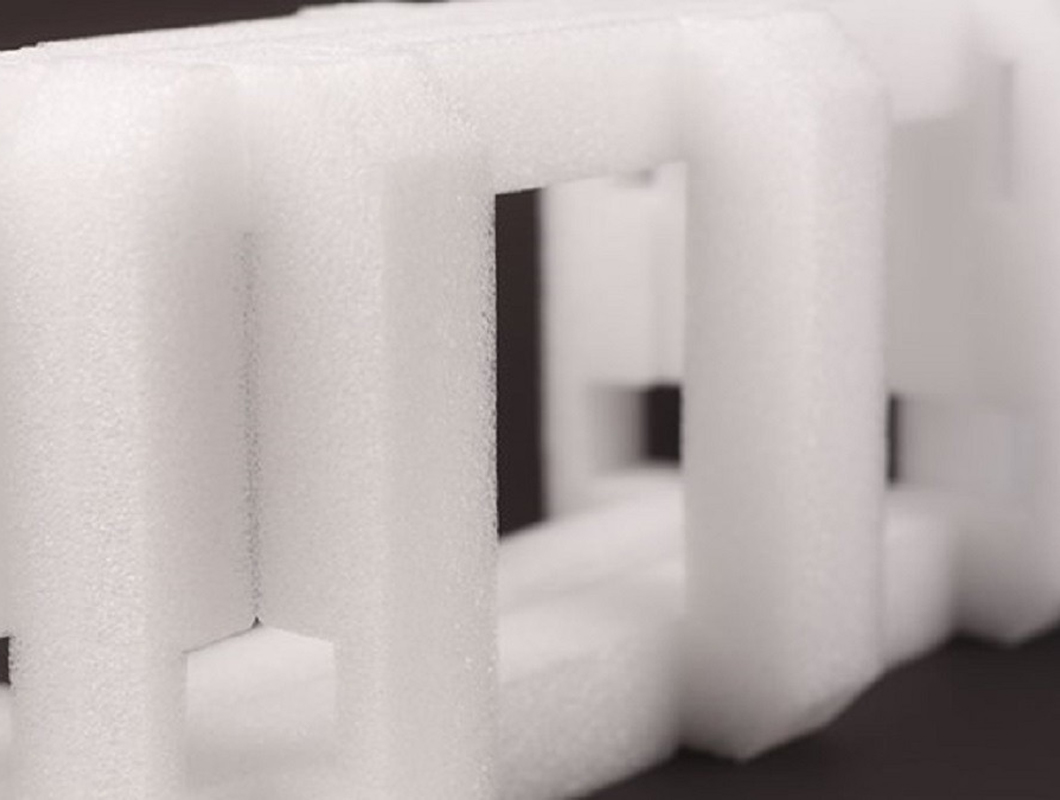
Every year, businesses lose millions of dollars to a problem that often goes overlooked: product damage during shipping. It remains one of the leading causes of returns, warranty claims, and disappointed customers—yet it's also one of the easiest issues to fix.
If you're seeing an increase in damage-related claims, it may be time to re-evaluate the one element designed to protect your product throughout transit: your packaging.
The best part? Solving the issue doesn't usually require a full packaging redesign. In many cases, a simple adjustment to the internal cushioning or protective materials is all it takes.
Why Packaging-Related Damage Is So Common
Even the strongest box or crate can't fully protect a product on its own. True protection comes from the internal packaging—and this is where many companies fall short. Far too often, businesses rely on:
●Generic foam blocks or sheet materials
●Loose-fill options such as peanuts or paper
●Molded pulp inserts or vacuum-formed trays
While these materials may seem adequate, they frequently fail in real-world shipping environments—especially for products that are heavy, fragile, uniquely shaped, or exposed to rough handling through parcel or freight carriers.
Typical issues include:
●Products shifting inside the packaging
●Impact damage from drops
●Vibration-related wear during transport
●Inadequate cushioning against pressure or crushing
When the packaging isn't engineered to match the product, damage becomes almost unavoidable.
What's the Best Material for Reducing Damage Claims?
Foam is one of the most reliable and adaptable packaging materials available. When selected and engineered correctly, it absorbs shock, minimizes vibration, withstands compression, and provides precise support exactly where your product needs it.
Why is foam such an effective choice?
Superior Energy Absorption
Foam behaves like a shock absorber, compressing on impact to minimize the force transferred to your product. Whether a package is bumped, dropped, or mishandled, foam helps cushion the blow.
Lightweight Strength
With an excellent strength-to-weight ratio, foam enhances protection without adding significant shipping weight or cost.
Customizable Performance
Available in a wide spectrum of densities and firmness levels, foam can be perfectly matched to the size, weight, shape, and fragility of nearly any item.
Moisture and Chemical Resistance
Closed-cell foams offer strong resistance to water, oils, and chemicals—ideal for industrial components or outdoor products that require clean, dry transit conditions.
Reusable and Sustainable Options
Materials like expanded polypropylene (EPP) support reusable or returnable packaging systems, reducing waste and long-term operational costs.
Why Custom-Converted Foam Delivers Superior Protection
Placing a generic foam block or sheet in a box may offer some cushioning, but it rarely provides the level of protection your product truly needs. Custom-converted foam, however, offers a significant advantage because it is:
Precisely Tailored to Your Product
Using advanced fabrication methods—such as die cutting, waterjet cutting, and CNC routing—we create inserts, cavities, and supports that match your product's exact dimensions. The result: no shifting, no guesswork, and no unnecessary material.
Engineered for Optimal Performance
We help you choose the ideal foam type, thickness, and density for your application. This ensures maximum protection without unnecessary complexity or cost.
Designed for Your Shipping Environment
Whether your product ships by air, parcel, freight, or in a returnable packaging system, your logistics conditions matter. We design foam solutions that account for handling methods, transit cycles, and environmental factors to ensure real-world durability.
A Lower Total Cost of Ownership
While custom foam may cost more upfront than off-the-shelf options, it significantly reduces damage-related expenses—including returns, replacements, warranty claims, and customer dissatisfaction—resulting in substantial long-term savings.
How to Choose the Right Foam for Your Packaging
There is no single"best"foam. The ideal material depends on your product's weight, fragility, handling conditions, and shipping environment.
Best for: Lightweight, fragile products
Pros: Soft, flexible, excellent shock absorption
Use Cases: Electronics, medical devices, small instruments
Best for: Medium to heavy items that need both cushioning and structural support
Pros: Closed-cell, rigid, moisture- and chemical-resistant
Use Cases: Automotive components, appliances, tools, industrial equipment
Expanded Polyethylene (EPE)
Best for: Versatile applications, one-way or returnable packaging, and products requiring"Class A"surface protection
Pros: Class A surface finish, high strength-to-weight ratio, easily fabricated into complex shapes
Use Cases: Protective packaging, case inserts, medical packaging, crates and road cases
Best for: High-end packaging that requires both durability and a premium appearance
Pros: Smooth surface, long-lasting performance, excellent shock resistance
Use Cases: Branded packaging, specialty case inserts, military and medical transport packaging
Expanded Polypropylene (EPP)
Best for: Reusable or returnable packaging and heavy industrial products
Pros: Exceptional impact resistance, strong recovery, highly reusable
Use Cases: Returnable containers, robotics, aerospace components
Anti-Static Foams (ESD-Safe: PE, PU, Zote)
Best for: Sensitive electronics and static-sensitive assemblies
Pros: Prevents electrostatic discharge during handling and transit
Use Cases: PCBs, semiconductors, sensors, electronic modules
How TOPSUN Foam Helps You Reduce Damage Claims
TOPSUN isn't just a foam supplier—we're your packaging engineering partner. Our team guides you through a proven process to develop a custom solution that performs reliably in real-world conditions:
●We analyze your product, how it's shipped, and where protection is most needed
●We compare foam types based on cushioning, compression strength, durability, moisture resistance, and cost.
●We design inserts, supports, and assemblies that secure your product, absorb impact, and provide targeted structural support.
●We can supply prototype samples for fit checks or conduct drop testing when needed.
Whether you need low-volume custom kits or high-volume production runs, we deliver precise, production-ready foam components that meet your specifications and schedule.
Don't Let Packaging Be the Weakest Link
This is the ideal moment to improve your packaging. You don't need a complete redesign—just the right foam engineered to protect your product.
Ship smarter with TOPSUN. Contact us today for a free consultation.

 English
 العربية
 Français
 Русский
 Español
 Português
 Deutsch
 italiano
 日本語
日本語 한국어
한국어 Nederlands
 Tiếng Việt
 ไทย
ไทย Polski
 Türkçe
 ភាសាខ្មែរ
 Bahasa Melayu
 ဗမာစာ
ဗမာစာ தமிழ்
தமிழ் Filipino
 Bahasa Indonesia
 magyar
 Română
 Čeština
 қазақ
қазақ Српски
 हिन्दी
 فارسی
فارسی Kiswahili
 Norsk
Norsk Svenska
 українська
 Ελληνικά
 Suomi
Suomi עברית
עברית Latine
 Dansk
Dansk اردو
اردو বাংলা
বাংলা Afrikaans
 नेपाली
 Oʻzbekcha
 Azərbaycan dili
 Български
 guarani
 Hausa
Hausa Kurdî
Kurdî Kurdî
Kurdî Lietuvių
 Wikang Tagalog
 isiZulu


