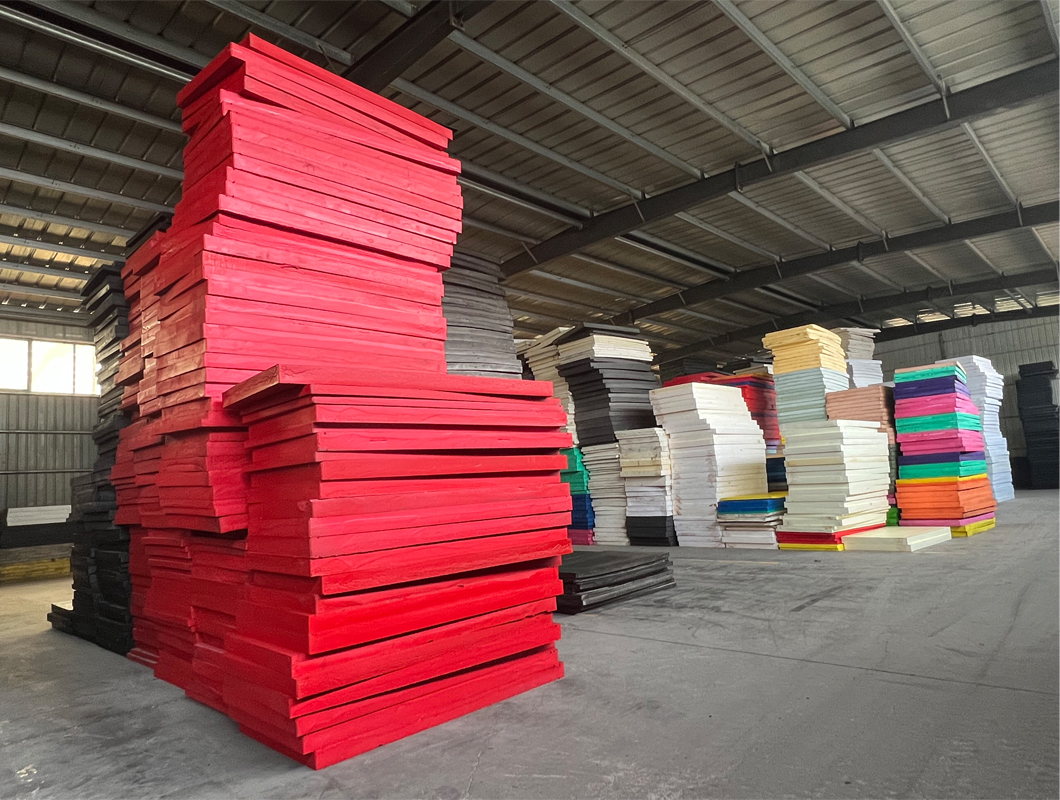
In 1995, TOPSUN established its first foam fabrication facility to meet growing demand for lightweight cushioning, protective packaging, and insulation. Five decades later, we continue to deliver these solutions with greater speed and precision. Today, our fabrication operations run 24/7, supported by the recent addition of our sixth die cutting machine. As foam materials and fabrication technologies evolve, we continue to invest in innovation and capability. Explore the materials, processes, and milestones that have shaped the foam fabrication industry over the past 30 years.
The 1990s: Polyurethane Foam Fabrication in the Automotive Industry
By the 1990s, flexible polyurethane (PU) foam had become a widely used material for automotive seating, while semi-rigid PU foam was commonly used to cushion dashboards and other interior components. In 1992, federal flammability requirements established maximum burn rates for materials used in passenger compartments, including seat foam.
Advances in cold-cure foam technology further improved automotive seating. These foams could be molded at lower temperatures while offering enhanced resilience and long-term performance compared with earlier formulations. Semi-rigid and integral-skin polyurethane foams also became popular for vehicle interiors, providing cushioning, structural support, and durable surface finishes.
Today, flexible and semi-rigid PU foams remain essential materials in automotive manufacturing, continuing to support comfort, safety, and design flexibility.
The 2000s: EPP, Digital Cutting, and Industry Advocacy
First developed in the 1990s, expanded polypropylene (EPP) entered commercial production in the 2000s. Known for its excellent energy absorption, impact resistance, and ability to recover its original shape after repeated compression, EPP was initially adopted by automakers for bumper cores. Its durability and reusability also made it an effective solution for returnable packaging and dunnage used to transport components between factories and assembly plants.
During this decade, affordable PC-based CAD/CAM software became increasingly accessible to foam fabricators. Combined with CNC routers and automated hot-wire cutting systems, these technologies transformed foam processing. Instead of manually guiding foam through a band saw using physical templates, operators could follow digital toolpaths to produce precise, repeatable cuts and complex contours with greater efficiency.
The 2010s: Memory Foam Enters the Mainstream
Originally developed through NASA-related research in the 1980s, viscoelastic polyurethane foam—better known as memory foam—gained widespread commercial attention in the early 2010s. Advances in manufacturing technology helped make large-scale production more practical, bringing memory foam mattresses and other consumer products to a broader market.
Today, memory foam remains a popular material among TOPSUN customers producing mattresses, furniture, seat cushions, commercial and restaurant seating, and athletic mats. To support these applications, TOPSUN offers a range of value-added services, including sewing, covering, private labeling, printing, finishing, and fulfillment.
The 2010s and 2020s: CNC Contour Cutting, Structural Foams, and 3D Printing
CNC contour cutting became an important advancement in foam fabrication during the 2010s and 2020s. These machines use programmed cutting paths to produce precise two-dimensional profiles through thick foam blocks. By combining multiple cuts, fabricators can create complex three-dimensional shapes with greater accuracy and consistency. CNC contour cutting also improves material utilization, reduces waste, and supports efficient production of custom foam components.
During this period, expanded polypropylene (EPP) continued to gain traction in the automotive industry, extending far beyond the bumper cores introduced in the 1990s. Its applications expanded to seat structures, side-impact protection, and components designed to reduce noise, vibration, and harshness (NVH). By replacing heavier materials with lightweight foam, automakers could reduce vehicle weight while maintaining impact protection and supporting increasingly demanding fuel-efficiency targets.
Additive manufacturing also began to influence foam product development. Rather than relying solely on traditional foaming and molding processes, manufacturers explored 3D printing to produce customized elastomeric lattice structures. Applications included running shoe midsoles, sports helmet liners, and medical cushioning components. At TOPSUN, our engineering team uses 3D printing to develop customer prototypes, helping evaluate designs and refine product concepts before production.
The 2020s: Waste Reduction and Protective Packaging
The continued growth of e-commerce has changed how products move through supply chains. Individual parcels often undergo more handling and sorting than palletized shipments, increasing the importance of reliable protective packaging.
Custom foam inserts provide targeted cushioning and help products withstand the demands of shipping. Designed to match a product's dimensions and contours, these inserts can reduce the need for oversized cartons and loose void-fill materials such as paper or air pillows. A properly engineered insert also helps minimize product damage during transit.
By protecting products during the initial shipment, custom foam packaging can reduce the likelihood of returns, replacement shipments, and the additional packaging materials and transportation those shipments require. In this way, thoughtful foam design supports both shipping efficiency and more sustainable packaging practices.
Looking Ahead: Proven Expertise and End-to-End Support
From high-volume production programs to concepts still in development, TOPSUN helps customers turn ideas into practical foam solutions. Our team provides comprehensive design and engineering support throughout the entire process, from initial concept and material selection to prototyping and full-scale production.
We recommend the right materials for each application, fabricate custom foam components in-house, and offer flexible services ranging from subassembly and kitting to complete product assembly. With decades of fabrication experience, we combine proven manufacturing methods with continuous improvement to deliver reliable, cost-effective solutions.
Since 1995, our commitment has remained the same: provide custom foam solutions, maintain competitive pricing, and make every customer relationship straightforward and dependable.
Connect with the TOPSUN team to discuss your project and explore the right foam solution for your needs.

 English
 العربية
 Français
 Русский
 Español
 Português
 Deutsch
 italiano
 日本語
 한국어
 Nederlands
 Tiếng Việt
 ไทย
 Polski
 Türkçe
 ភាសាខ្មែរ
 Bahasa Melayu
 ဗမာစာ
 தமிழ்
 Filipino
 Bahasa Indonesia
 magyar
 Română
 Čeština
 қазақ
 Српски
 हिन्दी
 فارسی
 Kiswahili
 Norsk
 Svenska
 українська
 Ελληνικά
 Suomi
 עברית
 Latine
 Dansk
 اردو
 বাংলা
 Afrikaans
 नेपाली
 Oʻzbekcha
 Azərbaycan dili
 Български
 guarani
 Hausa
 Kurdî
 Kurdî
 Lietuvių
 Wikang Tagalog
 isiZulu


