XPE Foam Insulation for Building Applications
TOPSUN XPE foam insulation is a chemically cross-linked, closed-cell polyethylene foam supplied in rolls, sheets and laminated structures for building insulation and construction applications. Its uniform closed-cell structure helps reduce heat transfer, limit moisture absorption, cushion vibration and provide a clean, flexible insulation layer for walls, roofs, floors, ducts, pipes and other building assemblies.
The material can be customized by density, thickness, width, color, surface texture and secondary processing. Aluminum foil, adhesive backing and other facing materials can also be laminated according to the installation method and project requirements.
Quick specification: density 25–200 kg/m³; expansion ratio 3–35 times; standard width 800–1500 mm; thickness from 3 mm; continuous roll length available; custom Pantone colors available.
Typical functions: thermal insulation, moisture resistance, sound and vibration control, cushioning, weather resistance and easy fabrication.
Supply forms: continuous rolls, cut sheets, multilayer laminated sheets, die-cut parts and thermoformed components.
Key Features of Closed-Cell XPE Insulation Foam
Closed-cell structure: helps resist water absorption and moisture penetration in building and HVAC environments.
Low thermal conductivity: suitable for reducing conductive heat transfer when the correct density and thickness are selected.
Lightweight and flexible: easy to handle, cut, wrap, laminate and install on flat or curved surfaces.
Sound and vibration control: helps isolate impact noise, mechanical vibration and structure-borne sound in suitable assemblies.
Chemical and weather resistance: provides stable performance against many common chemicals, aging and environmental exposure.
Custom converting: available with cutting, slicing, lamination, embossing, adhesive backing, die cutting and compression molding.
XPE Foam Sheet and Roll Specifications
| Item | Available Specification |
| Material | Chemically cross-linked polyethylene foam (XPE / XLPE foam) |
| Cell Structure | Fine, uniform closed-cell structure with smooth skins on both sides |
| Expansion Ratio | 3–35 times |
| Density | 25–200 kg/m³ |
| Width | 800–1500 mm; custom width subject to production review |
| Thickness | 3 mm and above; thicker multilayer structures can be laminated |
| Length | Continuous roll length or cut-to-size sheets |
| Color | Custom colors according to Pantone reference |
| Optional Surface / Facing | Embossed surface, aluminum foil, film, fabric, adhesive backing or other laminated facings |
| Processing | Cutting, slicing, lamination, die cutting, CNC engraving, thermoforming, compression molding and printing |
XPE Foam Technical Specification
The following values are typical technical data for different expansion ratios. Final performance depends on density, thickness, formulation, test method and production specification. Confirm the required standard and end-use conditions before placing an order.
| XPE Foam Technical Specification |
| Testing Item | Expansion Ratio / Properties |
| 5 Times | 8 Times | 10 Times | 15 Times | 20 Times
(45 kg/m³) | 25 Times | 30 Times
(33 kg/m³) | 35 Times
(28 kg/m³) |
| Density kg/m³ | 200±30 | 125±15 | 100±10 | 67±8 | 50±6 | 40±4 | 33±3 | 28±2 |
| Shore Hardness ° | 60–70 | 50–60 | 45–50 | 35–45 | 30–35 | 25–30 | 18–25 | 13–18 |
| Water Absorption Rate (23°C, 24h) g/cm³ | ≤0.02 | ≤0.02 | ≤0.03 | ≤0.03 | ≤0.04 | ≤0.04 | ≤0.05 | ≤0.05 |
| Thermal Conductivity (W/m·K) | ≤0.092 | ≤0.082 | ≤0.072 | ≤0.062 | ≤0.053 | ≤0.047 | ≤0.0414 | ≤0.038 |
| Tensile Strength (L/W) MPa | ≥1.35/1.08 | ≥1.12/0.89 | ≥0.88/0.71 | ≥0.68/0.56 | ≥0.39/0.33 | ≥0.33/0.25 | ≥0.25/0.20 | ≥0.20/0.16 |
| Elongation (L/W) % | ≥260/220 | ≥230/200 | ≥210/185 | ≥190/170 | ≥170/150 | ≥160/135 | ≥140/130 | ≥120/110 |
| Tear Strength (L/W) kN/m | ≥5.90/7.10 | ≥4.80/5.40 | ≥3.60/4.00 | ≥2.80/3.30 | ≥1.80/2.30 | ≥1.60/2.00 | ≥1.35/1.70 | ≥1.25/1.50 |
| Compression Set (25%, 22h) % | ≤5 | ≤6 | ≤7 | ≤7 | ≤9 | ≤9 | ≤11 | ≤11 |
| Dimensional Change Rate (70°C, 22h) (L/W) % | ≤-6/-4 | ≤-6/-4 | ≤-6/-4 | ≤-6/-4 | ≤-6/-4 | ≤-8/-6 | — | — |
Where Is XPE Foam Insulation Used in Buildings?
Wall and Partition Insulation
XPE foam can be used as a thin thermal break, moisture-resistant liner, separation layer or vibration-control layer within suitable wall and partition systems. The required thickness, facing and fire-performance grade should be selected according to the complete wall assembly and local building requirements.
Roof and Ceiling Insulation
For roof and ceiling applications, XPE foam may be supplied as plain foam or laminated with a reflective facing. It can help reduce heat transfer and condensation risk when correctly integrated with vapor control, ventilation and waterproofing layers.
Floor Underlayment and Impact Sound Reduction
The resilient closed-cell structure makes XPE foam suitable for flooring underlayment, floating-floor isolation, impact-noise reduction and minor surface compensation beneath compatible flooring systems.
HVAC Duct and Pipe Insulation
Flexible XPE foam sheets and rolls can be wrapped or laminated for air ducts, pipes and equipment insulation. Low water absorption and easy fabrication make the material useful where thermal insulation, condensation control and vibration reduction are required.
Expansion Joints, Sealing and Vibration Isolation
Converted XPE foam strips, pads and gaskets can be used as joint fillers, separation pads, cushioning layers and vibration isolators. Density and compression behavior should be matched to the expected load and movement.
Other Applications of XPE Foam Sheet

XPE Foam Floating Mat
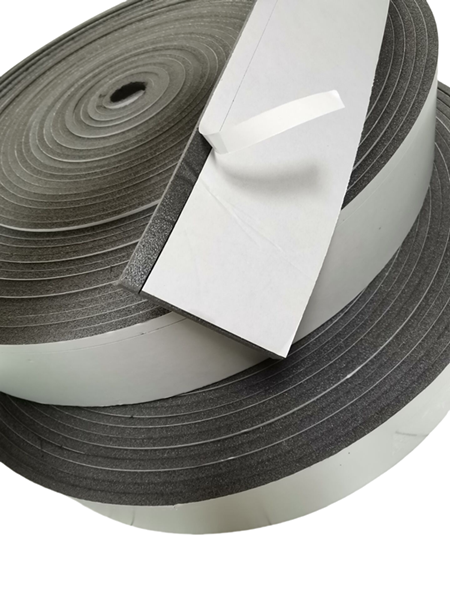
Cross-Linked XPE Foam
Automotive and Marine Interiors
XPE foam is lightweight, moisture resistant and capable of providing thermal, acoustic and cushioning performance. It is used for vehicle and marine interior liners, floor pads, sleeping pads, instrument insulation and shock-absorbing components.
Sports, Leisure and Flotation Products
Low water absorption and buoyancy make lower-density XPE foam suitable for floating mats, surfboard components, swimming aids, protective pads, camping mats, sports cushioning and selected leisure products.
Protective and Industrial Packaging
XPE foam can be cut or molded into protective packaging inserts for appliances, instruments, electronics and valuable products. Its cushioning, resilience and clean closed-cell surface help protect products during storage and transportation.
XPE Foam Video and Material Structure
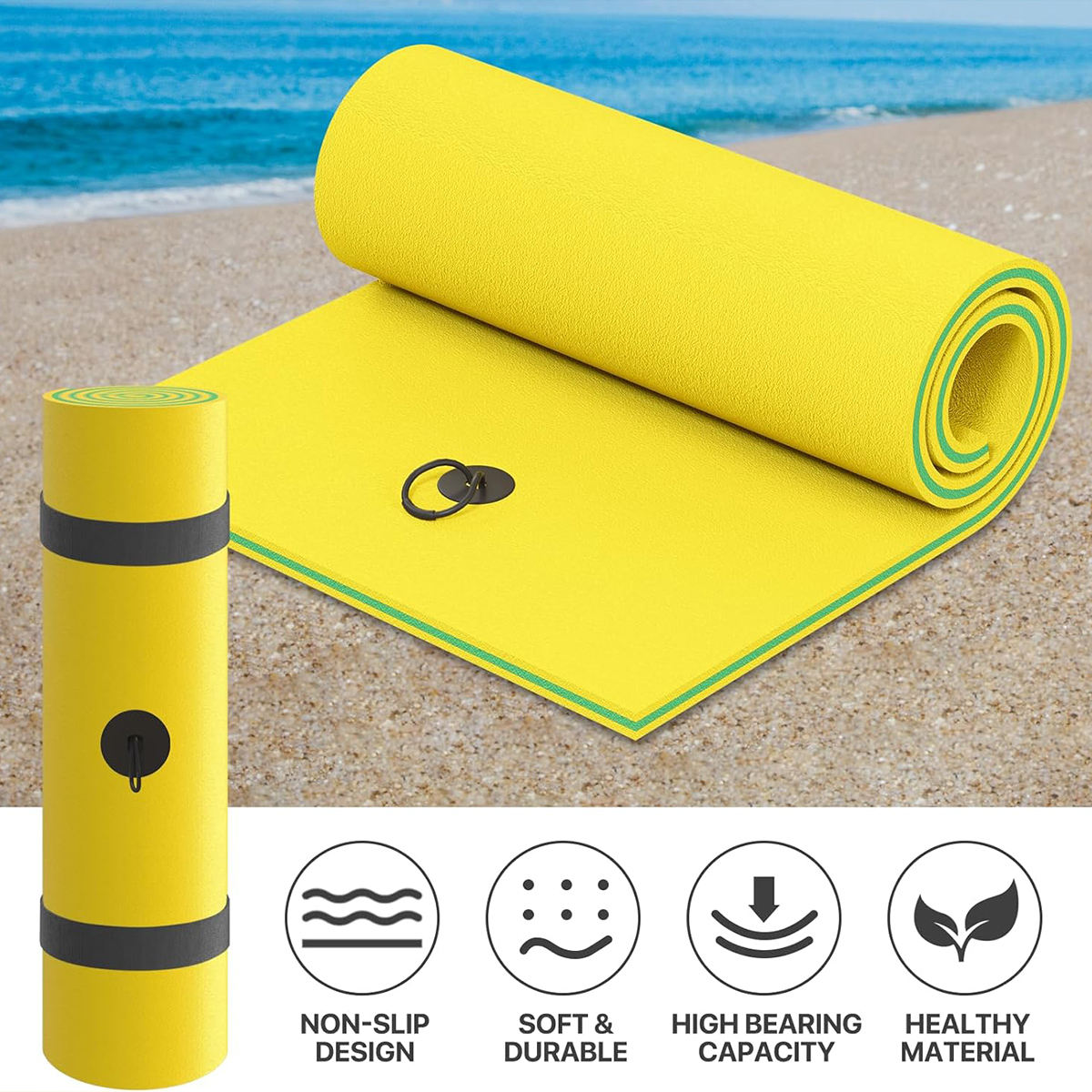
XPE foam provides a balanced combination of waterproofing, moisture resistance, cushioning, resilience, heat preservation, thermal insulation, weather resistance, aging resistance, corrosion resistance, low weight and processability. The exact performance should be verified against the selected grade and project test requirements.
Available XPE Foam Processing and Converting
Hot-Press and Compression Molding
The heated XPE material is placed into a shaped mold, pressed and cooled to produce three-dimensional foam parts with controlled geometry.
Vacuum and Thermoforming
Foam sheets or laminated structures can be heated, formed in a mold and cooled to create contoured insulation, cushioning or interior components.
Thermal Bonding and Lamination
XPE foam can be laminated with aluminum foil, films, fabrics, other foams and selected facing materials by thermal bonding, flame lamination, hot-melt film or pressure-sensitive adhesive.
Die Cutting, CNC Cutting and Engraving
Hydraulic die cutting, CNC engraving and other cutting processes can convert XPE foam into strips, pads, gaskets, seals, inserts and custom-shaped parts.
Embossing, Printing and Adhesive Backing
Surface patterns, logos and functional textures can be added by embossing or screen printing. Adhesive backing with release liner is available for installation-ready foam tapes, pads and insulation components.
Why Source XPE Foam Insulation from TOPSUN?
TOPSUN supplies a broad range of foam materials, including XPE foam, IXPE foam, EVA foam, PE foam, CR foam, EPDM foam, neoprene foam, SBR foam, NBR foam and microcellular PVC foam. Materials can be supplied in sheets, rolls or converted components according to the drawing and application.
Custom density, thickness, width, color and roll or sheet format.
Cutting, slicing, lamination, die cutting, CNC engraving, compression molding and printing.
Support for building insulation, HVAC, flooring, automotive, packaging, sports and industrial applications.
Material selection based on thermal, moisture, compression, acoustic and processing requirements.
Sample evaluation available before bulk production.
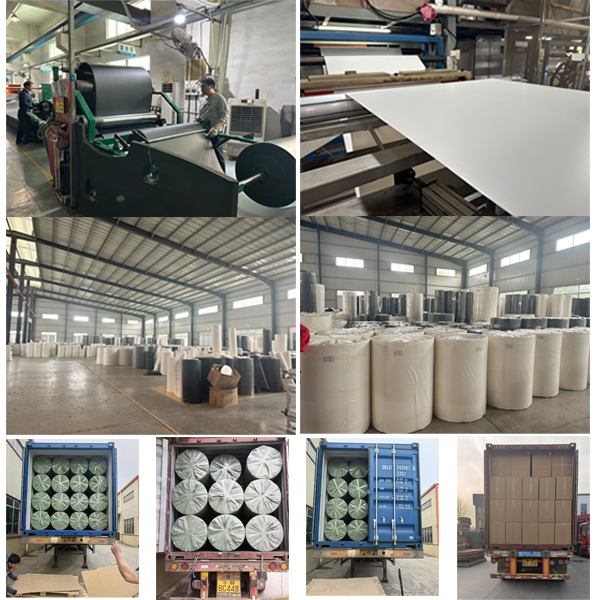
Our facility is located in Changzhou, Jiangsu Province, with convenient access to Shanghai Port for international shipment.
Need a material recommendation or sample?
Send the application, required thickness, density, width, quantity, facing material, fire-performance requirement and destination country to july@topsunfoam.com. We will review the specification and reply with a suitable XPE foam solution.
Request a Quote
XPE Foam Insulation FAQ
What Is XPE Foam Insulation?
XPE foam insulation is chemically cross-linked polyethylene foam with a fine, closed-cell structure. Cross-linking improves dimensional stability, tensile strength, compression behavior and thermal stability compared with non-cross-linked polyethylene foam. It is supplied in rolls, sheets and fabricated parts for thermal insulation, moisture control, cushioning and vibration isolation.
Is XPE Foam Waterproof?
XPE foam has low water absorption because its cells are closed rather than interconnected. It is commonly selected for moisture-resistant insulation and cushioning. However, joints, penetrations and installation details must still be sealed correctly because the complete assembly—not the foam alone—determines water and vapor performance.
Is XPE Foam Fireproof?
Standard polyethylene foam should not be described as fireproof. Flame-retardant formulations may be available for specific applications, but the required grade must be selected according to the target test method, building code and assembly design. Provide the required fire standard before ordering so the appropriate material can be evaluated.
What Thickness of XPE Foam Is Used for Building Insulation?
The suitable thickness depends on the required thermal resistance, available space, substrate, climate, facing material and complete construction assembly. TOPSUN supplies XPE foam from 3 mm upward, while thicker structures can be produced by multilayer lamination. A technical review is recommended before confirming the thickness.
What Is the Thermal Conductivity of XPE Foam?
The technical table on this page shows typical thermal conductivity values from ≤0.092 to ≤0.038 W/m·K across different expansion ratios. Lower-density grades may provide lower conductivity, but the final value must be confirmed for the selected formulation, density, thickness and test method.
Can XPE Foam Be Laminated with Aluminum Foil?
Yes. XPE foam can be laminated with aluminum foil and other facing materials to create reflective, protective or installation-specific insulation structures. The foil type, reinforcement, adhesive system and required peel strength should be specified according to the end use.
What Is the Difference Between XPE and IXPE Foam?
XPE is chemically cross-linked polyethylene foam, while IXPE is irradiation cross-linked polyethylene foam. Both are closed-cell materials, but they differ in production method, cell uniformity, surface quality, thickness range and suitability for specific converting processes. Material selection should be based on the required density, appearance, thermal performance and fabrication method.
Can TOPSUN Produce Custom XPE Foam Parts?
Yes. Available processes include cutting, slicing, die cutting, CNC engraving, lamination, thermoforming, compression molding, embossing, screen printing and adhesive backing. Send a drawing, sample or dimensional specification for manufacturability review.
How Can I Request XPE Foam Samples and Pricing?
Email july@topsunfoam.com with the application, density, thickness, width, length, color, facing, quantity and delivery country. For building projects, also include the required thermal, moisture, acoustic and fire-performance standards. TOPSUN will review the requirement and provide sample and quotation details.

 English
 العربية
 Français
 Русский
 Español
 Português
 Deutsch
 italiano
 日本語
日本語 한국어
한국어 Nederlands
 Tiếng Việt
 ไทย
ไทย Polski
 Türkçe
 ភាសាខ្មែរ
 Bahasa Melayu
 ဗမာစာ
ဗမာစာ தமிழ்
தமிழ் Filipino
 Bahasa Indonesia
 magyar
 Română
 Čeština
 қазақ
қазақ Српски
 हिन्दी
 فارسی
فارسی Kiswahili
 Norsk
Norsk Svenska
 українська
 Ελληνικά
 Suomi
Suomi עברית
עברית Latine
 Dansk
Dansk اردو
اردو বাংলা
বাংলা Afrikaans
 नेपाली
 Oʻzbekcha
 Azərbaycan dili
 Български
 guarani
 Hausa
Hausa Kurdî
Kurdî Kurdî
Kurdî Lietuvių
 Wikang Tagalog
 isiZulu


