Closed Cell Cross-Linked XPE Foam for Moisture-Resistant Cushioning
Topsun closed cell cross-linked XPE foam is a chemically cross-linked polyethylene material designed for moisture-resistant cushioning, marine and water-sports products, protective packaging, automotive interiors and custom industrial foam components.
The uniform closed-cell structure limits water absorption while providing lightweight cushioning, resilience, thermal insulation and surface protection. These characteristics make XPE suitable for applications exposed to humidity, splash, repeated handling or impact.
Chemical cross-linking creates a stable polymer network before foaming, helping improve dimensional stability, compression recovery, tensile strength and tear resistance compared with many ordinary non-cross-linked polyethylene foams.
Topsun can supply XPE in continuous rolls, sheets, strips, laminated structures and custom converted parts. Current product information covers expansion ratios from 3 to 35 times, widths from 800 to 1500 mm and thicknesses from 3 mm upward.
Request Closed Cell XPE Quote
Closed Cell XPE Foam Product Information
| Property | Product Information |
| Material | Chemically Cross-Linked Polyethylene Foam |
| Common Name | Closed Cell XPE Foam / Cross-Linked PE Foam |
| Cell Structure | Uniform Closed Cell with Smooth Surface Skins |
| Expansion Ratio | 3–35 Times According to Current Product Information |
| Density Range | 25–200 kg/m³ According to Current Product Information |
| Detailed Listed Grades | Approx. 28–200 kg/m³ Across Listed 5–35× Grades |
| Width | 800–1500 mm |
| Thickness | 3 mm and Above |
| Length | Continuous Roll or Cut-to-Size Sheet |
| Colors | Custom Colors According to Pantone Reference |
| Water Resistance | Low Water Absorption Due to Closed-Cell Structure |
| Supply Forms | Roll / Sheet / Strip / Pad / Laminated Foam / Adhesive-Backed Foam / Molded Part |
| Processing | Cutting / Slicing / Lamination / Laser Cutting / Die Cutting / Engraving / Compression Molding / Thermoforming / Embossing / Printing / Adhesive Backing |
| Typical Applications | Marine / Water Sports / Sports & Leisure / Protective Packaging / Automotive / Industrial Cushioning |
Why Closed-Cell Structure Matters
In closed-cell XPE foam, individual cells are separated from one another rather than forming an interconnected open network.
This structure helps reduce water uptake and moisture penetration while retaining trapped gas within the cells for lightweight cushioning and insulation.
| Closed-Cell Characteristic | Practical Benefit |
| Low Water Absorption | Useful for humid, splash-prone and moisture-exposed environments. |
| Lightweight Structure | Reduces component weight in sports, marine and packaging applications. |
| Resilient Cushioning | Helps absorb impact and protect products or users. |
| Thermal Insulation | Trapped gas within closed cells helps limit heat transfer. |
| Smooth Surface Skins | Suitable for laminating, printing, adhesive backing and surface contact. |
| Buoyancy Potential | Lower-density grades can be evaluated for suitable floating and water-sports products. |
Key Features of Closed Cell Cross-Linked XPE Foam
Low water absorption: closed cells help limit moisture penetration.
Lightweight construction: suitable for cushioning, flotation-related and protective applications.
Compression recovery: cross-linked structure provides useful resilience after loading.
Thermal insulation: available grades provide different thermal conductivity values according to density and expansion ratio.
Impact cushioning: suitable for protection against mechanical shock and vibration.
Flexible fabrication: can be cut, laminated, molded, engraved and die cut.
Custom colors: colors can be evaluated according to Pantone reference and production requirements.
Sheet and roll supply: suitable for both direct fabrication and continuous downstream converting.
XPE Expansion Ratio and Density Selection
Expansion ratio affects density, firmness, mechanical strength, cushioning and weight. Lower expansion ratios provide denser and firmer foam, while higher expansion ratios provide lighter and softer material.
| Expansion Ratio | Listed Density | Shore Hardness | Relative Position |
| 5× | 200±30 kg/m³ | 60–70 | Firm, high-density technical grade |
| 8× | 125±15 kg/m³ | 50–60 | Higher-density cushioning grade |
| 10× | 100±10 kg/m³ | 45–50 | Medium-high density |
| 15× | 67±8 kg/m³ | 35–45 | Balanced cushioning and strength |
| 20× | 50±6 kg/m³ | 30–35 | Lightweight cushioning |
| 25× | 40±4 kg/m³ | 25–30 | Lower-density flexible foam |
| 30× | 33±3 kg/m³ | 18–25 | Low-density lightweight foam |
| 35× | 28±2 kg/m³ | 13–18 | Lowest-density listed technical grade |
XPE Foam Technical Specification
The following values reproduce the current XPE technical data. L represents the longitudinal direction and W represents the width direction.
| XPE Foam Technical Specification |
| Testing Item | 5× | 8× | 10× | 15× | 20× | 25× | 30× | 35× |
| Density (kg/m³) | 200±30 | 125±15 | 100±10 | 67±8 | 50±6 | 40±4 | 33±3 | 28±2 |
| Shore Hardness ° | 60–70 | 50–60 | 45–50 | 35–45 | 30–35 | 25–30 | 18–25 | 13–18 |
| Water Absorption Rate (23°C, 24 h) g/cm³ | ≤0.02 | ≤0.02 | ≤0.03 | ≤0.03 | ≤0.04 | ≤0.04 | ≤0.05 | ≤0.05 |
| Thermal Conductivity (W/m·K) | ≤0.092 | ≤0.082 | ≤0.072 | ≤0.062 | ≤0.053 | ≤0.047 | ≤0.0414 | ≤0.038 |
| Tensile Strength (L/W) MPa | ≥1.35 / 1.08 | ≥1.12 / 0.89 | ≥0.88 / 0.71 | ≥0.68 / 0.56 | ≥0.39 / 0.33 | ≥0.33 / 0.25 | ≥0.25 / 0.20 | ≥0.20 / 0.16 |
| Elongation (L/W) % | ≥260 / 220 | ≥230 / 200 | ≥210 / 185 | ≥190 / 170 | ≥170 / 150 | ≥160 / 135 | ≥140 / 130 | ≥120 / 110 |
| Tear Strength (L/W) kN/m | ≥5.90 / 7.10 | ≥4.80 / 5.40 | ≥3.60 / 4.00 | ≥2.80 / 3.30 | ≥1.80 / 2.30 | ≥1.60 / 2.00 | ≥1.35 / 1.70 | ≥1.25 / 1.50 |
| Compression Set (25%, 22 h) % | ≤5 | ≤6 | ≤7 | ≤7 | ≤9 | ≤9 | ≤11 | ≤11 |
| Dimensional Change Rate (70°C, 22 h) (L/W) % | ≤-6 / -4 | ≤-6 / -4 | ≤-6 / -4 | ≤-6 / -4 | ≤-6 / -4 | ≤-8 / -6 | — | — |
Final performance should be confirmed according to expansion ratio, density, thickness, formulation, processing method and finished-product requirements.
Closed Cell XPE Foam for Marine and Moist Environments
Closed-cell XPE is suitable for evaluation in marine interiors, boat cushioning, protective liners and other applications where low water absorption and lightweight cushioning are important.
The foam can provide a moisture-resistant separation and cushioning layer while remaining easy to cut, shape and laminate.
Marine projects should separately define requirements for UV exposure, salt-water contact, flame behavior, adhesive durability and finished-product service conditions where applicable.
Closed Cell XPE Foam for Water Sports and Leisure Products
Lower-density XPE combines lightweight construction, closed-cell moisture resistance, resilience and buoyancy characteristics for suitable recreational and water-sports products.
Potential applications include floating mats, surfboard components, swimming mats, camping pads, sports cushioning and protective padding.
For flotation or life-safety applications, finished-product buoyancy, load capacity, construction and applicable safety requirements must be tested separately rather than inferred from the foam material alone.
Closed Cell XPE Foam for Protective Packaging
XPE provides resilient cushioning and low water absorption for equipment, instruments, tools and other products that require protection during transportation, handling and storage.
Different densities can be selected according to product weight, impact conditions, required support and available packaging space.
XPE can be cut, engraved, laminated, die cut or molded into inserts, liners, pads, separators and custom packaging components.
Standard XPE should not automatically be described as anti-static. Electronic products requiring electrostatic protection should use a dedicated anti-static or conductive grade with specified electrical properties.
Closed Cell XPE Foam for Automotive Interiors
XPE can be used as a lightweight cushioning, thermal-insulation and moisture-resistant layer in suitable automotive interior assemblies.
Typical converted products can include interior liners, floor pads, cushioning parts, instrument insulation, sleeping pads and vibration-control components.
Automotive programs should specify density, thickness, compression, temperature, lamination structure and any required flame, odor or emission standards separately.
Discuss Your Closed Cell XPE Application
XPE Foam Application Images
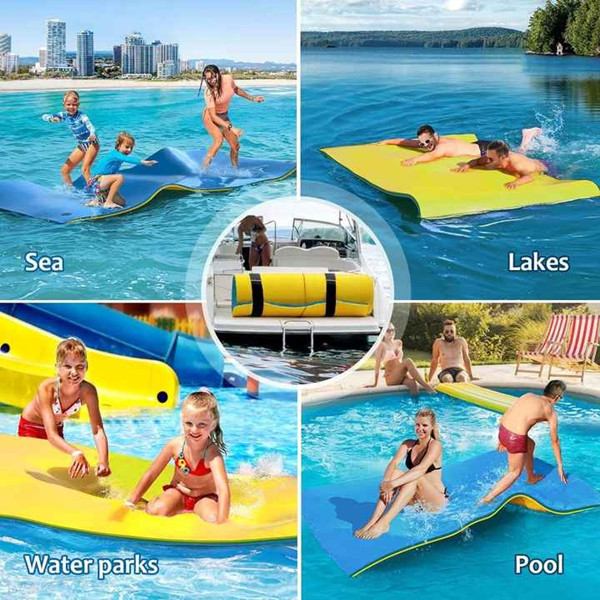
XPE Foam Floating Mat
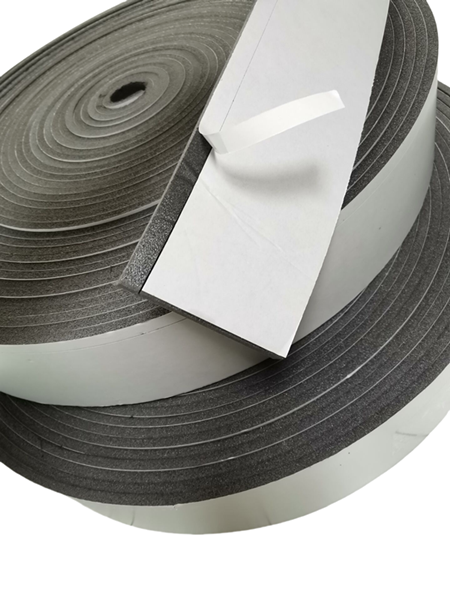
Cross-Linked XPE Foam
Closed Cell XPE Foam Material Features
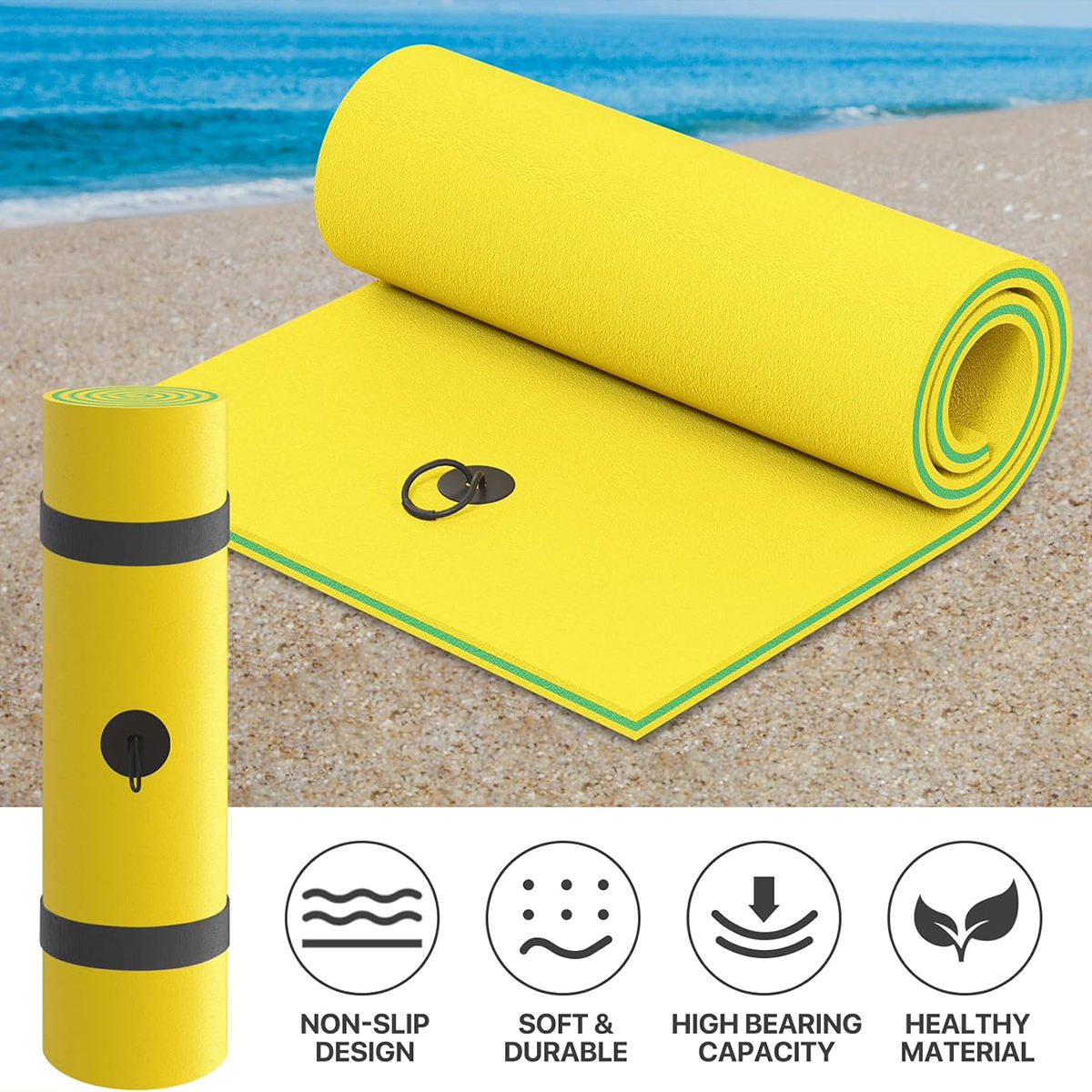
XPE combines low water absorption, moisture resistance, cushioning, resilience, thermal insulation, lightweight construction and flexible processing.
Exact performance depends on density, expansion ratio, thickness, formulation, laminated materials and finished-product construction.
XPE Foam Sheet, Roll and Custom Components
| Supply Form | Typical Use |
| XPE Foam Roll | Continuous production, lamination, slitting and large-area cushioning. |
| XPE Foam Sheet | Sports components, packaging inserts, cushioning pads and fabricated parts. |
| Laminated XPE | Composite protective, marine and industrial structures. |
| Adhesive-Backed XPE | Installation-ready pads, strips and tapes. |
| Die-Cut XPE | Packaging pads, separators, liners and custom components. |
| Molded XPE | Three-dimensional sports, automotive and protective components. |
How to Select Closed Cell XPE Foam
| Selection Factor | Information to Confirm |
| Application | Marine, water sports, packaging, automotive or industrial cushioning. |
| Density | Choose according to firmness, support, cushioning and weight requirements. |
| Expansion Ratio | Influences density, hardness and mechanical performance. |
| Thickness | Provide required finished thickness or available component space. |
| Water Exposure | Describe splash, immersion, humidity or outdoor exposure where applicable. |
| Compression Requirement | Define support, recovery and allowable deformation. |
| Lamination | Specify film, fabric, adhesive or other facing construction. |
| Finished Shape | Provide drawings or samples for die-cut or molded components. |
| Quantity | Provide sample, trial and estimated production quantities. |
Send Your Closed Cell XPE Requirements
Topsun XPE Foam Processing Capabilities
Cutting
XPE sheets, rolls, strips and custom components can be cut according to required dimensions.
Slicing
Foam can be prepared according to suitable thickness specifications for downstream fabrication.
Lamination
Hot-melt film, flame lamination and pressure-sensitive adhesive lamination can be evaluated for compatible composite materials.
Laser Cutting
Suitable foam shapes can be produced from digital drawings without dedicated cutting dies.
Die Cutting
Dedicated tooling can produce repeatable pads, inserts, liners and custom foam components.
Compression Molding
Heated XPE can be pressed into shaped tooling to create suitable three-dimensional components with defined geometry.
Thermoforming and Vacuum Forming
Suitable XPE sheets and laminated structures can be heated and formed into contoured components.
Engraving
Engraving can be used for packaging inserts, tool-box inserts and shaped protective foam components.
Embossing
Surface patterns can be added for anti-slip, decorative or functional requirements.
Silk-Screen Printing
Logos, marks and suitable patterns can be printed on compatible XPE surfaces.
Adhesive Backing
Pressure-sensitive adhesive and release liners can be applied to produce pads, tapes, strips and installation-ready components.
About Topsun Foam
Topsun supplies XPE, IXPE, IXPP, EVA, PE, EPDM, CR, neoprene, SBR, NBR and microcellular soft PVC foam for marine, sports, automotive, packaging, insulation and industrial applications.
Materials can be supplied as sheets and rolls or converted into laminated structures, adhesive-backed materials, pads, inserts, molded components and custom die-cut parts.
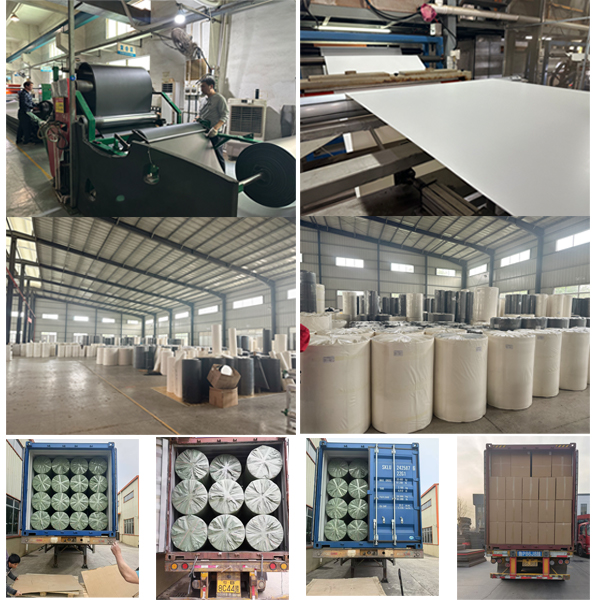
Our facility is located in Changzhou City, Jiangsu Province, China, with convenient access to Shanghai Port for international shipments.
Closed Cell Cross-Linked XPE Foam FAQ
What is closed cell XPE foam?
Closed cell XPE is chemically cross-linked polyethylene foam in which individual foam cells are largely separated from each other. This structure provides lightweight cushioning and low water absorption.
What does XPE mean?
XPE commonly refers to chemically cross-linked polyethylene foam.
Is XPE a closed-cell foam?
Yes. The Topsun XPE material on this page is a closed-cell polyethylene foam.
Is closed cell XPE foam waterproof?
XPE has low water absorption and good moisture resistance because of its closed-cell structure. Final waterproof performance depends on the finished product, seams, joints and overall construction.
Does XPE foam absorb water?
Water absorption is low but not necessarily zero. The current technical table lists different water-absorption values depending on expansion ratio and density.
Can XPE foam float?
Lower-density closed-cell XPE can provide buoyancy and is suitable for evaluation in floating mats and other recreational products. Finished flotation products should be tested according to actual load and safety requirements.
Is XPE suitable for marine applications?
XPE can be evaluated for marine interior cushioning, protective liners and moisture-resistant foam components. UV, salt-water, adhesive and flame requirements should be specified where applicable.
Is XPE suitable for water sports products?
Yes. Suitable lower-density XPE grades can be evaluated for floating mats, surfboard components, swimming products and other recreational cushioning applications.
What density range is available?
Current product information lists 25–200 kg/m³. The detailed technical table covers approximately 28–200 kg/m³.
What expansion ratios are available?
Current general product information covers 3–35 times expansion, while the detailed technical table includes 5×, 8×, 10×, 15×, 20×, 25×, 30× and 35× grades.
What thickness is available?
Current product information lists XPE foam from 3 mm upward. Final availability should be confirmed according to density, supply format and processing requirements.
What width is available?
Current product information lists widths from 800 to 1500 mm.
Is XPE suitable for protective packaging?
Yes. XPE can be fabricated into cushioning pads, inserts, dividers, liners and custom protective components for equipment and other products.
Is standard XPE anti-static?
Standard XPE should not automatically be described as anti-static. Projects requiring electrostatic protection should specify a dedicated anti-static or conductive formulation.
What is the thermal conductivity of XPE foam?
The current technical table lists thermal conductivity values from ≤0.092 W/m·K to ≤0.038 W/m·K depending on expansion ratio and density.
Can XPE foam be laminated?
Yes. XPE can be laminated with compatible films, fabrics, adhesive layers and other materials according to the final product construction.
Can XPE foam have adhesive backing?
Yes. Pressure-sensitive adhesive and release liner can be added to suitable XPE for pads, strips, tapes and installation-ready parts.
Can Topsun manufacture custom XPE components?
Yes. Topsun can cut, slice, laminate, laser cut, die cut, engrave, emboss, mold, form, print and adhesive-back suitable XPE materials.
How do I choose the correct XPE density?
Select density according to required firmness, support, cushioning, compression recovery, weight, water exposure and finished-product design.
What information should I provide for a quotation?
Provide the application, density or expansion ratio, thickness, dimensions, color, water-exposure conditions, lamination or adhesive requirement, drawing or sample and estimated quantity.
How can I request an XPE foam sample?
Send your requirements to july@topsunfoam.com, including density, thickness, dimensions, application, water-exposure conditions, processing requirements and estimated quantity.
Get Closed Cell XPE Sample & Quote

 English
 العربية
 Français
 Русский
 Español
 Português
 Deutsch
 italiano
 日本語
 한국어
 Nederlands
 Tiếng Việt
 ไทย
 Polski
 Türkçe
 ភាសាខ្មែរ
 Bahasa Melayu
 ဗမာစာ
 தமிழ்
 Filipino
 Bahasa Indonesia
 magyar
 Română
 Čeština
 қазақ
 Српски
 हिन्दी
 فارسی
 Kiswahili
 Norsk
 Svenska
 українська
 Ελληνικά
 Suomi
 עברית
 Latine
 Dansk
 اردو
 বাংলা
 Afrikaans
 नेपाली
 Oʻzbekcha
 Azərbaycan dili
 Български
 guarani
 Hausa
 Kurdî
 Kurdî
 Lietuvių
 Wikang Tagalog
 isiZulu


