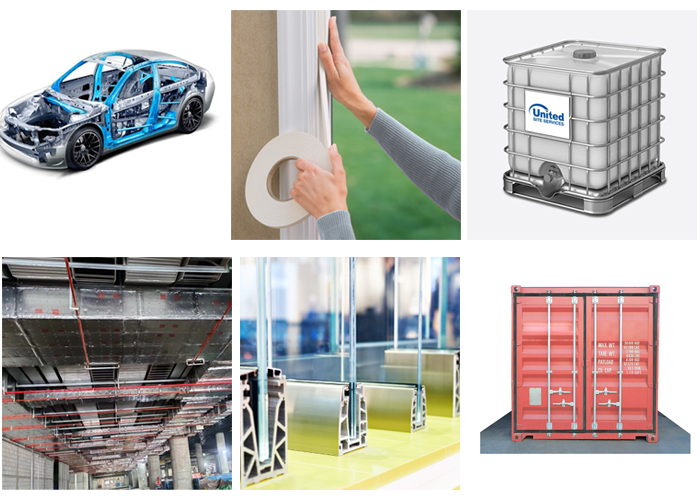
Low Density Compressible PVC Foam for Automotive, HVAC and Industrial Applications
Topsun low density compressible PVC foam is a closed-cell PVC sponge material designed for cushioning, vibration damping, sound attenuation, gap filling and industrial sealing applications. It is suitable for automotive interiors, HVAC equipment, electrical appliances, electronic components, construction assemblies and custom foam parts.
The closed-cell structure provides low water absorption, dimensional stability and resistance to dust and moisture. PVC sponge foam also conforms to curved and irregular surfaces, making it useful where components require flexible contact, cushioning or compression during assembly.
Topsun can supply PVC foam as sheets, rolls, strips, tapes, pads and custom die-cut components. Cutting, slicing, lamination, adhesive backing, laser cutting, die cutting, compression molding, engraving and printing are available according to customer drawings, samples and application requirements.
Closed Cell PVC Sponge Foam Features
UV and weather resistance: suitable for many indoor and outdoor industrial applications.
Conforms to irregular surfaces: flexible PVC foam can follow curves, corners and uneven contact surfaces.
Low water absorption: closed-cell structure supports moisture-resistant and dustproof applications.
Vibration damping: helps isolate vibration between automotive, equipment and appliance components.
Sound attenuation: suitable for cushioning and acoustic interface applications.
Chemical resistance: resistant to dilute acids and alkalis under suitable service conditions.
Dimensional stability: suitable for converted foam components requiring consistent dimensions.
Custom fabrication: can be converted into sheets, strips, pads, tapes, gaskets and die-cut foam parts.
Optional adhesive backing: pressure-sensitive adhesive and release liner can be added for easier assembly.
PVC Sponge Foam Technical Specification
The following values are the existing technical data provided for this PVC sponge foam. Final material selection should be confirmed according to the required density, hardness, compression, thickness and application conditions.
| Property | Value |
| Density | 350 kg/m³ |
| Shore 00 Hardness | 80±10° |
| 30% Compression Set | ≤6% |
| Tensile Strength | 1570 kPa |
| Elongation | ≥70% |
| Flammability | UL94 HBF/HF-1/V-0
FMVSS 302
Available in customized grades |
PVC Sponge Foam Product Video
What Is Closed Cell PVC Sponge Foam?
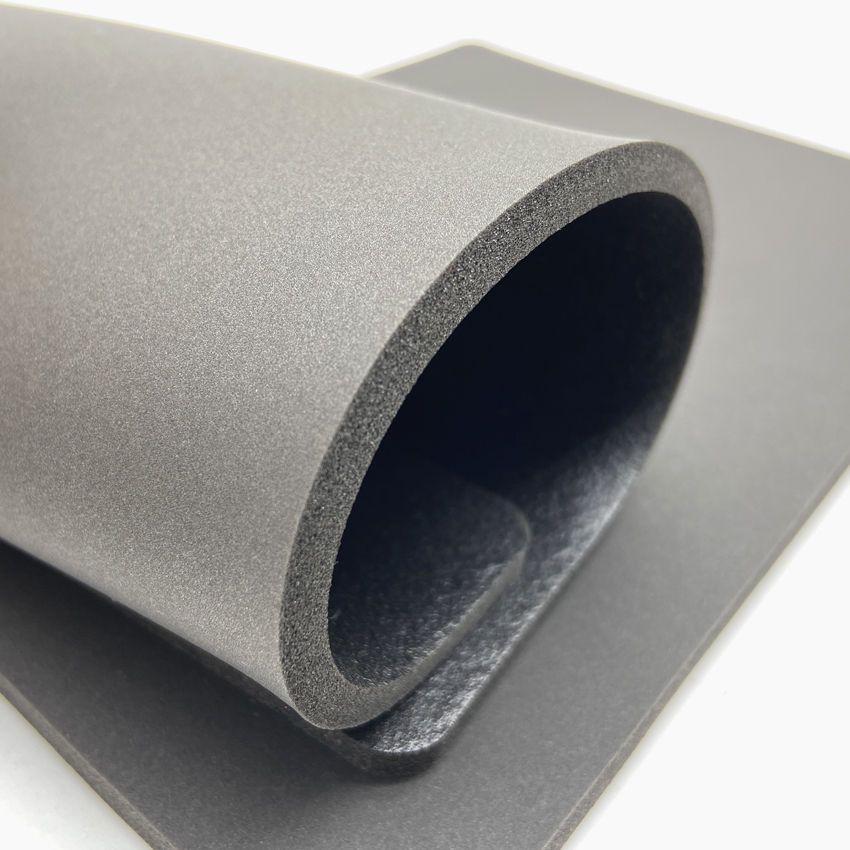
Polyvinyl chloride foam, commonly called PVC foam or PVC sponge foam, is a flexible closed-cell material used for sealing, cushioning, vibration damping and component protection.
PVC foam properties can be adjusted through density, softness or hardness, resilience and thickness. Topsun supplies PVC foam materials covering densities from approximately 80 kg/m³ to 500 kg/m³ and Shore 00 hardness from approximately 5° to 99° for different application requirements.
The closed-cell structure helps reduce water absorption while providing a flexible interface between components. It can be used for vehicle body vibration damping, door and window sealing, water tank sealing, HVAC components, electronic product cushioning and custom industrial foam parts.
The correct PVC foam grade should be selected according to compression space, density, hardness, required recovery, environmental exposure and finished component dimensions.
Low Density PVC Foam for Automotive Applications
Compressible PVC foam can be used in automotive applications where cushioning, vibration control, sound attenuation or flexible contact between components is required.
Typical uses include vehicle body seals, interior cushioning, anti-vibration pads, equipment interfaces and custom foam components. The foam can also be supplied with adhesive backing for easier positioning during vehicle assembly.
For automotive projects requiring specific flammability performance, the required standard and material grade should be confirmed before production.
PVC Foam for HVAC and Equipment
PVC sponge foam can be converted into strips, tapes, pads and gasket components for HVAC equipment, access panels, ventilation systems and industrial machinery.
Its combination of conformability, vibration damping, sound attenuation and closed-cell structure makes it suitable for applications where panels or equipment components require a compressible interface.
Applications of PVC Sponge Foam
| Application | Typical Function |
| Door and Window Sealing | Flexible sealing strips and gap-filling foam components for frames and assembled structures. |
| Automotive and Transportation | Truck, cab and vehicle body seals, vibration damping, cushioning and custom foam components. |
| HVAC Systems | Panel sealing, cushioning, vibration isolation and flexible interface components. |
| Appliances | Cushioning, panel interfaces, vibration damping and sealing components. |
| Die-Cut Gaskets | Custom gasket and pad components manufactured according to drawings or samples. |
| Electronic Devices | Cushioning, enclosure interfaces, protective pads and custom converted foam parts. |
| Railway and Marine Components | Flexible cushioning, vibration-control and sealing applications. |
| Outdoor Lighting | Housing interfaces, cushioning and gasket components. |
PVC Foam for Vibration Damping and Sound Attenuation
Flexible PVC foam can act as a cushioning interface between two components, helping reduce direct mechanical contact and vibration transfer. This makes it useful in automotive interiors, appliances, HVAC equipment and machinery assemblies.
The foam can also help attenuate sound generated by vibration or contact between adjacent components. Final performance depends on density, hardness, thickness, compression and the structure of the complete assembly.
PVC Foam for Curved and Irregular Surfaces
One advantage of compressible PVC sponge foam is its ability to conform to curved and irregular surfaces. This can help maintain contact between components where rigid gasket materials would not follow surface variation effectively.
When selecting foam for an irregular gap, buyers should provide the minimum and maximum gap, available compression, surface geometry and finished component dimensions.
Custom PVC Foam Sheet, Strip, Tape and Gasket Options
Topsun can supply PVC sponge foam as raw sheets and rolls or convert the material into parts ready for assembly.
| Custom Option | Available Processing |
| Product Format | Sheets, rolls, strips, tapes, pads, gaskets and custom components. |
| Thickness | Material can be sliced according to suitable thickness requirements. |
| Cut Size | Custom width, length and finished part dimensions. |
| Adhesive Backing | Pressure-sensitive adhesive and release liner for suitable assembly applications. |
| Lamination | Hot-melt film lamination, flame lamination and pressure-sensitive adhesive lamination. |
| Custom Shape | Laser-cut and die-cut components according to drawings, dimensions or samples. |
How to Select the Right PVC Sponge Foam
PVC foam selection should be based on the finished application rather than density alone. Different densities and hardness levels provide different compression, support, recovery and cushioning characteristics.
Application: identify whether the foam is used for cushioning, vibration damping, sound attenuation, sealing or component protection.
Density: specify the required grade if already determined.
Hardness: determine the required softness or support level.
Thickness: confirm the available gap and finished thickness.
Compression: identify how much the foam will be compressed after assembly.
Environment: provide information about UV, moisture, outdoor exposure or chemical contact.
Flammability: specify the required test method or performance grade where applicable.
Adhesive backing: identify whether adhesive is required and the substrate it will bond to.
Finished dimensions: provide dimensions, drawings or physical samples for custom parts.
Order quantity: provide sample, trial and estimated production quantities.
Topsun Foam Processing Capabilities
Topsun provides foam material supply together with custom processing services for OEM manufacturers, industrial buyers and distributors.
Cutting: cut foam sheets, rolls and parts according to customer dimensions.
Slicing: slice foam material to the required thickness.
Lamination: hot-melt film lamination, flame lamination and pressure-sensitive adhesive lamination.
Laser Cutting: produce suitable customized foam shapes according to digital drawings.
Die Cutting: manufacture repeatable pads, gaskets, seals and custom components according to customer designs.
Compression Molding: manufacture three-dimensional molded foam and composite parts requiring defined geometry.
Engraving: produce tool-box inserts, protective packaging inserts and other customized foam parts.
Silk-Screen Printing: print logos and patterns on suitable foam surfaces.
Adhesive Backing: laminate adhesive and release liner to produce tapes, strips, pads, gaskets and self-adhesive foam parts.
Foam Materials Available from Topsun
Topsun supplies EVA foam, PE foam, XPE foam, IXPE foam, CR foam, EPDM foam, neoprene foam, SBR foam, NBR foam and micro-cell soft PVC foam. Materials can be supplied as sheets and rolls or converted into customized foam components.
About Topsun Foam
Topsun is a professional supplier of foam materials and custom foam products. We support customers with material selection, cutting, slicing, lamination, adhesive backing, die cutting and other converting processes.
Our factory is located in Changzhou City, Jiangsu Province, China, with convenient access to Shanghai Port for international shipments.
Low Density PVC Foam FAQ
What is low density PVC foam?
Low density PVC foam is a compressible closed-cell polyvinyl chloride sponge material used for cushioning, vibration damping, sealing, gap filling and component protection. Different grades can be produced with different density, hardness and recovery characteristics.
Is PVC sponge foam closed cell?
Yes. This PVC sponge foam uses a closed-cell structure, which helps reduce water absorption and supports sealing, cushioning and protective applications.
What is compressible PVC foam used for?
Typical applications include automotive interiors, vehicle body seals, HVAC systems, appliances, door and window seals, electronic equipment, vibration-control pads, outdoor lighting components and custom die-cut parts.
Can PVC foam reduce vibration and noise?
PVC sponge foam can provide cushioning between components and help reduce vibration transfer and contact-related noise. Final performance depends on density, hardness, thickness, compression and the complete assembly design.
Is PVC foam suitable for automotive applications?
PVC foam is used in automotive applications for cushioning, vibration damping, body seals, interior interfaces and custom converted foam parts. Where flammability requirements apply, the required grade and test standard should be confirmed before production.
Can PVC foam conform to curved or irregular surfaces?
Yes. Compressible PVC foam can conform to curves and irregular shapes, making it useful for assemblies where contact surfaces are not completely flat.
Does PVC sponge foam have low water absorption?
Closed-cell PVC sponge foam has low water absorption compared with open-cell foam materials. Actual sealing performance depends on foam grade, compression and the design of the finished assembly.
Can Topsun provide adhesive-backed PVC foam?
Yes. Topsun can laminate pressure-sensitive adhesive and release liner onto suitable PVC foam to produce adhesive-backed sheets, strips, tapes, pads and die-cut components.
Can Topsun make custom PVC foam gaskets and parts?
Yes. Topsun provides cutting, slicing, lamination, laser cutting and die cutting according to customer drawings, dimensions or samples. Custom pads, gaskets, strips and other converted foam components can be produced.
How do I choose PVC foam density and hardness?
Density and hardness should be selected according to the required compression force, support, cushioning, recovery, sealing requirement and assembly gap. Provide the actual application conditions when requesting a material recommendation.
What information should I provide for a PVC foam quotation?
Please provide density and hardness if known, required thickness, width and length or finished part dimensions, application, compression conditions, adhesive requirement, drawing or sample and estimated quantity.
What other foam materials can Topsun supply?
Topsun supplies EVA foam, PE foam, XPE foam, IXPE foam, CR foam, EPDM foam, neoprene foam, SBR foam, NBR foam and micro-cell soft PVC foam in sheet, roll and customized converted forms.
How can I request PVC foam samples?
Send your requirements to july@topsunfoam.com with the required density, hardness, thickness, dimensions, application, adhesive requirement and estimated quantity for evaluation.

 English
 العربية
 Français
 Русский
 Español
 Português
 Deutsch
 italiano
 日本語
 한국어
 Nederlands
 Tiếng Việt
 ไทย
 Polski
 Türkçe
 ភាសាខ្មែរ
 Bahasa Melayu
 ဗမာစာ
 தமிழ்
 Filipino
 Bahasa Indonesia
 magyar
 Română
 Čeština
 қазақ
 Српски
 हिन्दी
 فارسی
 Kiswahili
 Norsk
 Svenska
 українська
 Ελληνικά
 Suomi
 עברית
 Latine
 Dansk
 اردو
 বাংলা
 Afrikaans
 नेपाली
 Oʻzbekcha
 Azərbaycan dili
 Български
 guarani
 Hausa
 Kurdî
 Kurdî
 Lietuvių
 Wikang Tagalog
 isiZulu