Open Cell EVA Foam for Case Inserts, Cushioning and Acoustic Applications
Topsun open cell EVA foam is a soft and compressible foam material designed for case inserts, protective cushioning, sound absorption, vibration damping, gap filling and custom converted foam components.
Compared with conventional closed-cell EVA foam, open-cell construction allows greater air movement through the cellular structure and generally provides softer compression. This makes it suitable for applications where conformability, cushioning or acoustic absorption is more important than moisture-barrier performance.
The current Topsun product information lists a density of 110–130 kg/m³, sheet size of 1000×2000 mm, tensile strength of ≥120 kPa, compression deflection of ≤5.0 kPa and tearing strength of ≥2.5 N/cm. Adhesive backing can also be evaluated for suitable finished parts.
Open Cell EVA Foam Key Features
Soft compression: suitable for components requiring flexible contact and relatively low compression force.
Good elasticity: provides resilient cushioning for suitable inserts and protective components.
Sound absorption: open-cell structure can support selected acoustic and noise-control applications.
Shock absorption: suitable for protecting instruments, equipment and products from impact.
Vibration damping: can help reduce direct vibration transmission between components.
Surface conformability: soft foam can adapt to irregular shapes and variable contact surfaces.
Lightweight construction: helps reduce the overall weight of case inserts and cushioning assemblies.
Custom converting: suitable material can be cut, sliced, laminated, engraved, die-cut and adhesive-backed.
Open Cell EVA Foam Product Information
| Item | Product Information |
| Material | EVA Foam |
| Cell Structure | Open Cell |
| Density | 110–130 kg/m³ |
| Sheet Size | 1000×2000 mm |
| Tensile Strength | ≥120 kPa |
| Compression Deflection | ≤5.0 kPa |
| Tearing Strength | ≥2.5 N/cm |
| Adhesive Options | One-Side or Double-Side Adhesive for Suitable Applications |
| Available Forms | Sheet, Pad, Insert, Strip and Custom Converted Parts |
Open Cell EVA Foam Technical Specification
The following technical data is retained from the existing product specification. Final values should be confirmed according to the selected production grade and finished application.
| Item | Test Standard | Specification | Test Result | Unit |
| Density | GB/T 6343-1995 | 110–130 | 123.5 | kg/m³ |
| Tensile Strength | GB/T 6344-2008 | ≥120 | 241.0 | kPa |
| Tensile Rate | GB/T 6344-2008 | ≥120 | 196 | % |
| Compression Deflection | ASTM D 1056 | ≤5.0 | 2.9 | kPa |
| Compression Deformation | GB/T 6669-2008 | ≤30 | 6.0 | % |
| Tearing Strength | GB/T 10808-2006 | ≥2.5 | 6.5 | N/cm |
| Low Temperature Test | ASTM D 1056 | -40°C ±1°C, 5 h; Soft, No Cracking | Pass | — |
| High Temperature Test | GB/T 17794-1999 | 90°C ±3°C, 7 days; ≤10.0 | 7.14 | % |
Open Cell EVA Foam Product Video
What Is Open Cell EVA Foam?

Open cell EVA foam is a cellular EVA material in which part of the internal cell structure is interconnected. This allows air to move through the foam more easily than through conventional closed-cell EVA.
The more permeable cellular structure can provide softer compression and improved interaction with airborne sound, making open-cell material suitable for selected cushioning and acoustic applications.
Open-cell EVA should not be treated as the primary water or water-vapor barrier in an assembly. When moisture resistance is the main requirement, a suitable closed-cell EVA grade should be evaluated instead.
Material selection should therefore be based on the required cushioning, compression, acoustic behavior, moisture exposure and finished component design.
Open Cell EVA Foam for Case Inserts
Open cell EVA foam can be used for suitable case inserts where soft cushioning and conformability are required around tools, instruments, electronics or equipment.
The material can be cut or converted according to product geometry so that individual components remain separated and cushioned inside the case.
For case insert projects, foam density, compression behavior and cavity geometry should be matched to the weight, dimensions and protection requirements of the packed product.
Open Cell EVA Foam for Cushioning and Impact Protection
Soft foam cushioning helps reduce direct contact between products and surrounding structures. Under suitable compression, EVA foam can absorb part of the mechanical energy created during movement or impact.
This makes open cell EVA foam suitable for selected packaging inserts, protective pads, spacers, equipment interfaces and other components where flexible cushioning is required.
Open Cell EVA Foam for Sound Absorption
An interconnected cell structure allows airborne sound to enter the foam rather than being reflected primarily at the surface.
Part of the sound energy can then be dissipated within the cellular structure. Acoustic performance depends on foam thickness, density, cell structure, mounting method and the frequency range of the noise.
For acoustic applications, provide the noise source, available installation space, required thickness and relevant sound-frequency information where available.
Open Cell EVA Foam for Vibration Damping
Flexible EVA foam can be installed between components to provide cushioning and reduce direct mechanical contact.
Suitable pads and strips can help attenuate vibration in equipment housings, packaging systems, cases and other assemblies. Final performance depends on foam thickness, density, compression and applied load.
Open Cell EVA Foam for Low-Compression Applications
Softer foam materials are useful where the mating components cannot tolerate high compression force or where the foam needs to conform to variable surfaces.
Open cell EVA foam can be considered for suitable pads, spacers and cushioning interfaces where flexibility is more important than forming a moisture-resistant seal.
Open Cell EVA Foam vs. Closed Cell EVA Foam
| Comparison | Open Cell EVA Foam | Closed Cell EVA Foam |
| Cell Structure | Interconnected cellular structure | Predominantly isolated cells |
| Compression | Generally softer depending on grade | Generally firmer depending on density and grade |
| Sound Absorption | More suitable for selected sound-absorption applications | More commonly used for cushioning and barrier applications |
| Moisture Barrier | Not normally selected as the primary moisture barrier | Better suited to moisture-resistant applications |
| Surface Conformability | Suitable for soft cushioning and irregular contact surfaces | Suitable for more structured cushioning and support |
| Typical Applications | Acoustic absorption, soft inserts, cushioning and vibration control | Protective packaging, tool inserts, pads, mats and moisture-resistant parts |
Typical Open Cell EVA Foam Applications
| Application | Typical Function |
| Case Inserts | Soft cushioning around tools, instruments and equipment. |
| Protective Packaging | Shock absorption and cushioning during handling and transportation. |
| Acoustic Components | Selected sound-absorption and noise-control applications. |
| Equipment Pads | Cushioning and vibration-control interfaces. |
| Foam Spacers | Soft spacing between components with limited closing force. |
| Custom Foam Inserts | Custom-cut cavities and cushioning according to component geometry. |
| Adhesive Foam Parts | Pads and strips positioned on suitable substrates during assembly. |
Open Cell EVA Foam Application Examples
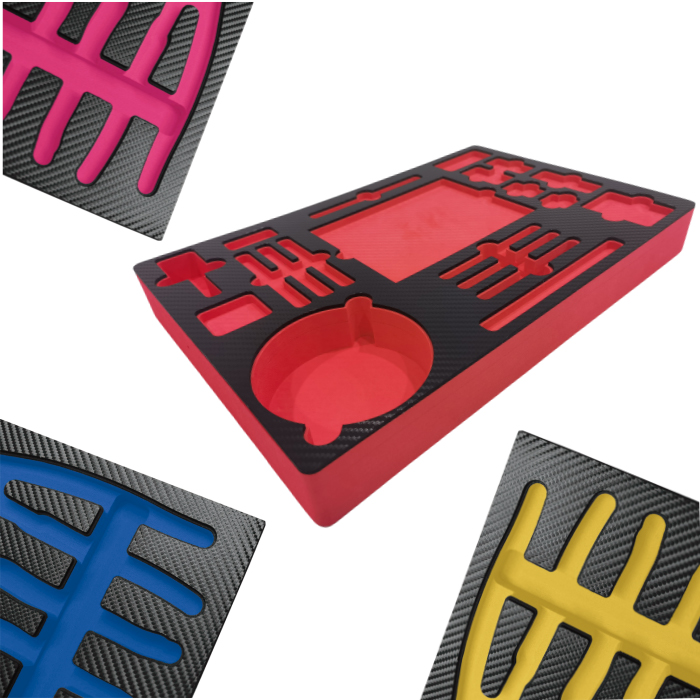
EVA Foam Tool Box Insert
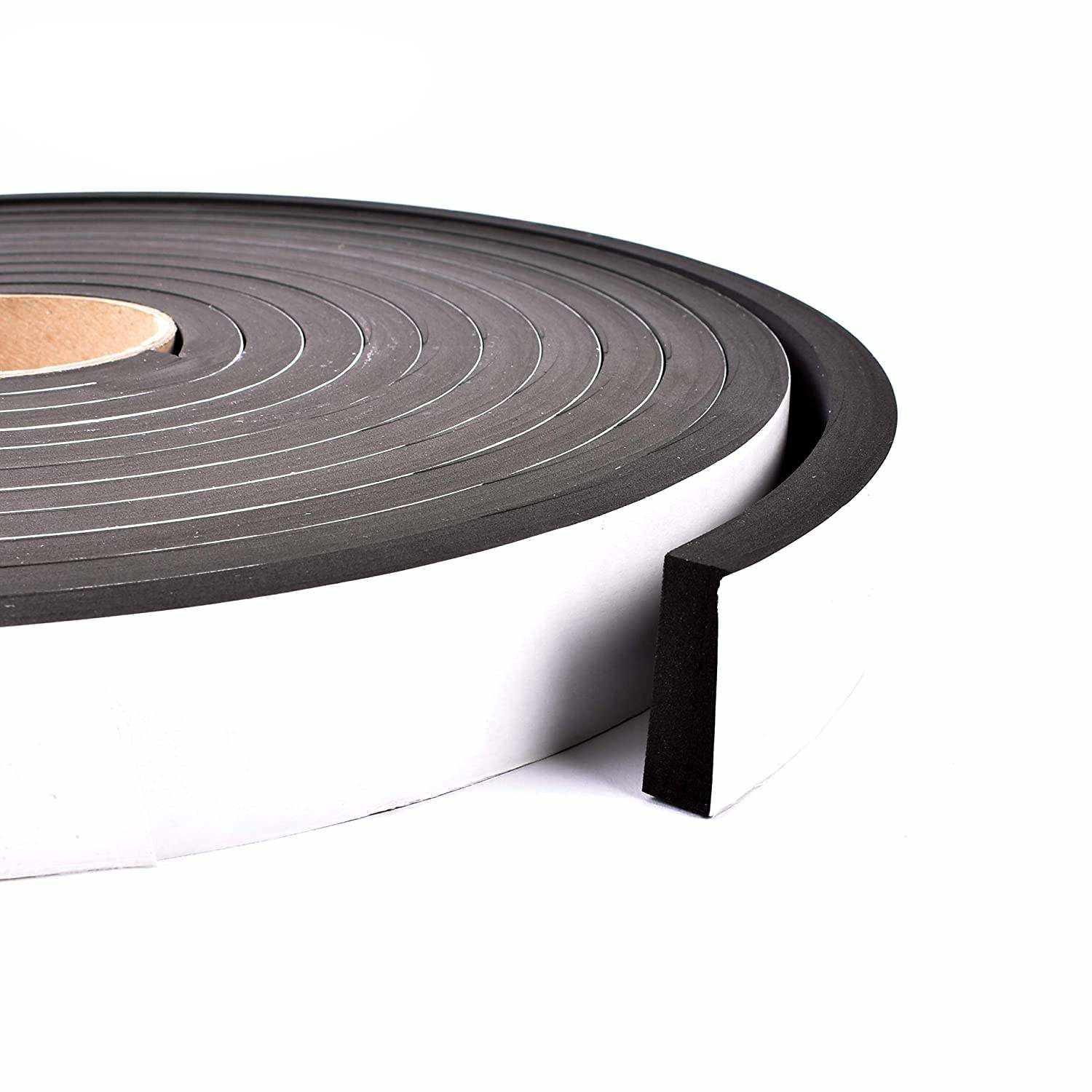
EVA Foam Tape
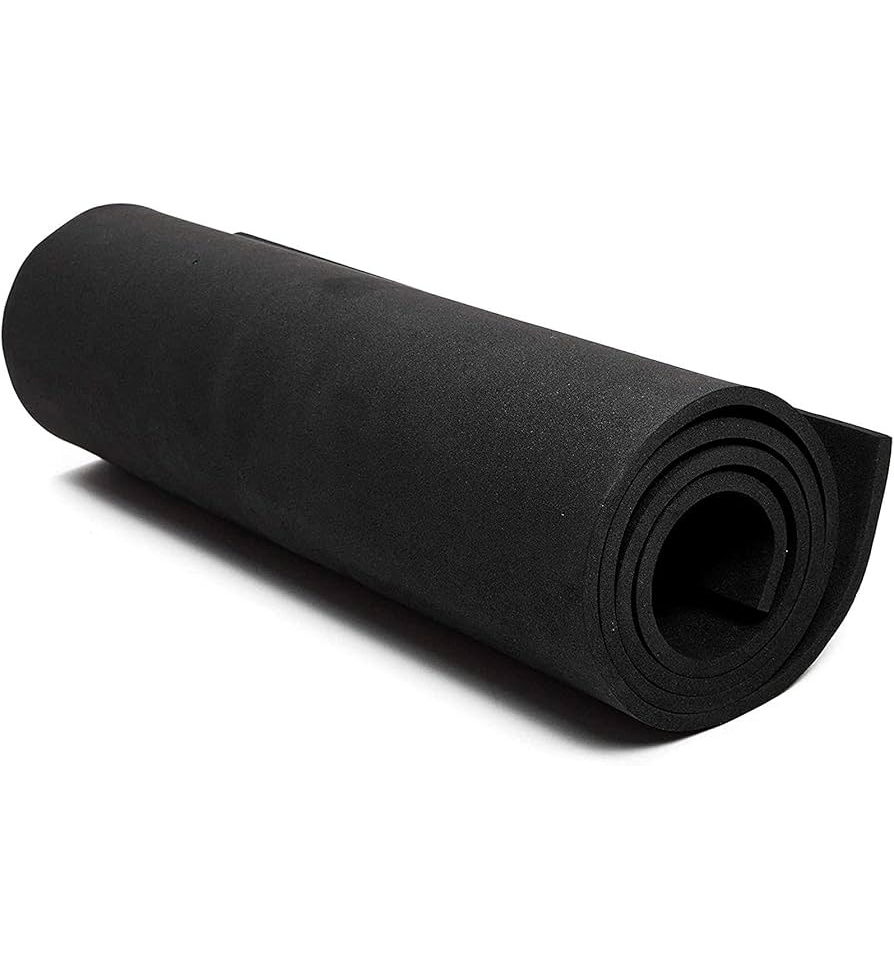
EVA Foam Rolls
Custom Open Cell EVA Foam Inserts, Pads and Parts
| Converted Form | Typical Use |
| EVA Foam Sheet | General fabrication and custom converting. |
| Case Insert | Cushioning and positioning of tools, instruments and equipment. |
| Foam Pad | Shock absorption, vibration damping and spacing. |
| Foam Strip | Soft cushioning and gap-filling applications. |
| Die-Cut Part | Repeatable custom components according to drawings. |
| Adhesive-Backed EVA | Helps position pads and strips during suitable assembly operations. |
How to Select Open Cell EVA Foam
Application: case insert, cushioning, acoustic absorption, vibration damping or custom foam component.
Density: specify the required density or desired compression behavior.
Thickness: select according to cushioning depth, available space and required compression.
Product weight: for packaging and inserts, provide the weight of the protected component.
Cavity dimensions: provide drawings or product dimensions for custom case inserts.
Acoustic requirement: provide the noise source and relevant frequency range where available.
Moisture exposure: identify whether the finished part will be exposed to water or high humidity.
Adhesive backing: specify plain foam, one-side adhesive or double-side adhesive.
Finished form: sheet, insert, strip, pad or die-cut component.
Estimated quantity: provide sample, trial and production quantities where available.
Topsun EVA Foam Processing Capabilities
Topsun supplies foam materials together with custom converting services according to customer drawings, dimensions and finished component requirements.
1. Cutting: foam sheets and components can be cut according to required dimensions.
2. Slicing: foam materials can be sliced to the required thickness.
3. Lamination: hot-melt film lamination, flame lamination and pressure-sensitive adhesive lamination are available.
4. Laser Cutting: suitable custom foam shapes can be processed according to digital drawings.
5. Die Cutting: custom inserts, pads, strips and repeatable foam components can be manufactured according to customer designs.
6. Compression Molding: three-dimensional molded foam and foam composite parts can be manufactured for suitable applications.
7. Engraving: suitable for tool box inserts, case inserts and packaging components.
8. Silk-Screen Printing: logos and patterns can be printed on suitable foam surfaces.
9. Adhesive Backing: adhesive and release liner can be applied to suitable EVA foam for strips, pads, inserts and custom parts.
Other Foam Materials Available from Topsun
Topsun supplies EVA foam, PE foam, XPE foam, IXPE foam, CR foam, EPDM foam, neoprene foam, SBR foam, NBR foam, NBR/PVC foam and micro-cell soft PVC foam in sheet, roll and custom converted forms.
About Topsun Foam
Topsun supplies foam materials and customized foam components for packaging, equipment, automotive, acoustic, construction and industrial applications. Customers can provide density, thickness, product dimensions, compression requirements, drawings and application information for evaluation.
Our facility is located in Changzhou City, Jiangsu Province, China, with convenient access to Shanghai Port for international shipments.
Open Cell EVA Foam FAQ
What is open cell EVA foam?
Open cell EVA foam is an EVA-based cellular material with interconnected cells. It is generally more permeable and compressible than conventional closed-cell EVA and can be used for cushioning, acoustic and custom insert applications.
What is open cell EVA foam used for?
Typical applications include case inserts, cushioning pads, acoustic components, vibration-control parts, soft spacers, packaging components and custom die-cut foam parts.
What is the density of this open cell EVA foam?
The current product specification lists density from 110–130 kg/m³, with a recorded test result of 123.5 kg/m³.
What sheet size is available?
The current product information lists a sheet size of 1000×2000 mm.
Is open cell EVA foam waterproof?
Open-cell materials are more permeable than closed-cell foam and should not normally be selected as the primary water or water-vapor barrier. For applications where moisture resistance is the main requirement, a suitable closed-cell EVA grade should be evaluated.
Is open cell EVA foam good for sound absorption?
Open-cell construction can support sound absorption because airborne sound can enter the cellular structure. Actual acoustic performance depends on density, thickness, cell structure, installation method and sound frequency.
Is open cell EVA foam suitable for case inserts?
It can be used for suitable case inserts where soft cushioning and conformability are required. Foam density and cavity design should be matched to the size and weight of the protected product.
What is the tensile strength of the referenced EVA foam?
The product specification lists tensile strength of ≥120 kPa according to GB/T 6344-2008, with a recorded test result of 241.0 kPa.
What is the compression deflection?
The referenced grade lists compression deflection of ≤5.0 kPa according to ASTM D 1056, with a recorded test result of 2.9 kPa.
What is the tearing strength?
The referenced specification lists tearing strength of ≥2.5 N/cm according to GB/T 10808-2006, with a recorded test result of 6.5 N/cm.
What is the difference between open cell and closed cell EVA foam?
Open-cell EVA is generally more permeable and suited to soft cushioning and selected acoustic applications. Closed-cell EVA is generally better suited to moisture-resistant cushioning, protective packaging, mats and more structured inserts.
Can adhesive backing be added?
Yes. Existing product information includes adhesive on one side or both sides for suitable applications. The bonding substrate and service environment should be provided for evaluation.
Can Topsun cut custom open cell EVA foam parts?
Yes. Topsun provides cutting, slicing, engraving and die-cutting capabilities for suitable foam materials. Custom inserts, pads, strips and other components can be evaluated according to drawings.
What information should I provide for a quotation?
Please provide the application, required density, thickness, dimensions, product weight, cushioning or acoustic requirement, adhesive option, drawings or cavity layout and estimated quantity.
How can I request an open cell EVA foam sample?
Send your requirements to july@topsunfoam.com, including density, thickness, dimensions, application and estimated quantity for evaluation.

 English
 العربية
 Français
 Русский
 Español
 Português
 Deutsch
 italiano
 日本語
 한국어
 Nederlands
 Tiếng Việt
 ไทย
 Polski
 Türkçe
 ភាសាខ្មែរ
 Bahasa Melayu
 ဗမာစာ
 தமிழ்
 Filipino
 Bahasa Indonesia
 magyar
 Română
 Čeština
 қазақ
 Српски
 हिन्दी
 فارسی
 Kiswahili
 Norsk
 Svenska
 українська
 Ελληνικά
 Suomi
 עברית
 Latine
 Dansk
 اردو
 বাংলা
 Afrikaans
 नेपाली
 Oʻzbekcha
 Azərbaycan dili
 Български
 guarani
 Hausa
 Kurdî
 Kurdî
 Lietuvių
 Wikang Tagalog
 isiZulu


