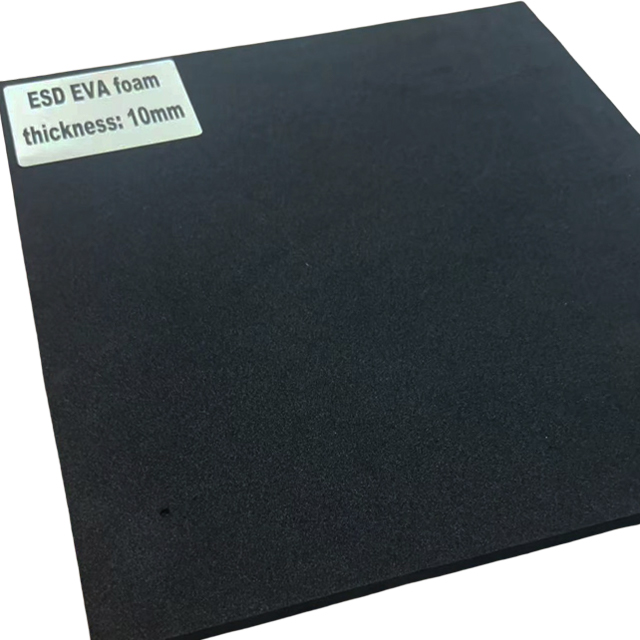
ESD EVA Antistatic Foam Sheet for Electronics Packaging
Topsun ESD EVA antistatic foam sheet is designed for PCB protection, electronic component packaging, precision instruments, equipment cases, tool box inserts and custom static-control cushioning parts.
The material combines EVA foam cushioning with antistatic performance to help reduce static buildup and protect sensitive electronic products during handling, storage and transportation.
The current tested sample has a density of 82 kg/m³, tensile strength of 890 kPa, elongation at break of 93%, tear strength of 1040 N/m and a listed antistatic resistance value of 10^6–10^11 Ω under a test environment of 23°C±2°C and 50%±5% relative humidity.
Topsun can convert ESD EVA foam into sheets, inserts, trays, pads, strips, adhesive-backed components and custom die-cut parts according to product dimensions, drawings, samples and packaging requirements.
Request ESD EVA Foam Quote
ESD EVA Foam Product Information
| Property | Product Information |
| Material | ESD / Antistatic EVA Foam |
| Primary Function | Static-Control Cushioning for Electronic Products |
| Tested Sample Density | 82 kg/m³ |
| Listed Antistatic Value | 10^6–10^11 Ω |
| Testing Environment | 23°C±2°C / 50%±5% Relative Humidity |
| Tensile Strength | 890 kPa for Current Tested Sample |
| Elongation at Break | 93% for Current Tested Sample |
| Tear Strength | 1040 N/m for Current Tested Sample |
| Current Listed Sheet Size | 1000 × 2000 mm |
| Custom Options | Density / Thickness / Size / Color / Antistatic Range / Lamination / Adhesive Backing / Die-Cut Shape |
| Supply Forms | Sheet / Roll / Insert / Tray / Pad / Strip / Tape / Custom Die-Cut Part |
| Typical Applications | PCB Packaging / Electronics / Precision Instruments / Case Inserts / Tool Inserts / ESD Trays |
ESD EVA Foam Technical Specification
The following values are based on the current tested ESD EVA foam sample. Electrical resistance requirements and measurement methods should be confirmed according to the customer's ESD packaging specification before material approval.
| ESD EVA Foam Specification |
| Testing Environment |
| Temperature: 23°C±2°C |
| Relative Humidity: 50%±5% |
| Item | Unit | Testing Standard | Test Result |
| Density | kg/m³ | GB/T 6343-2009 | 82 |
| Tensile Strength | kPa | GB/T 6343-2008 | 890 |
| Elongation at Break | % | GB/T 10808-2006 | 93 |
| Tear Strength | N/m | GB/T 6344-2008 | 1040 |
| Antistatic Value | Ω | Not Listed in Current Data | 10^6–10^11 |
Electrical resistance can be affected by material grade, test method, humidity, temperature and conditioning. Confirm the required resistance range and applicable test method before bulk production.
What Is ESD EVA Antistatic Foam?

ESD EVA antistatic foam is a cushioning material developed for electronic products and components that require both mechanical protection and static-control performance.
During handling, transportation and assembly, friction between products, packaging materials and operators can generate electrostatic charge. A suitable antistatic foam helps reduce charge buildup while cushioning the component against movement, vibration and impact.
Material selection should be based on the required electrical resistance range, measurement method, product sensitivity, contact conditions, foam density, thickness and complete packaging design.
Antistatic EVA Foam vs Conductive Foam
Antistatic and conductive foams should not be treated as interchangeable materials. Electronic packaging projects can require different electrical resistance ranges and discharge behavior depending on the sensitivity of the component and the packaging system.
The current Topsun test data lists an antistatic value of 10^6–10^11 Ω, but does not specify an electrical resistance test standard. For projects requiring a defined conductive or static-dissipative grade, provide the required resistance range and test method for evaluation.
| Selection Requirement | Information to Provide |
| Target Resistance | Specify the acceptable electrical resistance range. |
| Test Method | Provide the required electrical test standard or customer method. |
| Direct Product Contact | Confirm whether the foam contacts PCBs, terminals, sensors or finished electronics directly. |
| Packaging Configuration | Identify whether the foam is used alone or together with bags, trays, cases or shielding packaging. |
| Environmental Conditions | Provide expected temperature, humidity and storage conditions where relevant. |
Key Features of ESD EVA Foam
Static-control performance: current tested material lists an antistatic value of 10^6–10^11 Ω.
Cushioning: helps reduce product movement and mechanical impact during storage and transportation.
Flexible fabrication: suitable for cutting, punching, die cutting, engraving and custom cavity designs.
Case insert capability: can be converted into equipment, instrument and tool case inserts.
Custom trays and pads: suitable for PCB trays, assembly pads, protective liners and component separators.
Adhesive backing: single-side or double-side adhesive options can be evaluated according to the bonding surface.
Lamination: compatible foam and facing structures can be evaluated according to packaging requirements.
Flame-retardant options: suitable formulations can be evaluated where a defined flame test is required.
ESD EVA Foam for PCB and Electronic Component Packaging
ESD EVA foam can be used to cushion printed circuit boards, sensors, electronic modules, precision components and other sensitive products during handling, shipping and storage.
Custom cavities can help restrict product movement and separate components while the selected antistatic grade provides static-control performance.
Buyers should provide component dimensions, weight, contact surfaces, ESD requirement and packaging configuration before selecting the foam grade.
ESD EVA Case Inserts
ESD EVA can be fabricated into custom case inserts for electronic instruments, diagnostic equipment, sensors, tools and precision components.
Cavities can be cut or engraved according to product geometry so that each component has a defined storage position and cushioning space.
For reusable transport cases, buyers should define product weight, insertion and removal frequency, required resistance range and desired cushioning firmness.
ESD EVA Tool Box Inserts
Custom ESD EVA inserts can organize electronic tools, measurement instruments, probes and sensitive service equipment inside portable cases or tool boxes.
Inserts can be cut or engraved according to drawings, CAD files, samples or dimensional information.
ESD EVA Foam Trays and Assembly Pads
ESD EVA foam can be fabricated into trays, pads and separators for electronics assembly, internal handling, component storage and transportation.
Tray design should consider component size, spacing, cavity depth, loading direction, product weight and the required electrical resistance specification.
ESD EVA Foam Video
ESD EVA Foam Application Images
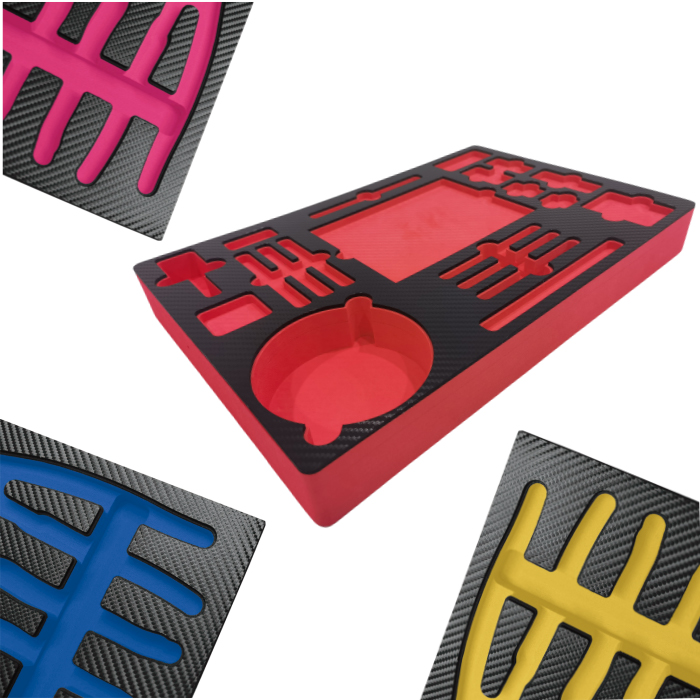
EVA Foam Tool Box Insert
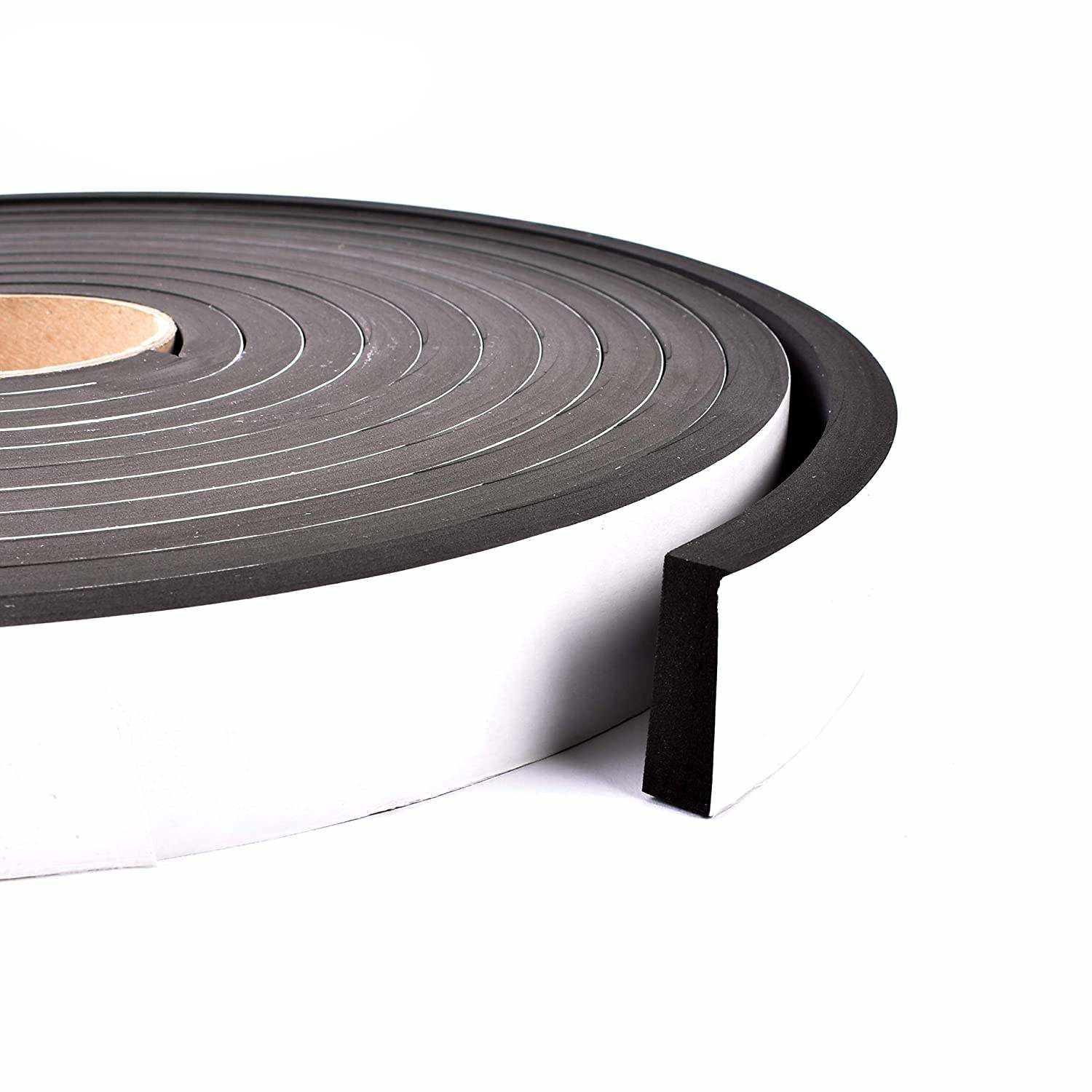
EVA Foam Tape
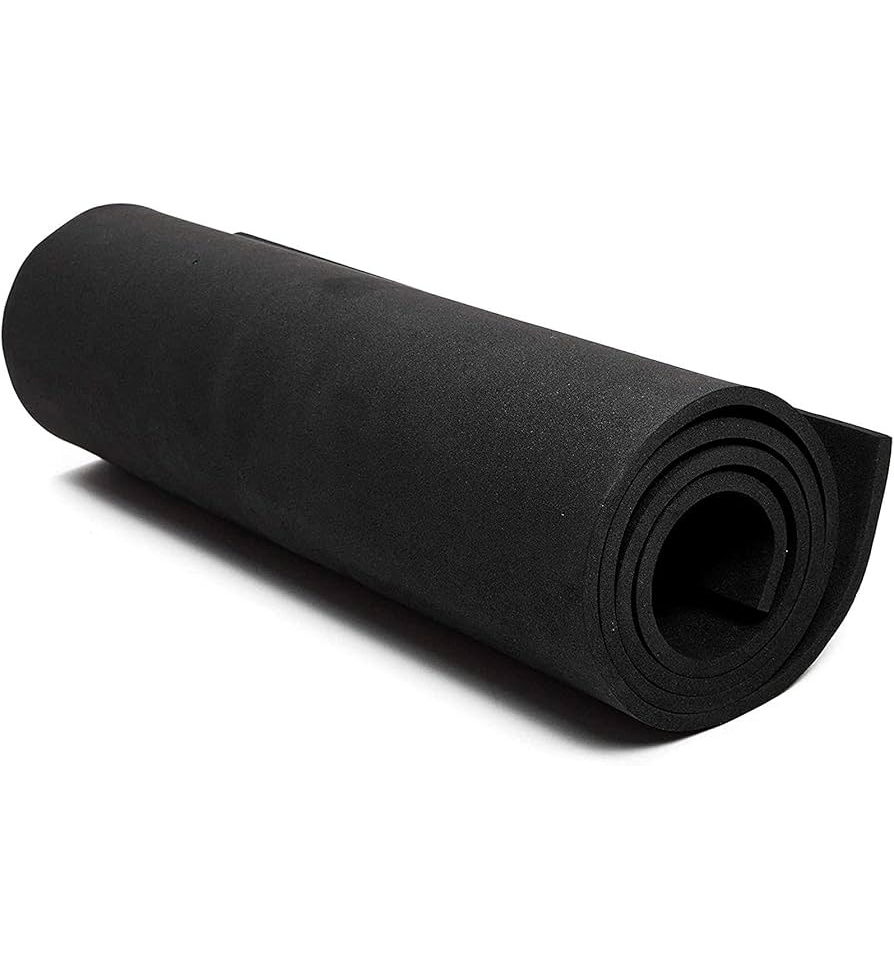
EVA Foam Sheet and Roll
Custom ESD EVA Foam Inserts and Die-Cut Parts
Topsun can convert ESD EVA foam into custom case inserts, tool box inserts, packaging inserts, trays, pads, strips, tapes and die-cut components.
Customization can include density, thickness, dimensions, color, required antistatic range, cavity layout, adhesive backing, release liner, lamination and packaging method.
For custom inserts, provide the product drawing or sample together with component weight, desired cavity depth, quantity and required ESD performance.
Request Custom ESD Foam Insert
Adhesive-Backed ESD EVA Foam
Suitable ESD EVA foam can be supplied with pressure-sensitive adhesive and release liner for mounting, assembly, protective pads and custom die-cut components.
Single-side or double-side adhesive constructions can be evaluated according to the actual bonding surface and installation method.
Adhesive selection should consider substrate material, surface energy, temperature, humidity and required holding performance.
How to Select ESD EVA Antistatic Foam
| Selection Factor | Information to Confirm |
| Required Resistance Range | Provide the required electrical resistance specification. |
| Electrical Test Method | Provide the required ESD standard or customer test procedure. |
| Product Type | PCB, sensor, instrument, module, component or finished electronic product. |
| Product Weight | Helps determine required cushioning firmness and foam support. |
| Foam Thickness | Specify available space and required cushioning thickness. |
| Density | Confirm required firmness or provide the product load conditions. |
| Direct Contact | Confirm whether foam directly contacts electronic parts, terminals or PCB surfaces. |
| Cavity Design | Provide drawings, product dimensions or physical samples. |
| Adhesive | Specify whether single-side or double-side adhesive is required. |
| Quantity | Provide prototype, trial and expected production quantities. |
Topsun ESD Foam Processing Capabilities
Cutting
EVA foam sheets, rolls, strips and components can be cut according to customer dimensions.
Slicing
Suitable foam can be prepared according to required thickness specifications.
Lamination
Hot-melt film, flame lamination and pressure-sensitive adhesive lamination can be evaluated for compatible composite structures.
Laser Cutting
Suitable custom foam shapes can be cut from digital drawings without dedicated cutting dies.
Die Cutting
Dedicated tooling can produce repeatable pads, inserts, trays, separators and other custom foam components.
Compression Molding
Suitable EVA foam can be compression molded into three-dimensional components with defined geometry.
Engraving
Engraving can be used for equipment cases, tool box inserts, packaging inserts and custom product cavities.
Silk-Screen Printing
Logos, identification and suitable markings can be printed on compatible foam surfaces.
Adhesive Backing
Pressure-sensitive adhesive and release liners can be applied for mounting pads, strips, tapes and custom components.
Send Your ESD Packaging Requirements
About Topsun Foam
Topsun supplies EVA, PE, XPE, IXPE, IXPP, EPDM, CR, neoprene, SBR, NBR and microcellular soft PVC foam for electronics packaging, cushioning, insulation and industrial applications.
Foam materials can be supplied as sheets and rolls or converted into case inserts, trays, adhesive-backed components, pads and custom die-cut parts.
Our facility is located in Changzhou City, Jiangsu Province, China, with convenient access to Shanghai Port for international shipments.
ESD EVA Antistatic Foam Sheet FAQ
What is ESD EVA antistatic foam?
ESD EVA antistatic foam is EVA cushioning material with static-control properties for electronic components, PCBs, precision instruments and other products that require protection against both physical impact and static buildup.
What is the antistatic value of this EVA foam?
The current tested material lists an antistatic value of 10^6–10^11 Ω under a test environment of 23°C±2°C and 50%±5% relative humidity. The electrical resistance test standard is not specified in the current data.
Is this ESD EVA foam conductive?
The current data identifies the material as antistatic and lists a resistance value of 10^6–10^11 Ω. Projects requiring a specifically defined conductive grade should provide the required resistance range and test method for evaluation.
What density was tested?
The current technical table lists a tested density of 82 kg/m³.
What size is currently listed for the ESD EVA sheet?
The current product information lists a sheet size of 1000 × 2000 mm. Other dimensions can be discussed according to the project and converting requirements.
What is ESD EVA foam used for?
Typical applications include PCB packaging, electronic component protection, precision instrument cases, ESD trays, equipment case inserts, tool box inserts, cushioning pads and custom die-cut components.
Can ESD EVA foam be used for PCB packaging?
Yes. Suitable ESD EVA grades can be used as cushioning inserts and protective packaging for PCBs. The required resistance range, direct-contact conditions and complete packaging system should be confirmed before material selection.
Can Topsun make custom ESD EVA case inserts?
Yes. Topsun can produce custom case inserts, tool box inserts, trays, cavity inserts and pads according to product drawings, samples or dimensional information.
Can ESD EVA foam be die cut or engraved?
Yes. Suitable EVA foam can be cut, punched, die cut, laser cut and engraved into custom packaging and protective components.
Can ESD EVA foam have adhesive backing?
Yes. Single-side or double-side pressure-sensitive adhesive can be evaluated according to the bonding surface and application conditions.
Can Topsun customize the antistatic resistance range?
Different static-control requirements can be discussed according to the customer's target resistance range and required test method. Final performance should be confirmed for the selected material grade.
Can flame-retardant ESD EVA foam be supplied?
Flame-retardant options can be evaluated where required. Buyers should provide the exact flame test or customer specification before material selection.
Can compliance documentation be provided?
Available compliance documentation should be confirmed for the selected material grade and project requirement before ordering.
How do I choose the right ESD EVA foam?
Confirm the required resistance range, electrical test method, product sensitivity, direct-contact conditions, density, thickness, cushioning requirement, cavity design, adhesive requirement and complete packaging configuration.
What information should I provide for a quotation?
Provide the required resistance range, ESD test requirement, product dimensions, product weight, foam thickness, density, sheet or insert dimensions, color, adhesive requirement, drawing or sample and estimated quantity.
How can I request an ESD EVA foam sample?
Send your requirements to july@topsunfoam.com, including the required antistatic range, thickness, density, dimensions, application, adhesive requirement and estimated quantity.
Get ESD EVA Foam Sample & Quote

 English
 العربية
 Français
 Русский
 Español
 Português
 Deutsch
 italiano
 日本語
 한국어
 Nederlands
 Tiếng Việt
 ไทย
 Polski
 Türkçe
 ភាសាខ្មែរ
 Bahasa Melayu
 ဗမာစာ
 தமிழ்
 Filipino
 Bahasa Indonesia
 magyar
 Română
 Čeština
 қазақ
 Српски
 हिन्दी
 فارسی
 Kiswahili
 Norsk
 Svenska
 українська
 Ελληνικά
 Suomi
 עברית
 Latine
 Dansk
 اردو
 বাংলা
 Afrikaans
 नेपाली
 Oʻzbekcha
 Azərbaycan dili
 Български
 guarani
 Hausa
 Kurdî
 Kurdî
 Lietuvių
 Wikang Tagalog
 isiZulu