Flame Retardant Silicone Foam Rubber Sheet
TOPSUN silicone foam rubber sheet is a low-density, soft, flame-retardant silicone sponge material designed for sealing, gasketing, thermal insulation, cushioning and vibration-control applications. It combines the flexibility of sponge rubber with the temperature resistance, weather resistance and sealing performance of silicone rubber.
The material is suitable for applications that require a compressible closed-cell silicone foam with stable performance under heat, cold, UV, ozone, moisture and outdoor exposure. It can be supplied as sheets, strips, pads, gaskets, seals and custom die-cut parts according to drawings or samples.
Material: flame retardant low-density soft silicone foam / silicone sponge rubber.
Available thickness: 1.5 mm to 30 mm, with custom sizes and converted parts available.
Temperature range: suitable for demanding environments from approximately -60°C to 200°C, depending on grade and application conditions.
Typical uses: enclosure gaskets, battery pack pads, thermal barriers, acoustic insulation, HVAC seals, marine insulation, rail and automotive sealing, aerospace cushioning and industrial gasket parts.
Key Features of Silicone Foam Rubber
Flame retardant performance: typical material data shows V-0 flame resistance for selected silicone foam grades.
Excellent thermal stability: suitable for high-temperature and low-temperature sealing and insulation applications.
Weather, UV and ozone resistance: helps maintain sealing performance in outdoor or exposed environments.
Soft compressibility: provides reliable sealing on uneven surfaces and helps reduce vibration and mechanical shock.
Closed-cell structure: helps resist the passage of liquids and gases when properly compressed in a sealing design.
Good thermal insulation: low thermal conductivity helps reduce heat transfer in insulation pads, thermal barriers and equipment seals.
Low compression set: helps the gasket recover after compression and maintain long-term sealing pressure.
Easy to fabricate: can be cut, sliced, laminated, die-cut, engraved, adhesive-backed and converted into custom foam parts.
Silicone Foam Rubber Sheet Specifications
The following data shows typical performance parameters for TOPSUN foamed silicone grades. Final values may vary by density, thickness, color, formulation, test method and production tolerance. Confirm the required standard before placing bulk orders.
| Foamed Silicone Typical Performance Parameters |
Density
(g/cm³) | 25% Compression Force Deflection
(kPa) | Tensile Strength
(MPa) | Elongation at Break
(%) | Compression Set
(%) | Water Absorption
(%) | Low Temperature Embrittlement | Environmental Test | Flame Resistance | Dielectric Strength
(kV/mm) | Volume Resistivity
(Ω·cm) | Thermal Conductivity
W/(m·K) |
| 0.14±0.04 | 5±2 | ≥0.1 | ≥70 | ≤5.0 | ≤10.0 | -55°C
Pass | RoHS, REACH
Pass | V-0 | ≥2.0 | ≥1.0 × 10¹⁴ | 0.05±0.01 |
| 0.18±0.04 | 10±4 | ≥0.1 | ≥70 | ≤5.0 | ≤10.0 | -55°C
Pass | RoHS, REACH
Pass | V-0 | ≥2.0 | ≥1.0 × 10¹⁴ | 0.05±0.01 |
| 0.22±0.04 | 20±10 | ≥0.15 | ≥70 | ≤5.0 | ≤5.0 | -55°C
Pass | RoHS, REACH
Pass | V-0 | ≥2.0 | ≥1.0 × 10¹⁴ | 0.06±0.01 |
| 0.26±0.04 | 35±10 | ≥0.2 | ≥80 | ≤5.0 | ≤5.0 | -55°C
Pass | RoHS, REACH
Pass | V-0 | ≥2.2 | ≥1.0 × 10¹⁴ | 0.07±0.01 |
| 0.32±0.04 | 45±10 | ≥0.3 | ≥80 | ≤5.0 | ≤5.0 | -55°C
Pass | RoHS, REACH
Pass | V-0 | ≥2.2 | ≥1.0 × 10¹⁴ | 0.07±0.01 |
| 0.37±0.04 | 75±20 | ≥0.3 | ≥80 | ≤5.0 | ≤5.0 | -55°C
Pass | RoHS, REACH
Pass | V-0 | ≥2.5 | ≥1.0 × 10¹⁴ | 0.08±0.01 |
| 0.42±0.04 | 110±20 | ≥0.4 | ≥85 | ≤5.0 | ≤5.0 | -55°C
Pass | RoHS, REACH
Pass | V-0 | ≥3.5 | ≥1.0 × 10¹⁴ | 0.09±0.01 |
| 0.50±0.04 | 145±30 | ≥0.5 | ≥90 | ≤5.0 | ≤5.0 | -55°C
Pass | RoHS, REACH
Pass | V-0 | ≥4.0 | ≥1.0 × 10¹⁴ | 0.10±0.01 |
| 0.55±0.04 | 110±20 | ≥0.7 | ≥160 | ≤5.0 | ≤5.0 | -55°C
Pass | RoHS, REACH
Pass | V-0 | ≥4.0 | ≥1.0 × 10¹⁴ | 0.10±0.01 |
What Is Silicone Foam?
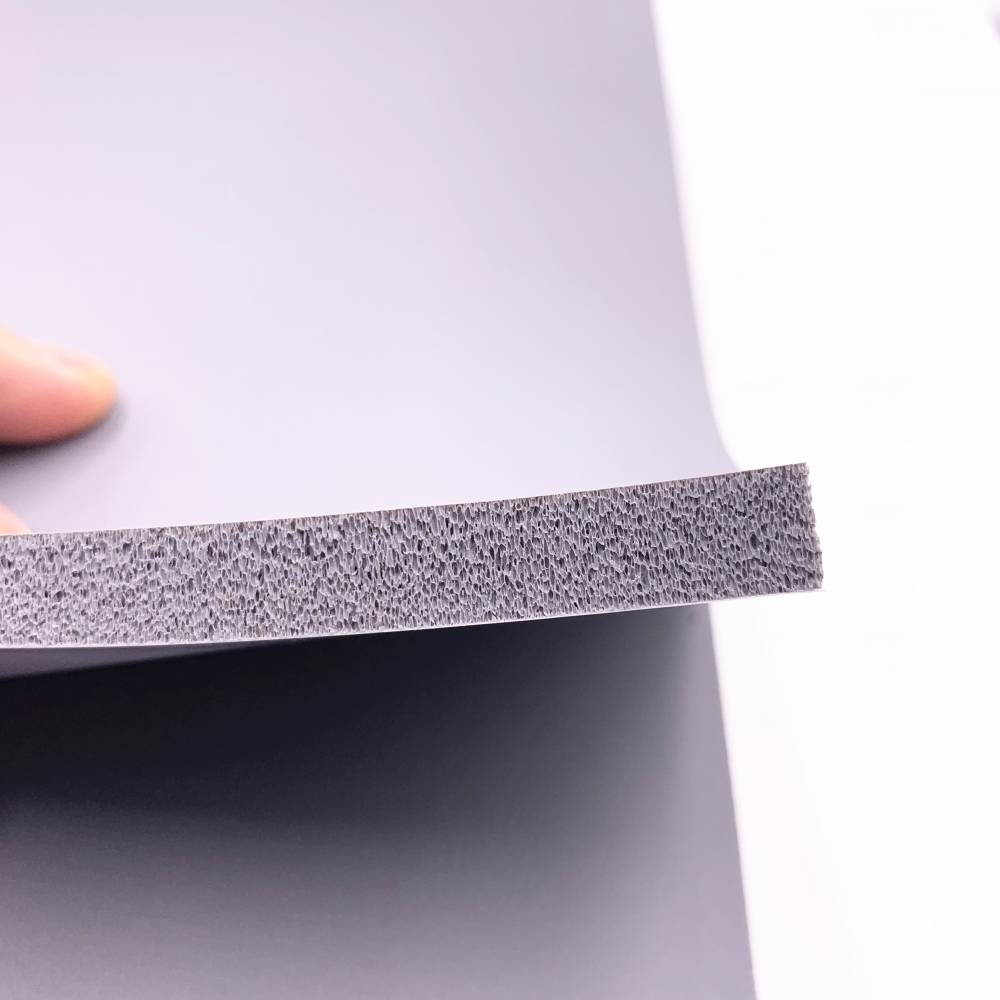
Silicone foam is a sponge-like silicone rubber material with a lightweight cellular structure. Compared with standard solid rubber, silicone foam is softer, more compressible and easier to seal at lower closing force. Compared with many general-purpose foams, silicone foam provides stronger resistance to heat, cold, UV, ozone and weathering.
TOPSUN silicone sponge sheets are designed with a closed-cell structure and smooth outer surface to help resist liquid and gas passage. Thicknesses from 1.5 mm to 30 mm are available, and specialized grades can be selected for sealing, insulation, flame retardancy, electrical insulation or cushioning applications.
These features make silicone foam a practical replacement for standard rubber in applications where a softer, more flexible and temperature-resistant sealing material is required.
Applications of Silicone Foam Rubber Sheet

Automotive and Mass Transit
Silicone foam can be converted into gaskets, seals, anti-rattle pads, vibration-damping parts and thermal insulation pads for automotive, bus, rail and mass-transit systems. Flame-retardant and low-compression-set performance are useful where long-term sealing reliability is required.
Aircraft and Aerospace
Low-density silicone foam helps reduce component weight while providing cushioning, thermal insulation and gasketing performance. Material selection should be confirmed against the required aerospace standard, flame behavior and environmental exposure.
Marine and Fire Barrier Insulation
Silicone foam can be used for firewall insulation, thermal barriers, noise insulation, gasketing and sealing in commercial and private marine vehicles. It may also be combined with aluminum or fiberglass fabrics to form radiant heat shields or insulation blankets.
Electronics, Electrical Cabinets and Battery Packs
The material offers electrical insulation, compressible sealing and thermal resistance for enclosure gaskets, cabinet seals, LED lighting seals, battery pack pads, electronic cushioning and protection parts. The proper grade should be selected according to compression force, dielectric requirement and flame-retardant standard.
Industrial Gaskets and Custom Seals
Silicone foam rubber can be die-cut into gaskets, washers, sealing strips, pads, cushions, spacers and vibration-control components for industrial equipment. Adhesive backing is available for easier assembly.
Custom Silicone Foam Processing Capabilities
Cutting and Slicing
Silicone foam sheets can be cut to the requested length and width or sliced to specific thickness requirements within the applicable production tolerance.
Die Cutting and Gasket Conversion
Custom dies can produce repeatable silicone foam gaskets, seals, washers, strips, pads and cushioning parts for medium and high-volume production.
Laser Cutting and CNC Engraving
Digital cutting and engraving can convert silicone foam parts from drawings without opening molds, making the process suitable for prototypes and complex part shapes.
Lamination and Adhesive Backing
Silicone foam can be laminated with suitable films, fabrics or pressure-sensitive adhesive liners. Adhesive-backed silicone sponge is useful for enclosure seals, cabinet gaskets, equipment pads and installation-ready sealing strips.
Compression Molding and Custom Foam Parts
Compression molding can be used for three-dimensional molded foam and foam-composite parts where defined geometry, variable wall thickness or specific dimensional tolerance is required.
Why Choose TOPSUN Silicone Foam Rubber?
TOPSUN is a professional foam supplier with material and converting capabilities for silicone foam, EVA foam, PE foam, XPE foam, IXPE foam, CR foam, EPDM foam, neoprene foam, SBR foam, NBR foam and microcellular soft PVC foam. Materials are available in sheet, roll, strip and custom converted forms.
Low-density silicone foam grades for soft sealing and cushioning.
Flame-retardant V-0 grade options for demanding applications.
Custom thickness, width, length, density and part shape.
Die-cut, adhesive-backed, laminated and molded gasket parts.
Support for material selection according to compression, temperature, flame rating and sealing requirements.
Our factory is located in Changzhou, Jiangsu Province, approximately one hour by road from Shanghai Port, which supports convenient international shipment.
Need silicone foam sheets, gaskets or custom seals?
Send your thickness, density, size, drawing, application, compression requirement, flame-retardant requirement, adhesive requirement and destination country to july@topsunfoam.com. TOPSUN will review the specification and provide sample and quotation details.
Request a Quote
Silicone Foam Rubber FAQ
What Is Silicone Foam Rubber?
Silicone foam rubber is a lightweight cellular silicone material used for sealing, gasketing, insulation, cushioning and vibration control. It is softer and more compressible than solid silicone rubber while retaining many silicone properties such as heat resistance, weather resistance and flexibility over a wide temperature range.
Is Silicone Foam the Same as Silicone Sponge?
In many industrial applications, the terms silicone foam and silicone sponge are used similarly. Both refer to cellular silicone rubber materials. The exact meaning can vary by supplier, so density, cell structure, compression deflection, flame rating and test standard should be confirmed in the specification.
Is This Silicone Foam Closed Cell?
Yes. TOPSUN silicone sponge sheets are designed with a closed-cell structure and smooth outer surface. This helps resist liquid and gas passage when the foam is properly compressed in a gasket or sealing design.
What Temperature Can Silicone Foam Rubber Withstand?
The page specification describes silicone sponge sheets suitable for approximately -60°C to 200°C. Actual long-term performance depends on grade, thickness, compression, exposure time, environment and whether the part is exposed to oils, chemicals or mechanical stress.
Is Silicone Foam Rubber Flame Retardant?
Selected TOPSUN silicone foam grades show V-0 flame resistance in the typical data table. Flame-retardant performance should be confirmed by the required test method, sample thickness, production grade and certificate requirements before use in regulated applications.
What Is Silicone Foam Rubber Used For?
Common uses include enclosure gaskets, cabinet seals, battery pack pads, automotive seals, rail and bus sealing, aerospace cushioning, marine insulation, thermal barriers, HVAC gaskets, lighting seals, electrical insulation, vibration-control pads and industrial cushioning parts.
Can Silicone Foam Be Die-Cut into Custom Gaskets?
Yes. Silicone foam can be cut, die-cut, laser cut, CNC processed and adhesive-backed to produce custom gaskets, strips, washers, seals and pads. Provide a drawing, CAD file or physical sample for part review.
Can Silicone Foam Be Supplied with Adhesive Backing?
Yes. Pressure-sensitive adhesive and release liner can be applied to silicone foam for installation-ready gasket strips and pads. Adhesive selection should be based on substrate, service temperature, humidity, required peel strength and expected service life.
How Do I Choose the Right Silicone Foam Density?
Lower-density silicone foam is softer and requires lower closing force, while higher-density silicone foam provides stronger support and higher compression force deflection. The correct choice depends on gasket gap, compression percentage, sealing pressure, temperature, vibration and assembly tolerance.
How Can I Request Samples and Pricing?
Email july@topsunfoam.com with the required thickness, density, dimensions, quantity, drawing, adhesive requirement, flame rating, application environment and delivery country. TOPSUN will review the requirement and provide sample and quotation information.

 English
 العربية
 Français
 Русский
 Español
 Português
 Deutsch
 italiano
 日本語
日本語 한국어
한국어 Nederlands
 Tiếng Việt
 ไทย
ไทย Polski
 Türkçe
 ភាសាខ្មែរ
 Bahasa Melayu
 ဗမာစာ
ဗမာစာ தமிழ்
தமிழ் Filipino
 Bahasa Indonesia
 magyar
 Română
 Čeština
 қазақ
қазақ Српски
 हिन्दी
 فارسی
فارسی Kiswahili
 Norsk
Norsk Svenska
 українська
 Ελληνικά
 Suomi
Suomi עברית
עברית Latine
 Dansk
Dansk اردو
اردو বাংলা
বাংলা Afrikaans
 नेपाली
 Oʻzbekcha
 Azərbaycan dili
 Български
 guarani
 Hausa
Hausa Kurdî
Kurdî Kurdî
Kurdî Lietuvių
 Wikang Tagalog
 isiZulu


