English


silicone foam
Topsun
200kPa
60%
<5%


Product Description
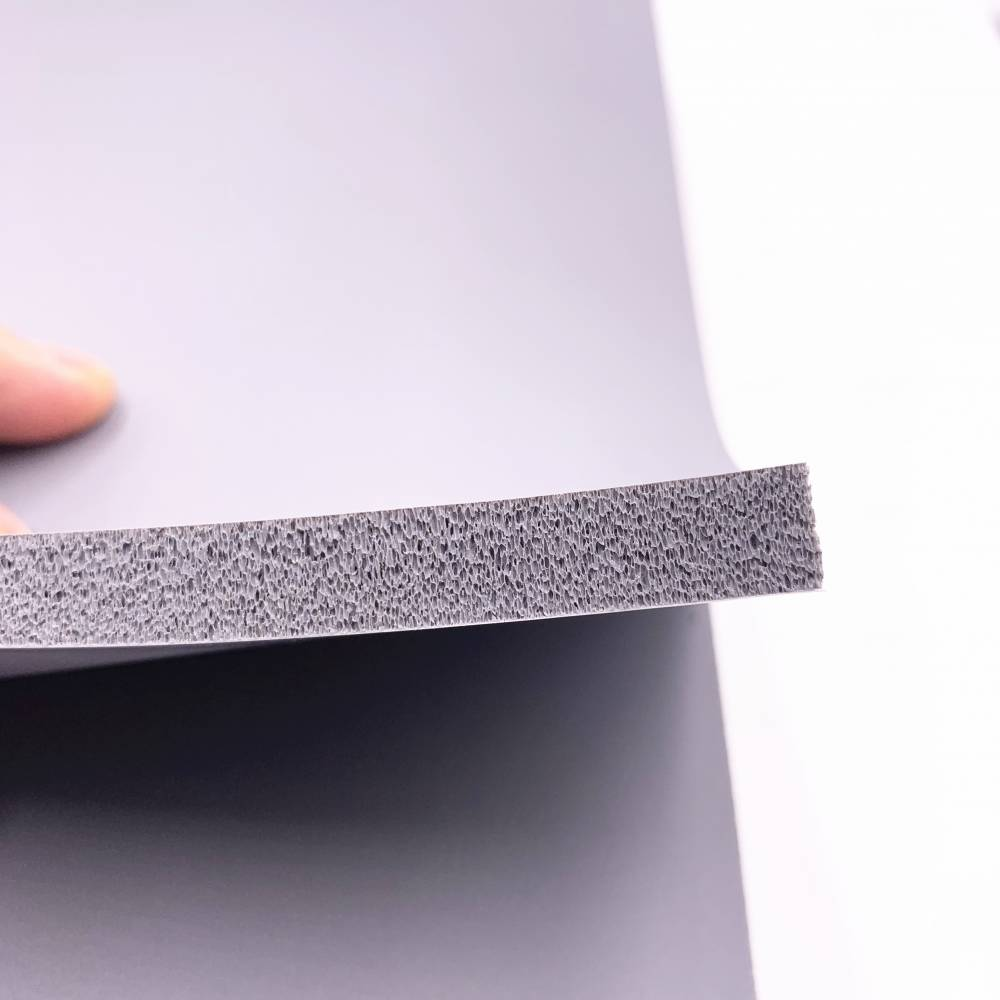
Topsun silicone foam rubber sheet is a soft, compressible closed-cell silicone material for industrial sealing, gasketing, cushioning, thermal insulation, electrical insulation and vibration-control applications.
The current silicone foam range is available in thicknesses from 1.5 mm to 30 mm and multiple densities from 0.14 to 0.55 g/cm³. Different grades provide different compression-force, tensile, dielectric and thermal properties, allowing buyers to select the material according to gasket closing force, sealing pressure, operating temperature and finished-part requirements.
Silicone foam can be supplied as sheets, rolls, strips, pads, gaskets, seals and custom die-cut parts. Topsun also provides cutting, slicing, die cutting, laser cutting, lamination and pressure-sensitive adhesive backing according to customer drawings, samples or application requirements.
| Item | Product Information |
| Material | Silicone Foam Rubber / Silicone Sponge |
| Cell Structure | Closed-Cell Structure with Smooth Outer Surface |
| Available Thickness | 1.5–30 mm |
| Listed Density Range | 0.14–0.55 g/cm³ |
| Temperature Range | Approximately -60°C to 200°C Depending on Grade and Application Conditions |
| 25% Compression Force Deflection | 5±2 to 145±30 kPa Depending on Grade |
| Compression Set | ≤5.0% in the Listed Performance Data |
| Low Temperature Test | -55°C, Pass in the Listed Performance Data |
| Environmental Test | RoHS and REACH, Pass in the Listed Performance Data |
| Flame Resistance | V-0 Listed for the Current Silicone Foam Grades |
| Available Forms | Sheet, Roll, Strip, Pad, Gasket, Seal and Custom Die-Cut Part |
| Custom Processing | Cutting, Slicing, Die Cutting, Laser Cutting, Lamination and Adhesive Backing |
Wide temperature capability: suitable for demanding sealing and insulation environments from approximately -60°C to 200°C depending on grade and operating conditions.
Multiple compression-force options: different densities provide different levels of softness, closing force and mechanical support.
Low compression set: the listed grades show ≤5.0% compression set, supporting applications requiring recovery after compression.
Closed-cell construction: suitable for many gasket and sealing applications where resistance to liquid or gas passage is required when the material is correctly compressed.
Weathering resistance: silicone materials provide good resistance to UV, ozone and outdoor exposure.
Thermal insulation: the current grades list thermal conductivity values from approximately 0.05 to 0.10 W/(m·K).
Electrical insulation: listed grades provide dielectric strength from ≥2.0 to ≥4.0 kV/mm and high volume resistivity.
Flame-resistant grade options: the current technical data lists V-0 performance for the silicone foam grades shown below.
Custom converting: silicone foam can be manufactured into gaskets, pads, strips, washers, seals and installation-ready adhesive-backed parts.
The following values are typical performance parameters for the current Topsun foamed silicone grades. Final values can vary according to density, thickness, formulation, color, production tolerance and test method. Confirm the required grade and test requirement before production orders.
| Foamed Silicone Typical Performance Parameters | |||||||||||
| Density (g/cm³) |
25% Compression Force Deflection (kPa) |
Tensile Strength (MPa) |
Elongation at Break (%) |
Compression Set (%) |
Water Absorption (%) |
Low Temperature Embrittlement | Environmental Test | Flame Resistance | Dielectric Strength (kV/mm) |
Volume Resistivity (Ω·cm) |
Thermal Conductivity W/(m·K) |
| 0.14±0.04 | 5±2 | ≥0.1 | ≥70 | ≤5.0 | ≤10.0 | -55°C Pass |
RoHS, REACH Pass |
V-0 | ≥2.0 | ≥1.0×10¹⁴ | 0.05±0.01 |
| 0.18±0.04 | 10±4 | ≥0.1 | ≥70 | ≤5.0 | ≤10.0 | -55°C Pass |
RoHS, REACH Pass |
V-0 | ≥2.0 | ≥1.0×10¹⁴ | 0.05±0.01 |
| 0.22±0.04 | 20±10 | ≥0.15 | ≥70 | ≤5.0 | ≤5.0 | -55°C Pass |
RoHS, REACH Pass |
V-0 | ≥2.0 | ≥1.0×10¹⁴ | 0.06±0.01 |
| 0.26±0.04 | 35±10 | ≥0.2 | ≥80 | ≤5.0 | ≤5.0 | -55°C Pass |
RoHS, REACH Pass |
V-0 | ≥2.2 | ≥1.0×10¹⁴ | 0.07±0.01 |
| 0.32±0.04 | 45±10 | ≥0.3 | ≥80 | ≤5.0 | ≤5.0 | -55°C Pass |
RoHS, REACH Pass |
V-0 | ≥2.2 | ≥1.0×10¹⁴ | 0.07±0.01 |
| 0.37±0.04 | 75±20 | ≥0.3 | ≥80 | ≤5.0 | ≤5.0 | -55°C Pass |
RoHS, REACH Pass |
V-0 | ≥2.5 | ≥1.0×10¹⁴ | 0.08±0.01 |
| 0.42±0.04 | 110±20 | ≥0.4 | ≥85 | ≤5.0 | ≤5.0 | -55°C Pass |
RoHS, REACH Pass |
V-0 | ≥3.5 | ≥1.0×10¹⁴ | 0.09±0.01 |
| 0.50±0.04 | 145±30 | ≥0.5 | ≥90 | ≤5.0 | ≤5.0 | -55°C Pass |
RoHS, REACH Pass |
V-0 | ≥4.0 | ≥1.0×10¹⁴ | 0.10±0.01 |
| 0.55±0.04 | 110±20 | ≥0.7 | ≥160 | ≤5.0 | ≤5.0 | -55°C Pass |
RoHS, REACH Pass |
V-0 | ≥4.0 | ≥1.0×10¹⁴ | 0.10±0.01 |
The V-0 values above reproduce the current listed material data. If your project requires a specific flame-test standard or certification, confirm the test method, material grade, sample thickness and required documentation before ordering.
Compression Force Deflection is one of the most useful parameters when selecting silicone foam for a gasket. It indicates how much pressure is required to compress the foam by a defined percentage.
A softer grade can conform to uneven surfaces using lower closing force, while a firmer grade can provide greater resistance and mechanical support. The correct choice depends on the gasket gap, required compression percentage, fastening system and the stiffness of the surrounding structure.
| Density | 25% CFD | General Selection Consideration |
| 0.14±0.04 g/cm³ | 5±2 kPa | Low closing-force sealing and soft cushioning. |
| 0.18±0.04 g/cm³ | 10±4 kPa | Soft sealing where good conformability is required. |
| 0.22±0.04 g/cm³ | 20±10 kPa | Moderate closing force and cushioning. |
| 0.26±0.04 g/cm³ | 35±10 kPa | Medium compression sealing and support. |
| 0.32±0.04 g/cm³ | 45±10 kPa | Medium-force gasket and industrial pad applications. |
| 0.37±0.04 g/cm³ | 75±20 kPa | Firmer sealing and mechanical support. |
| 0.42±0.04 g/cm³ | 110±20 kPa | Higher compression-force requirements. |
| 0.50±0.04 g/cm³ | 145±30 kPa | High compression resistance and mechanical support. |
| 0.55±0.04 g/cm³ | 110±20 kPa | High-density grade with the tensile and elongation properties listed above. |
Density and compression force should not be considered independently. Finished gasket performance also depends on thickness, compression ratio, flange stiffness, fastener spacing, surface condition and service temperature.
| Property | Silicone Foam Rubber | Solid Silicone Rubber |
| Structure | Cellular and compressible | Solid elastomer |
| Closing Force | Generally lower for suitable gasket designs | Generally requires higher compression force |
| Conformability | Well suited to gaps and uneven surfaces | Better suited where a denser solid elastomer is required |
| Weight | Lower due to cellular structure | Higher material density |
| Typical Use | Enclosure gaskets, cushioning, insulation, pads and seals | Dense seals, membranes and mechanically demanding rubber parts |
Industrial electrical enclosures, cabinets, control panels and equipment housings often require a compressible gasket between the cover and flange.
Silicone foam can conform to dimensional variation while providing relatively low closing force compared with harder rubber materials. The correct grade should be selected according to gasket width, thickness, compression percentage, fastener spacing and available closure force.
Where a defined enclosure protection level or specific gasket standard is required, the finished gasket and enclosure assembly should be evaluated against that requirement.
Silicone foam can be converted into perimeter gaskets, cushioning pads, insulation pads and other suitable components for battery enclosures and electrical equipment.
The current material range provides both electrical insulation and compression properties. The listed grades have volume resistivity of ≥1.0×10¹⁴ Ω·cm and dielectric strength values from ≥2.0 to ≥4.0 kV/mm depending on density.
Battery and electrical applications should be selected according to the complete assembly, including voltage, insulation distance, compression force, operating temperature, flame requirements and environmental conditions.
Topsun silicone foam grades list thermal conductivity values from approximately 0.05 to 0.10 W/(m·K), depending on material density.
This allows silicone foam to be evaluated for flexible insulation pads, thermal barriers, equipment seals and other applications requiring both compressibility and temperature stability.
Actual thermal performance depends on material thickness, density, compression, surrounding materials, temperature difference and the complete assembly design.
Topsun can convert silicone foam sheet into finished gaskets and components according to customer drawings, CAD files or physical samples.
| Custom Option | Available Requirement |
| Density | Select according to compression force and mechanical requirements. |
| Thickness | 1.5–30 mm within the current product range. |
| Width and Length | Customized according to sheet, roll or strip requirements. |
| Part Shape | Custom gasket, washer, pad, strip, seal or other die-cut geometry. |
| Adhesive Backing | Pressure-sensitive adhesive and release liner according to installation requirements. |
| Lamination | Suitable films, fabrics or other compatible materials according to project requirements. |
| Prototype | Digital cutting can be evaluated for suitable prototype and low-volume shapes. |
| Production Parts | Die cutting can be used for repeatable gasket and pad production. |
Pressure-sensitive adhesive backing can be applied to suitable silicone foam gaskets, strips and pads to help position the component during installation.
Adhesive selection is important because bonding to silicone surfaces can require a different adhesive construction from bonding to metal, plastic or painted surfaces.
Please provide the bonding substrate, service temperature, humidity conditions and expected service environment when requesting an adhesive-backed silicone foam part.
Silicone foam sheets can be cut to the requested length and width or processed to suitable thickness requirements within the applicable production tolerance.
Custom dies can produce repeatable silicone foam gaskets, seals, washers, strips and pads according to customer drawings.
Digital processing can be evaluated for suitable prototypes and complex foam shapes where dedicated die tooling is not required.
Silicone foam can be laminated with suitable films, fabrics or pressure-sensitive adhesive constructions for installation-ready sealing and insulation components.
Three-dimensional molded foam and foam-composite components can be evaluated for suitable projects requiring defined geometry or custom component construction.
Application and component function
Required thickness
Density if already specified
Required compression force or softness
Available gasket gap
Target compression percentage
Minimum and maximum service temperature
Required sealing conditions
Flame-resistance test or certification requirement
Electrical insulation requirement if applicable
UV, ozone, moisture or outdoor exposure
Adhesive backing requirement
Bonding substrate for adhesive-backed parts
Drawing, CAD file or physical sample
Estimated order quantity
Topsun supplies silicone foam together with EVA foam, PE foam, XPE foam, IXPE foam, CR foam, EPDM foam, neoprene foam, SBR foam, NBR foam and microcellular soft PVC foam in sheet, roll and custom converted forms.
Multiple silicone foam densities and compression-force levels.
Thicknesses from 1.5 mm to 30 mm.
Custom sheet, roll, strip, pad and gasket production.
Die-cut and adhesive-backed finished parts.
Material selection according to compression, temperature and sealing requirements.
Custom conversion according to drawings and physical samples.
Our facility is located in Changzhou City, Jiangsu Province, China, with convenient access to Shanghai Port for international shipments.


Silicone foam rubber is a cellular silicone material used for sealing, gasketing, insulation, cushioning and vibration control. It is softer and more compressible than solid silicone rubber while retaining useful silicone properties such as temperature and weather resistance.
The terms are sometimes used differently by material manufacturers. Buyers should therefore compare the actual cell structure, density, compression force, thickness and test data rather than selecting material only by the product name.
Yes. The silicone foam described on this page has a closed-cell structure and smooth outer surface for suitable sealing, gasketing and insulation applications.
The current product range lists thicknesses from 1.5 mm to 30 mm. Confirm the required thickness, tolerance and grade when requesting a quotation.
The current performance table includes silicone foam densities from 0.14±0.04 to 0.55±0.04 g/cm³.
The silicone foam described on this page is suitable for approximately -60°C to 200°C depending on grade and application conditions. Long-term performance also depends on compression, exposure time and the service environment.
Compression Force Deflection measures the pressure required to compress foam by a defined percentage. It helps engineers compare how soft or firm different silicone foam grades are and estimate the closing force required by a gasket.
Compression set indicates permanent thickness loss after the material has been compressed under defined test conditions. Lower permanent set can help a gasket maintain recovery and sealing pressure during repeated or long-term compression.
The current technical table lists V-0 flame resistance for the shown grades. If your project requires a specific flame-test standard or certification, provide the applicable standard and required thickness so the material can be evaluated correctly.
The current material table lists dielectric strength from ≥2.0 to ≥4.0 kV/mm and volume resistivity of ≥1.0×10¹⁴ Ω·cm depending on density. Final electrical suitability should be evaluated using the complete component design.
The listed grades have thermal conductivity values from approximately 0.05±0.01 to 0.10±0.01 W/(m·K), depending on density.
Silicone materials provide useful resistance to UV, ozone and weathering and can be evaluated for suitable outdoor sealing applications. The finished enclosure should be tested against the required environmental protection level.
Suitable silicone foam grades can be evaluated for battery enclosure gaskets, cushioning pads and insulation parts. Material selection should consider compression force, temperature, electrical and flame requirements of the complete battery system.
Yes. Topsun can convert silicone foam into custom gaskets, washers, strips, pads and seals according to drawings, CAD files or physical samples.
Yes. Pressure-sensitive adhesive and release liner can be applied to suitable silicone foam parts. Adhesive selection should consider both the silicone surface and the material to which the gasket will be bonded.
Select density together with compression-force requirements, thickness, gasket gap, compression percentage, closing force, operating temperature and mechanical support requirements. Density alone does not determine finished gasket performance.
Please provide the application, required thickness, density if known, dimensions, compression requirement, working temperature, sealing requirement, flame or electrical requirement, adhesive requirement, drawing or sample and estimated quantity.
Send your requirements to july@topsunfoam.com, including thickness, density, dimensions, application, compression requirement, adhesive requirement and estimated quantity for evaluation.