English


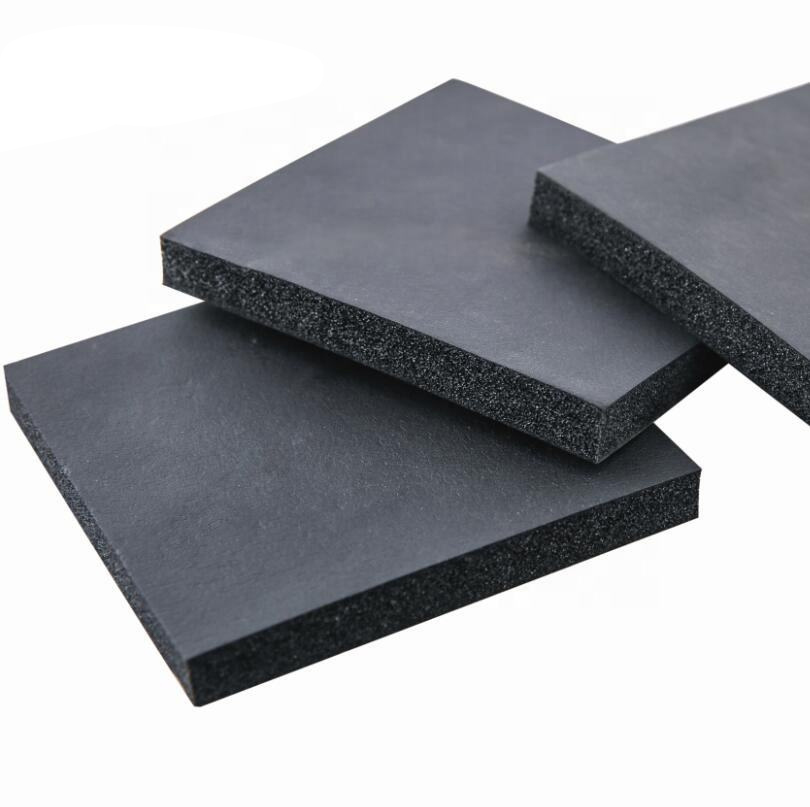
nbr/pvc foam
Topsun
160-450kpa
180-250%
1000X2000mm, 1500mm*2000mm


Product Description
Topsun supplies NBR/PVC foam in different cellular structures for sealing, cushioning, acoustic control, thermal insulation, vibration damping and custom industrial foam components. Choosing between open-cell and closed-cell NBR/PVC foam depends primarily on the required compression, moisture resistance, acoustic performance and sealing function.
Open-cell NBR/PVC foam has an interconnected cellular structure and is generally softer and more compressible, making it suitable for acoustic absorption, cushioning, gap filling and low-compression interfaces. Closed-cell NBR/PVC foam contains predominantly isolated cells and is more suitable for moisture-resistant sealing, thermal insulation and applications where reduced air or liquid penetration is required.
The broader Topsun NBR/PVC foam range includes densities from 50–150 kg/m³, widths from 1000–1800 mm and thicknesses mainly from 3–50 mm. One-side or double-side adhesive backing can also be provided for suitable applications.
| Property | Open Cell NBR/PVC Foam | Closed Cell NBR/PVC Foam |
| Cell Structure | Interconnected cellular structure | Predominantly isolated cells |
| Compression | Generally softer and easier to compress depending on grade | Generally firmer depending on density and grade |
| Surface Conformability | Suitable for irregular gaps and low-force contact | Suitable for controlled compression sealing |
| Acoustic Absorption | Better suited to selected sound-absorption applications | More commonly used for isolation, insulation and sealing |
| Moisture Resistance | Not normally selected as the primary moisture barrier | More suitable where resistance to moisture penetration is required |
| Air and Liquid Sealing | Mainly suited to soft gap filling and selected low-pressure sealing | Generally preferred for environmental sealing applications |
| Thermal Insulation | Can provide thermal insulation depending on grade and application | Commonly selected for HVAC and refrigeration insulation |
| Typical Applications | Acoustic absorption, NVH, cushioning, soft gap filling and anti-rattle parts | Gaskets, sealing strips, HVAC insulation, refrigeration and moisture-resistant components |
| Item | Product Information |
| Material | NBR/PVC Foam |
| Available Structures | Open Cell or Closed Cell depending on selected grade |
| Product Range Density | 50–150 kg/m³ |
| Width | 1000–1800 mm |
| Typical Roll Length | Approximately 10 m |
| Main Thickness Range | 3–50 mm |
| Main Color | Black; red, purple, blue and other colors can be evaluated according to requirements |
| Adhesive Options | One-side or double-side adhesive |
Open-cell NBR/PVC foam is generally selected when soft compression, acoustic absorption, cushioning or conformability to irregular surfaces is more important than resistance to water or air penetration.
Because the cells are interconnected, air can move through the foam structure more easily. This allows the foam to compress with relatively low resistance and also makes the structure useful for selected acoustic applications.
Open-cell construction can be considered for automotive NVH components, equipment acoustic pads, cushioning, soft gap filling, anti-rattle interfaces and other applications where flexible contact is required.
Closed-cell NBR/PVC foam is generally preferred when thermal insulation, moisture resistance, environmental sealing or controlled compression is required.
The isolated cellular structure reduces the movement of air and moisture through the foam compared with open-cell material. This makes closed-cell grades suitable for HVAC insulation, refrigeration, sealing strips, gaskets and other applications where the foam needs to provide a more continuous barrier.
Density, thickness and compression should still be selected according to the exact assembly and service environment.
Open-cell foam is useful for selected acoustic applications because airborne sound can enter the interconnected cell structure rather than being reflected mainly from the material surface.
Acoustic performance depends on foam thickness, density, cell structure, installation space, backing surface and the frequency range of the noise. For automotive or industrial NVH projects, these factors should be considered together.
Typical applications can include vehicle interior acoustic pads, equipment enclosures, anti-rattle components, machinery cushioning and suitable HVAC acoustic-control components.
Closed-cell NBR/PVC foam can be compressed between mating surfaces to form flexible gaskets and sealing strips.
Because the cells are predominantly isolated from each other, closed-cell foam is generally more suitable than open-cell foam for applications where resistance to air, moisture or liquid penetration is important.
Custom sealing components can be cut or die-cut according to equipment housings, panels, automotive components and other assembly geometries.
Closed-cell NBR/PVC foam is commonly used for thermal insulation in HVAC and refrigeration applications where reducing heat transfer and limiting water vapor penetration are important.
Typical applications include chilled-water pipes, condenser-water pipes, refrigeration equipment, air ducts and suitable hot-water piping systems.
Insulation thickness should be selected according to system temperature, ambient conditions, humidity, equipment geometry and condensation-control requirements.
Open-cell foam is generally easier to compress than closed-cell material of comparable dimensions, making it useful where components cannot tolerate high closure force.
The soft foam structure can conform to variable gaps and irregular mating surfaces, which can be useful around lightweight panels, plastic housings, interior trim and other assemblies.
Required thickness should be selected from the minimum and maximum gap rather than from nominal thickness alone.
For applications exposed to moisture, air movement or environmental contaminants, closed-cell foam is normally the more appropriate structure.
The final sealing performance depends on cell structure, foam density, thickness, compression percentage, joint geometry and surface condition. Material selection should therefore be based on the complete assembly rather than foam type alone.
| Application | Usually Preferred Structure | Main Reason |
| Acoustic Absorption | Open Cell | Interconnected cells support sound absorption. |
| Automotive NVH | Open Cell or Closed Cell | Structure depends on whether acoustic absorption, cushioning or environmental sealing is required. |
| Soft Gap Filling | Open Cell | Easier compression and greater conformability. |
| Environmental Gasket | Closed Cell | Better resistance to air and moisture penetration. |
| HVAC Pipe Insulation | Closed Cell | Thermal insulation and moisture resistance. |
| Refrigeration Insulation | Closed Cell | Supports condensation-control design. |
| Cushioning Pads | Open Cell or Closed Cell | Selection depends on compression, firmness and environmental exposure. |
| Vibration Isolation | Open Cell or Closed Cell | Density, compression and load are more important than cell structure alone. |
The following technical table is retained from the existing Topsun product information. The table identifies the tested material as a closed-cell NBR/PVC foam grade. These values should not be applied automatically to open-cell NBR/PVC foam.
| Property | Units | Value | Test Method |
| Density | kg/m³ | 50–90 | ASTM D 1667 |
| Compression Set, 25% | % | ≤20 | ASTM D 1056 |
| Compression Deflection | kPa | 30–35 | ASTM D 1056 |
| Tensile Strength | kPa | ≥100 | ASTM D 412 |
| Elongation | % | ≥100 | ASTM D 412 |
| Thermal Conductivity | W/m·K | 0.038 | ASTM C 534 |
| Water Vapor Resistance Index | µ | ≥7000 | DIN EN 12086 |
| Upper Use Limit | 110 | ||
| Lower Use Limit | 20 | ||
| Fire Performance | HF-1 | UL 94 | |
| Cell Structure | Closed Cell |
Note: the existing technical table does not state units for the upper and lower use-limit values. Confirm the applicable service-temperature range for the selected grade before use.
Primary function: identify whether the foam is required for acoustic absorption, sealing, insulation, cushioning, vibration control or gap filling.
Moisture exposure: identify whether the finished component will be exposed to condensation, water, humidity or liquids.
Required compression: provide minimum and maximum gap dimensions and available closure force.
Acoustic requirement: provide the noise source, installation area and frequency information where available.
Thermal requirement: provide operating and ambient temperatures for insulation applications.
Density: specify the required firmness or density if already determined.
Thickness: select according to gap, compression, insulation or acoustic requirement.
Oil or fuel exposure: identify specific fluids, concentration and contact conditions where relevant.
Adhesive requirement: specify plain foam, one-side adhesive or double-side adhesive.
Finished form: sheet, roll, strip, pad, gasket, tape or custom die-cut component.
Estimated quantity: provide sample, trial and production requirements where available.
Topsun supplies NBR/PVC foam together with custom processing for manufacturers, distributors and industrial buyers.
1. Cutting: foam sheets and rolls can be cut according to required dimensions.
2. Slicing: foam materials can be sliced to the required thickness.
3. Lamination: hot-melt film lamination, flame lamination and pressure-sensitive adhesive lamination are available.
4. Laser Cutting: suitable foam shapes can be processed according to digital drawings.
5. Die Cutting: custom gaskets, pads, strips and other repeatable components can be produced according to customer drawings.
6. Compression Molding: three-dimensional molded foam and foam composite components can be produced for suitable applications.
7. Engraving: suitable for tool-box inserts, packaging inserts and other customized foam parts.
8. Silk-Screen Printing: logos and patterns can be printed on suitable foam surfaces.
9. Adhesive Backing: adhesive and release liner can be applied for suitable foam tapes, strips, pads, gaskets and other converted parts.
Topsun supplies NBR/PVC foam, NBR foam, EVA foam, PE foam, XPE foam, IXPE foam, CR foam, EPDM foam, neoprene foam, SBR foam and micro-cell soft PVC foam in sheet, roll and custom converted forms.
Topsun supplies foam materials and customized foam components for automotive, HVAC, refrigeration, construction, electronics and industrial applications. Customers can provide cell-structure requirements, density, thickness, drawings and application information for material evaluation.
Our facility is located in Changzhou City, Jiangsu Province, China, with convenient access to Shanghai Port for international shipments.


Open-cell NBR/PVC foam has interconnected cells and is generally softer and more suitable for acoustic absorption, cushioning and soft gap filling. Closed-cell NBR/PVC foam has predominantly isolated cells and is more suitable for insulation, moisture resistance and environmental sealing.
Open-cell foam is generally better suited to sound-absorption applications because sound can enter the interconnected cellular structure. Actual acoustic performance depends on thickness, density, cell structure, mounting and frequency.
Closed-cell NBR/PVC foam is generally the more appropriate choice where resistance to moisture, air or liquid penetration is required. Final sealing performance also depends on compression and joint design.
Closed-cell NBR/PVC foam is generally preferred for HVAC and refrigeration insulation where thermal performance and moisture resistance are required. Open-cell foam can be considered for selected acoustic or vibration-control functions.
Open-cell foam is generally softer and easier to compress, although actual compression depends on material density, thickness and the individual foam grade.
Open-cell foam can be used for suitable soft gap-filling or low-pressure gasket applications where strict liquid sealing is not required. Closed-cell foam is generally preferred for environmental seals.
Closed-cell foam can contribute to vibration isolation and sound-control assemblies, but open-cell materials are generally more suitable when airborne sound absorption is the primary function.
The broader Topsun NBR/PVC foam range lists densities from 50–150 kg/m³. The closed-cell grade shown in the technical table on this page lists density from 50–90 kg/m³.
The existing NBR/PVC product information lists thicknesses mainly from 3–50 mm. Available thickness should be confirmed for the selected open-cell or closed-cell grade.
Yes. Existing product information includes one-side and double-side adhesive options. The substrate and service environment should be provided when selecting the adhesive construction.
Yes. Topsun provides cutting and die-cutting capabilities for suitable foam materials. Strips, pads, gaskets and custom shapes can be evaluated according to drawings or finished dimensions.
Start with the primary application. Open-cell foam is generally selected for acoustic absorption, soft cushioning and gap filling, while closed-cell foam is generally selected for thermal insulation, moisture resistance and environmental sealing.
Please provide the application, required sealing or acoustic function, gap dimensions, compression, density if known, thickness, operating temperature, moisture or chemical exposure, adhesive requirement, finished dimensions and estimated quantity.
Send your requirements to july@topsunfoam.com, including the application, required cell structure, density if known, thickness, dimensions and estimated quantity for evaluation.