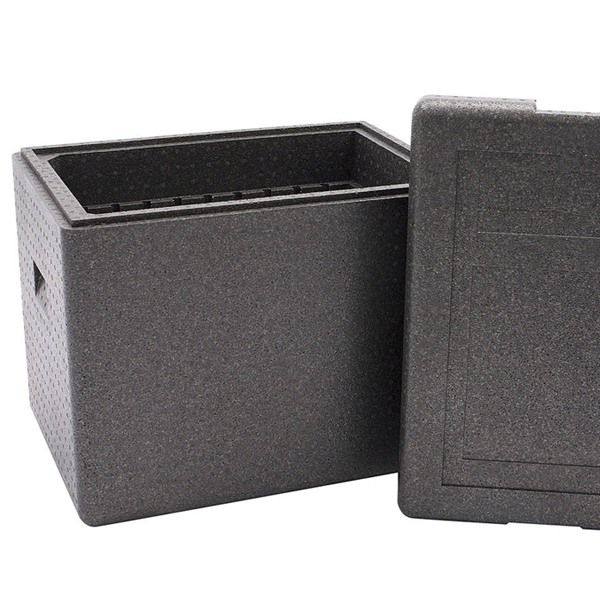
epp foam
Topsun
45kg/M3
490*380*400


Product Description
Topsun provides custom EPP cooler box mold development for manufacturers, cold-chain packaging companies, food-delivery brands and industrial customers that need dedicated tooling for molded Expanded Polypropylene insulated boxes.
The mold is developed around the required finished cooler box rather than selected as a generic standard tool. Project requirements can include external and internal dimensions, capacity, wall thickness, EPP density, lid structure, handles, inner cavities, partitions, coolant positions, stacking features, molded identification and other functional details.
Customers can provide a 3D model, 2D engineering drawing, physical sample or detailed box requirements for evaluation. Topsun supports projects from finished-box requirement review and tooling evaluation through sample production and subsequent molded EPP box supply.
| Item | Project Information |
| Product | Custom EPP Cooler Box Mold / Tooling |
| Finished Box Material | Expanded Polypropylene Foam / EPP |
| Development Basis | 3D Model, 2D Drawing, Physical Sample or Detailed Box Requirements |
| Custom Box Geometry | Outer Size, Inner Size, Capacity, Wall Thickness and Internal Cavity |
| Functional Structures | Lid, Handles, Partitions, Inserts, Coolant Areas and Stacking Features |
| Finished Box Density | Selected According to Box Design and Application Requirements |
| Application | Cold Chain, Food Delivery, Seafood, Fresh Produce, Beverage, Pharmaceutical and Reusable Transport Packaging |
| Development Support | Box Requirement Review, Mold Evaluation, Sample Production and Molded Box Production |
An EPP cooler box mold is dedicated tooling used to form Expanded Polypropylene beads into a defined three-dimensional insulated box component.
The tooling defines the finished geometry of the molded box body or lid, including overall shape, inner cavity, wall sections, corners, recesses, locating areas, handle structures, stacking features and other molded details.
In particle foam molding, EPP material is introduced into shaped tooling and fused under controlled molding conditions. The finished component therefore takes its three-dimensional geometry directly from the tooling cavity.
Because cooler boxes vary significantly in volume, wall thickness, lid construction and internal layout, custom tooling is normally developed around the actual finished-box requirements.
| Comparison | EPP Cooler Box Mold | Finished EPP Cooler Box |
| Function | Production tooling used to form the box | Reusable insulated transport container |
| Development Basis | Approved finished-box geometry and production requirements | Payload, capacity, transport and insulation requirements |
| Material Density | Not a mold property | EPP density selected for the finished molded box |
| Dimensions | Tooling dimensions correspond to the required molded geometry | Defined outer and inner box dimensions |
| Output | Enables repeatable molded production | Carries and protects the customer's goods |
EPP cooler box tooling is customized according to the required finished container. The following project items should be defined before final mold development.
| Project Item | Requirement |
| Finished Box Type | EPP Cooler Box / Insulated Box / Cold Chain Container |
| Finished Box Material | Expanded Polypropylene Foam |
| Outer Dimensions | Customized |
| Inner Dimensions | Customized According to Payload and Coolant Space |
| Capacity | Customized |
| Wall Thickness | Defined According to Box Design and Insulation Requirements |
| EPP Density | Selected for the Finished Box Application |
| Lid Structure | Customized |
| Handle Structure | Optional According to Handling Requirements |
| Inner Partitions | Optional According to Payload and Coolant Layout |
| Stacking Structure | Optional According to Warehouse and Logistics Requirements |
| Identification | Molded Marks or Other Project-Specific Identification Requirements |

External dimensions should be defined according to vehicle loading space, pallets, racks, warehouse systems and other logistics constraints.
Internal dimensions should be developed around the actual payload rather than calculated only from overall capacity. Buyers should consider package length, width, height, loading quantity, partitions and any space required for ice packs, gel packs or other temperature-control components.
Clearly defining both outer and inner dimensions before tooling helps avoid a box that fits the payload but cannot fit the intended vehicle, shelf, pallet or warehouse system.
Wall thickness is an important part of EPP cooler box development because it affects usable internal volume, structural protection and thermal insulation.
A thicker wall does not automatically define the final temperature performance. Box geometry, lid construction, payload temperature, coolant quantity, ambient conditions and transport duration also influence the complete cold-chain packout.
For temperature-critical applications, the approved molded box should therefore be evaluated as part of the complete transport configuration.
The lid is an important element of an insulated EPP box and should be developed together with the box body.
Lid design can be evaluated according to alignment, opening frequency, handling method, usable internal space and the mating geometry between the lid and box body.
Critical mating surfaces and fit dimensions should be clearly identified in the drawing before tooling is finalized.
EPP cooler boxes used in reusable logistics may require additional molded features beyond the basic box cavity.
| Feature | Project Consideration |
| Handles | Loaded weight, carrying method and operator handling. |
| Stacking Features | Warehouse stacking, vehicle transport and return logistics. |
| Partitions | Payload separation and internal organization. |
| Coolant Areas | Dedicated positions for ice packs, gel packs or other cooling media. |
| Locating Features | Positioning of internal components or mating parts. |
| Identification Areas | Molded marks, customer identification or designated branding areas. |
| Stage | Project Requirement |
| 1. Application Definition | Confirm product type, payload dimensions, loading quantity, temperature requirement and logistics process. |
| 2. Finished Box Specification | Define external dimensions, internal dimensions, capacity, wall thickness and required EPP density. |
| 3. Functional Structure | Confirm lid, handles, partitions, coolant positions, stacking features and other molded details. |
| 4. Drawing Review | Review 3D models, 2D drawings, physical samples and critical dimensions. |
| 5. Mold Evaluation | Evaluate the required tooling according to the approved box geometry and intended production requirements. |
| 6. Tooling Development | Develop tooling around the approved molded-box design. |
| 7. Sample Production | Produce molded samples for dimensional, fit and application evaluation. |
| 8. Project Approval | Confirm critical dimensions, lid fit, stacking, internal layout and other customer-defined requirements. |
| 9. Production | Proceed with approved molded EPP cooler box production according to project requirements. |
A complete 3D CAD model is useful for custom tooling projects because it defines the external geometry, internal cavity, lid interface, wall sections, handles and other molded features.
The 3D model should be supported by a drawing identifying critical dimensions and any functional areas that require special attention during sample evaluation.
If the tooling is intended for a specified production machine or manufacturing setup, relevant equipment and production information should also be provided where available for project evaluation.
An existing EPP cooler box can be provided as a physical reference when complete engineering data is not available.
A sample can help communicate overall geometry, lid structure, carrying method, stacking features and internal layout, but additional information may still be required before a new tool can be developed.
Buyers should also provide the intended application, payload dimensions, required capacity, EPP density if known, critical dimensions, expected quantity and any required design changes from the reference box.
Cooler box tooling should be developed with the intended logistics system in mind rather than only the appearance of the box.
| Application Requirement | Design Input |
| Cold Chain | Target temperature, transport duration, payload and coolant arrangement. |
| Food Delivery | Package dimensions, route stops, loading access and box handling. |
| Seafood | Payload weight, moisture conditions, coolant requirements and handling method. |
| Fresh Produce | Product packaging, usable internal space and distribution conditions. |
| Pharmaceutical Transport | Required temperature range, validated packout requirements and coolant arrangement. |
| Reusable Logistics | Stacking, carrying, return transport, cleaning and repeated handling. |
Molded samples should be evaluated against the approved finished-box requirements before routine production.
Outer dimensions
Inner usable dimensions
Lid alignment and fit
Wall and corner geometry
Handle structure where applicable
Partitions and coolant positions
Stacking fit
Payload fit
Critical molded features
Customer-defined application requirements
Where temperature performance is critical, the finished EPP box should also be evaluated as part of the complete packout using the intended payload, coolant, ambient conditions and transport duration.
3D CAD file if available
2D drawing with critical dimensions
Physical reference sample if applicable
Required outer box dimensions
Required inner usable dimensions
Required capacity
Wall thickness if already defined
Required EPP density if already defined
Lid design
Handle requirements
Partitions or inserts
Coolant position requirements
Stacking requirements
Molded identification or branding requirements
Payload type and loading quantity
Temperature and transport requirements
Intended production equipment information where applicable
Prototype or sample requirements
Expected production quantity
A custom EPP cooler box mold can be developed for different insulated transport applications according to the customer's finished-container requirements.
| Finished Box Application | Typical Requirement |
| Food Delivery | Reusable insulated transport with suitable package fit and handling features. |
| Seafood | Insulated transport involving moisture and cold-pack requirements. |
| Fresh Produce | Reusable protection and insulated distribution. |
| Beverages | Protective insulated transport for suitable packaged beverages. |
| Pharmaceutical Logistics | Custom insulated container as part of an appropriately qualified packout. |
| Biological Samples | Custom transport container developed around the required packaging system. |
| Reusable Logistics | Stackable and returnable container design for repeated logistics cycles. |
In addition to molded EPP projects, Topsun provides foam converting for industrial packaging, protection and insulation applications.
1. Cutting: foam sheets, blocks and suitable parts can be cut according to customer dimensions.
2. Slicing: foam can be sliced to the required thickness.
3. Lamination: hot-melt film, flame and pressure-sensitive adhesive lamination are available for suitable foam materials.
4. Laser Cutting: suitable foam shapes can be processed according to digital drawings.
5. Die Cutting: repeatable foam pads, seals and inserts can be manufactured according to customer designs.
6. Compression Molding: three-dimensional molded foam and foam composite components can be manufactured for suitable applications.
7. Engraving: suitable for tool box inserts, packaging inserts and custom foam cavities.
8. Silk-Screen Printing: logos and patterns can be printed on suitable foam surfaces.
9. Adhesive Backing: adhesive and release liner can be applied to suitable foam materials.
Topsun supplies molded EPP products together with EVA foam, PE foam, XPE foam, IXPE foam, CR foam, EPDM foam, neoprene foam, SBR foam, NBR foam and micro-cell soft PVC foam in sheet, roll, block and custom converted forms.
Topsun supplies molded EPP cooler boxes, custom EPP components and foam products for cold-chain packaging, food distribution, reusable logistics and industrial applications. Customers can provide drawings, 3D files, physical samples or complete finished-product requirements for project evaluation.
Our facility is located in Changzhou City, Jiangsu Province, China, with convenient access to Shanghai Port for international shipments.

An EPP cooler box mold is custom tooling used to form Expanded Polypropylene beads into the three-dimensional shape of an insulated box body, lid or other molded container component.
No. The mold is the production tooling. The EPP cooler box is the finished foam container produced using the tooling.
No. EPP density describes the material used for the finished molded box. It is an input to the box and molding project rather than a density specification of the tooling itself.
Yes. Customers can provide a 3D model together with finished-box requirements and critical dimensions for project evaluation.
A physical sample can be used as a reference when complete engineering data is unavailable. Additional dimensions, material requirements and project information may still be required before tooling development.
Buyers should define the required outer dimensions, inner usable dimensions, capacity, wall thickness and critical lid or mating dimensions.
Yes. The lid can be developed according to the required box geometry, opening method, mating structure and application requirements.
Handle structures can be evaluated according to box geometry, loaded weight and logistics handling requirements.
Internal cavities, partitions, locating features and coolant positions can be evaluated according to the payload and box design.
Yes. Stacking requirements can be considered during box and tooling development according to loaded weight, warehouse and transport conditions.
Molded identification areas and other branding requirements can be evaluated according to the box design. Other logo methods can also be considered for the finished box where appropriate.
Custom EPP cooler boxes can be developed for suitable food, seafood, fresh produce, beverages, pharmaceuticals, biological samples and other products requiring insulated and protective transport.
A defined finished-box design is required before tooling can be finalized. This can be established from a 3D model, engineering drawing, sample or detailed product-development requirements.
If the tooling is intended to operate on a specified production machine or manufacturing setup, relevant equipment information should be provided where available so it can be considered during project evaluation.
Typical evaluation items include outer and inner dimensions, lid fit, wall geometry, stacking, handle features, internal layout, payload fit and other project-specific requirements.
Please provide the 3D model or drawing, outer and inner dimensions, capacity, wall thickness, EPP density if known, lid structure, handles, partitions, stacking requirements, payload information, temperature requirement, sample requirements and expected production quantity.
Send your drawings, 3D files, reference sample information and finished-box requirements to july@topsunfoam.com for project evaluation.